














Metaverse Standards Forum introduces Sneeze, the 1st open metaverse browser engine | exclusive interview
The Open Metaverse Browser Initiative (OMBI), created by the Metaverse Standards Forum in collaboration with RP1, today introduced Sneeze, the first open metaverse browser engine (MBE). If this is successful, then you may need to get ready for a world without app stores. Available immediately as open source under the Apache 2.0 license on the Forum’s GitHub repository, Sneeze gives developers, enterprises, hardware manufacturers, and researchers the foundational technology to build the open metaverse. At the core of every web browser today sits an engine: Blink powers Chrome, Edge, and Brave; WebKit powers Safari; Gecko powers Firefox. Those engines were built for 2D documents. Sneeze is a new engine, purpose-built for spatial computing. Organizations can embed it intoexisting browsers or use it to power standalone native metaverse browsers. Sneeze delivers capabilities the current web stack was never designed for: proximity-based service discovery, secure multi-origin 3D scene composition through the Scene Object Model (SOM), per-service WASM sandboxing for security isolation, and real-time co-presence for AI agents, AR glasses, and enterprise environments at scale. Market forces are converging, driving the need to make the web a truly capable spatial platform.What makes Sneeze a fit for the open metaverse The Open Metaverse Browser Initiative is getting behind standards for a metaverse browser. Source: Khronos Group Sneeze enables organizations to deliver spatial services without walled gardens or customapps, unlocking the future of spatial computing for AI, robotics, and humans.Major technology companies are racing to ship AR glasses. Enterprises are deploying digitaltwins in airports, hospitals, and factories to transform operations with real-time spatial data. AIagents and autonomous systems are being designed for deployment in physical spaces, wherethey must perceive, interact with, and contribute to a shared spatial environment in real time. All of these applications need a common, open mechanism to connect to spatial experiences and services across devices, operators, and platforms, while retaining the same ownership andcontrol as their web infrastructure. No standards-based spatial platform exists today. Without one, every proprietary platform risksbecoming a stack that can be discontinued at any time, stranding the organizations that built onit. Sneeze solves this by giving the metaverse the same open foundation as the web: acommunity-developed engine, based entirely around open standards, that any organization can build on reliably, with no single company able to discontinue or control it. “Enabling users to seamlessly connect with spatial services, AI, and other users as they journey through the real world is a compelling definition of the metaverse. The web is the only platform that has the reach and openness to make this vision real,” said Neil Trevett, president of the Khronos Group and of the Metaverse Standards Forum. “Building the spatial web will need a constellation of standards from dozens of standards organizations. Enabling and fosteringcooperative standardization is the reason the Forum exists, and building Sneeze under the OMBI is a perfect vehicl to catalyze, prototype, and deliver metaverse interoperability.” In an interview with GamesBeat, Trevett game a “big shout out to RP1 and Sean, as this is from RP1. They really are the catalyst for this.” He noted that the standard recognizes the presence of AI in the world, as well as the world being brought in to multiple composed services around a person or a device that is navigating the real world. “We want to be able to provide those services globally, and the only platform that has that kind of reach is the web, and so that comes down to the mission statement. We’re trying to bring composed spatial services into the web platform,” Trevett said. Trevett noted that RP1 tried to do this at the beginning and went far down the road before they found that they could not do it with the existing web stack. And so they went about creating and embracing a new web stack. Trevett said RP1 hit some key architectural roadblocks because the current web stack is simply not designed to do 3D spatial service composition. He added, “Of course, the web was designed around 2D documents, so what we’re trying to do is to bring the spatial web into being. You may call that the metaverse, or not. We’re not trying to reinvent the whole web stack but we will do just the necessary enhancements.”How It Works How a metaverse browser will help you navigate in real time. Source: Khronos Group Sneeze enables self-hosted spatial content that works the way the web does today.Organizations host their own spatial fabrics, the metaverse equivalent of websites, on their owninfrastructure. Sneeze handles multi-origin scene composition, rendering, networking, andsecurity natively across mobile, desktop, VR, and AR devices without proprietary dependencies. The engine ca
The Open Metaverse Browser Initiative (OMBI), created by the Metaverse Standards Forum in collaboration with RP1, today introduced Sneeze, the first open metaverse browser engine (MBE). If this is successful, then you may need to get ready for a world without app stores.
Available immediately as open source under the Apache 2.0 license on the Forum’s GitHub repository, Sneeze gives developers, enterprises, hardware manufacturers, and researchers the foundational technology to build the open metaverse.
At the core of every web browser today sits an engine: Blink powers Chrome, Edge, and Brave; WebKit powers Safari; Gecko powers Firefox. Those engines were built for 2D documents.
Sneeze is a new engine, purpose-built for spatial computing. Organizations can embed it into
existing browsers or use it to power standalone native metaverse browsers.
Sneeze delivers capabilities the current web stack was never designed for: proximity-based service discovery, secure multi-origin 3D scene composition through the Scene Object Model (SOM), per-service WASM sandboxing for security isolation, and real-time co-presence for AI agents, AR glasses, and enterprise environments at scale.
Market forces are converging, driving the need to make the web a truly capable spatial platform.
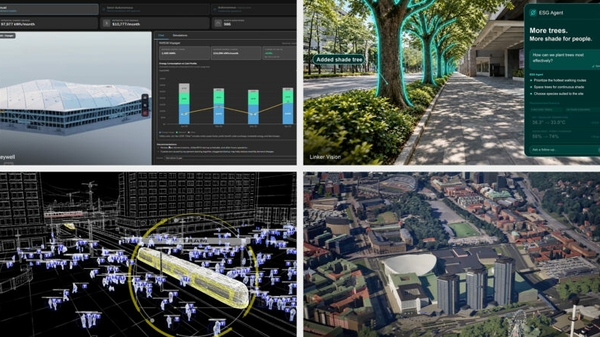
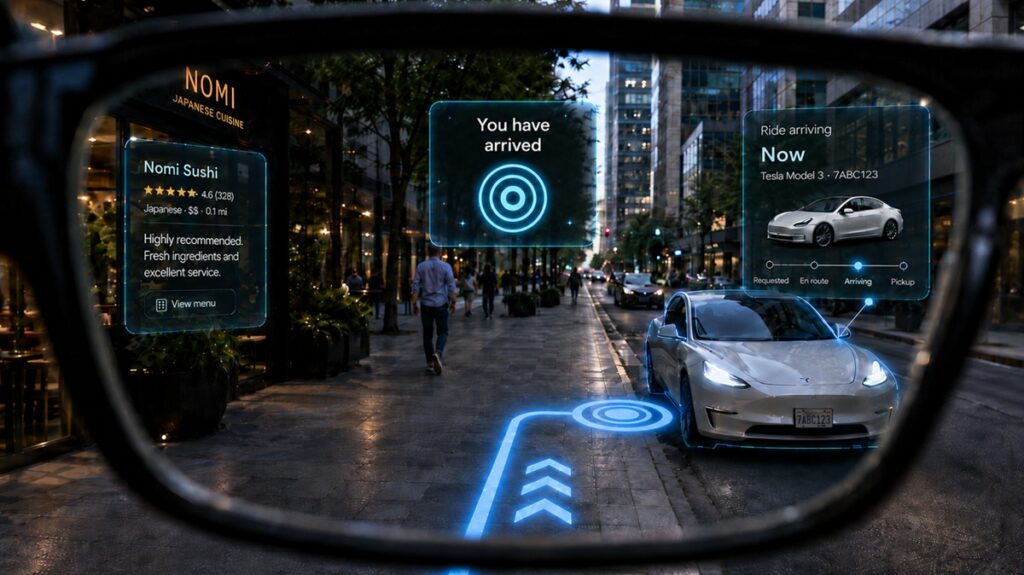
 The Open Metaverse Browser Initiative is getting behind standards for a metaverse browser. Source: Khronos Group Sneeze enables organizations to deliver spatial services without walled gardens or custom
apps, unlocking the future of spatial computing for AI, robotics, and humans.
Major technology companies are racing to ship AR glasses. Enterprises are deploying digital
twins in airports, hospitals, and factories to transform operations with real-time spatial data. AI
agents and autonomous systems are being designed for deployment in physical spaces, where
they must perceive, interact with, and contribute to a shared spatial environment in real time.
All of these applications need a common, open mechanism to connect to spatial experiences and services across devices, operators, and platforms, while retaining the same ownership and
control as their web infrastructure.
No standards-based spatial platform exists today. Without one, every proprietary platform risks
becoming a stack that can be discontinued at any time, stranding the organizations that built on
it. Sneeze solves this by giving the metaverse the same open foundation as the web: a
community-developed engine, based entirely around open standards, that any organization can build on reliably, with no single company able to discontinue or control it.
“Enabling users to seamlessly connect with spatial services, AI, and other users as they journey through the real world is a compelling definition of the metaverse. The web is the only platform that has the reach and openness to make this vision real,” said Neil Trevett, president of the Khronos Group and of the Metaverse Standards Forum. “Building the spatial web will need a constellation of standards from dozens of standards organizations. Enabling and fosteringcooperative standardization is the reason the Forum exists, and building Sneeze under the OMBI is a perfect vehicl to catalyze, prototype, and deliver metaverse interoperability.”
In an interview with GamesBeat, Trevett game a “big shout out to RP1 and Sean, as this is from RP1. They really are the catalyst for this.”
He noted that the standard recognizes the presence of AI in the world, as well as the world being brought in to multiple composed services around a person or a device that is navigating the real world.
“We want to be able to provide those services globally, and the only platform that has that kind of reach is the web, and so that comes down to the mission statement. We’re trying to bring composed spatial services into the web platform,” Trevett said.
Trevett noted that RP1 tried to do this at the beginning and went far down the road before they found that they could not do it with the existing web stack. And so they went about creating and embracing a new web stack. Trevett said RP1 hit some key architectural roadblocks because the current web stack is simply not designed to do 3D spatial service composition.
He added, “Of course, the web was designed around 2D documents, so what we’re trying to do is to bring the spatial web into being. You may call that the metaverse, or not. We’re not trying to reinvent the whole web stack but we will do just the necessary enhancements.”
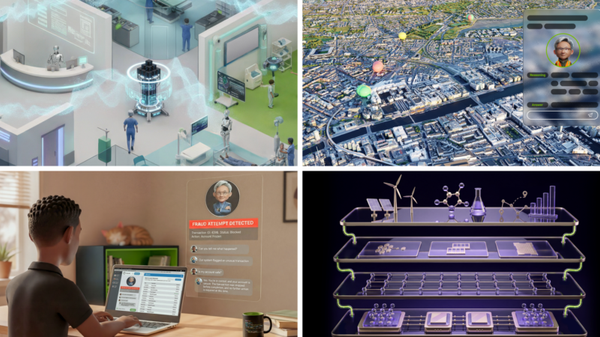
 How a metaverse browser will help you navigate in real time. Source: Khronos Group Sneeze enables self-hosted spatial content that works the way the web does today.
Organizations host their own spatial fabrics, the metaverse equivalent of websites, on their own
infrastructure. Sneeze handles multi-origin scene composition, rendering, networking, and
security natively across mobile, desktop, VR, and AR devices without proprietary dependencies.
The engine can discover and load spatial content based on physical proximity. As someone
moves through an airport, hospital, or factory, relevant content appears automatically without
having to download multiple applications for each location.
Sneeze also makes shared immersive spaces seamless. Services from multiple organizations
contribute to a single continuous scene through the Scene Object Model (SOM) while
maintaining strict security boundaries through per-service WASM sandboxing.
Each operator writes to its own branch of the scene graph, ensuring that no service can unexpectedly access another’s data or inject content into another’s space. Participants across AR glasses, VR headsets, phones, and desktops share the same spatial experience simultaneously with built-in presence, all without downloads or installations. To dive deeper into the OMBI architecture, go to omb.wiki.
In one use case, Trevett showed a user going through the real world, getting access to multiple services that are brought into their device at the same time. He said spatial 3D devices are not working on a 2D plane.
“It suddenly makes sense to have multiple services concurrently coming into your field of view, because you have a 3D webpage and it becomes confusing. You can have things that are spatially tagged to the pixel level in the real world, and actually navigate through the scene,” Trevett said.
Trevett said the important thing is these different services are coming from completely different providers, from different origin points, but have been composed into a single scene that surrounds the user, and that’s the thing that’s not possible in today’s website.”
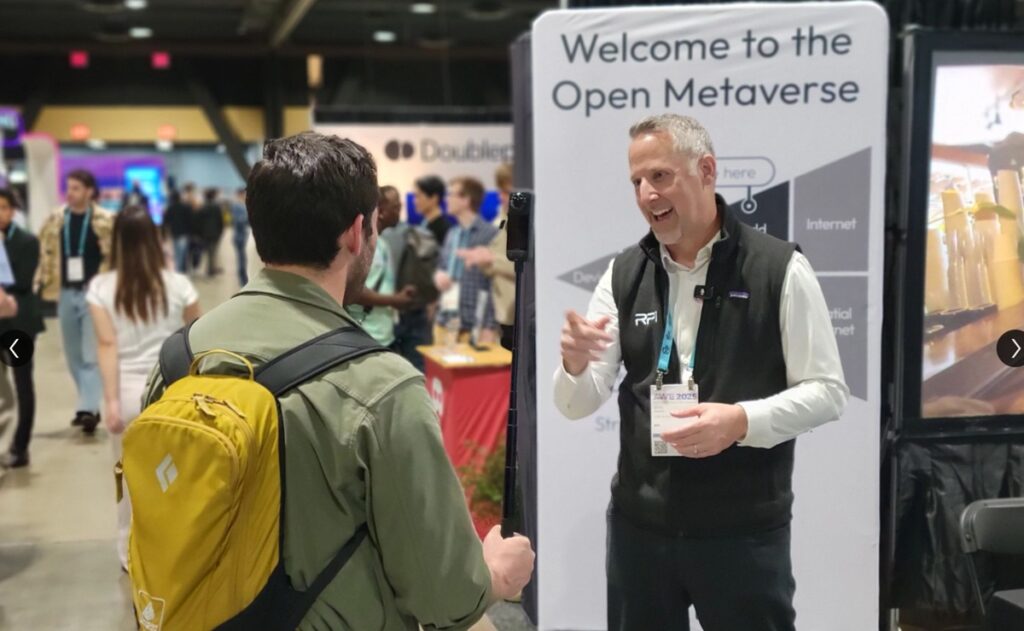 Sean Mann, CEO of RP1, at Augmented World Expo 2025. It’s worth noting I’ve talked to Mann multiple times over the years and wrote about RP1’s effort to build a prototype metaverse browser using the web.
The company announced a while ago it was building a prototype metaverse browser using WebXR.
“The goal was to really show how these technologies are needed and what it looks like as a prototype,” Mann said. “Just talking about it’s really difficult. You need to be able to actually use the technology to understand what you’re actually trying to solve for, and obviously we introduced our scaling technology and the ability to bring this all together.”
Mann said the company ran into big challenges with WebXR.
“When you think about building a spatial fabric, which is the evolution of a website, [you have to consider] how do you anchor multiple services in the same scene, and we realized that the technical details and iFrames were not designed for that process.”
He also said there wasn’t a built-in DPS system to make it seamless, where a user wearing AR glasses or a mobile phone or desktop knows exactly where they’re standing to present you that content.
“If you think about current web browsers, you have to actually go there, you type in a URL and you actually pick where you want to go,” Mann said. “But when you’re in the real world, it’s all around you. How does a new type of browser enable you to see those things in real time without having to install something every step of the way? And so we realized that we had to build out something that was native, that was outside of WebXR. Once we started building this, we realized that this could not be owned by any one company, and we reached out to Neil and the Metaverse Standard Form.
RP1 told the forum that this has to be built within a an organization that can shepherd it without one company controlling it, and make it open source.
“And so we’re now building out the Sneeze engine,” Mann said.
Trevett said enterprises are really telling the forum that they need to host their own spatial content on their own servers, just like they do with the current web.
“From the human user point of view, there’s of course no way that you’re going to be walking down the street and coming up with new services every few places,” Trevett said. “You don’t stop and install an app. So these services have got to be geo-located and come seamlessly in and out of the device. The multi-origin scene composition and service composition, we’ve already talked about. The web is really the only platform that’s going to be able to do this at sufficient scale and to scale up to encompass the entire world and to encompass multiple users in the same space for applications like Virtual Presence and Co Presence.”
“As I’ve come up the learning curve on the good work that RP1 has been doing, it comes down to four good ideas around which everything orbits, and going from the bottom up, there’s the evolution of a web page.”
Trevett said, “If we’re serving spatial services, they have to come from the server side, and [they use a ] spatial fabric, which is basically a set of assets and spatial services that can be geolocated.”
The second good idea is about how you connect those spatial services into devices. The interesting idea here is that it’s much more broadly applicable than just this metaverse application.
“It’s a really cool way to connect services and client devices, and we’ll go into that once you’ve got your browser connected to your spatial fabric. Then what you do, the core operation, is you compose the services and assets and applications into a shared scene graph. It’s a scene graph, but it’s being built cooperatively from multiple services running concurrently — each connected to their own service. And then all of that comes together. The implementation is the metaverse browser engine.”
Trevett said the forum is not re-implementing the entire stack. It’s just implementing an additional engine that can sit alongside the current web engines.
“And we’re calling that Sneeze, because it sits alongside alongside Blink, which is the web engine in the Chrome browser, and the metaverse browser engine. This new engine has multiple bits and pieces,” Trevett said.
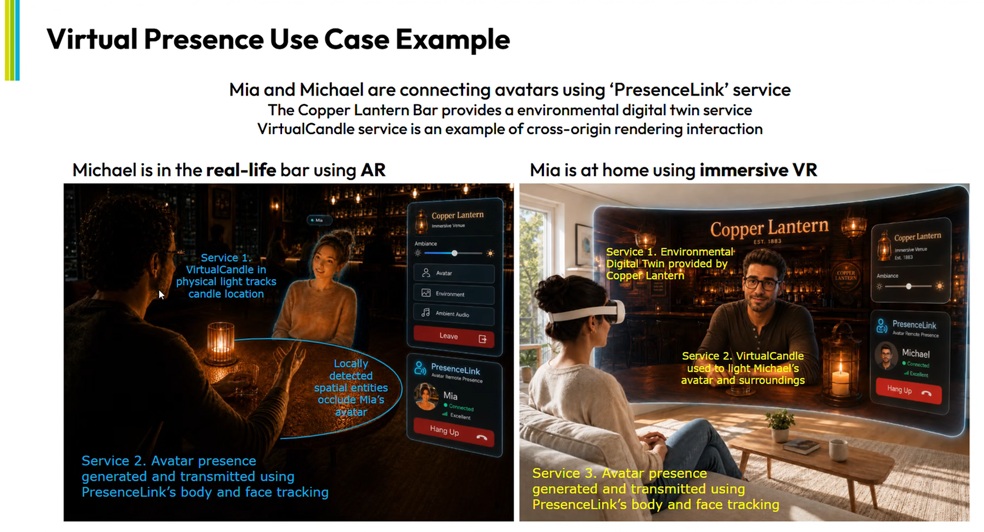 RP1 figured out how to implement a metaverse browser. Source: Khronos Group One of the use cases that the parties have designed is “virtual presence.” You could have someone, dubbed Michael, who is sitting in a real bar. He is talking to Mia, who is connected virtually and is sitting at home. Because there’s a digital twin service, Mia can see what the virtual environment, or the digital twin of the bar, looks like. You could light a virtual candle and you can see its location in the bar.
In this case, the spatial fabric of the scene is the equivalent of a web page. It’s a map with coordinates and the map is geolocated, or pinned to a real location on the planet. There’s a list of services available. The tech mixes AR and virtual reality (VR). Michael could be using AR, and Mia may be using VR.
“The assumption here is that the avatar service is using face and body tracking to animate the remote avatar, so that they’re both looking at an avatar in their device. The important thing, though, is that there will be hundreds of services for doing avatar virtual presence of different shapes and sizes, different fidelity, costs, bandwidth requirements, whatever, and they will all compete on the quality of their hand, face, and body tracking,” Trevett said.
He added, “The important thing is not how that works. The important thing we’re trying to enable here is to whoever wants to create a service that does that kind of thing can deploy that service on the open web. If we can achieve that enabler, then you will find lots of healthy competition on different ways of doing virtual presence and co-presence using avatars and live video streams. Whatever you want to do, that is healthy competition of an ecosystem of multiple services enabled by bringing these fundamental capabilities to the web.”
Mann said that others have worked on virtual avatars and the Holy Grail in the past was to bring it from Roblox into Fortnite and all these different experiences. If you take it outside of gaming, the metaverse itself is the evolution of the world wide web, and you need this open standard where I can create an avatar from any company that provides that service
“I can instantly ingest or inject into these scenes without worrying about which platform it exists on, and so by de-standardizing it now, we can create a Dean Takahashi avatar, and you can go visit someone at a conference room,” Mann said. “You can visit me, and we can have a discussion in our home. You can go to the museum and walk around with your niece that might be walking around, and you don’t have to worry about, is your avatar compatible with that scene in that space? You have to standardize this, so the world can build towards one ecosystem versus the fragmentation that exists today.”
Trevett said the forum wants to enable multiple services like this to bloom from a variety of different vendors, so the spatial fabric is just a list of services in location appended to a fabric with coordinates from your service.
“You can have non-pinned services as well. In the example we just went through, the digital twin, the scene, the ambience, ambience, and lighting in the in the scene would be a pinned service. The candle would be a pin service, but there were things like your tab that doesn’t need to be pinned,” Mann said.
The services available can come from different vendors and they don’t have to coordinate. If you’re in the vicinity of where the service can be useful, you can take advantage of it and start using it. Of course, this means you’ll need a good continuous web connection. You might have to engage offline if your connection is bad, and then deal with recovery later on once your connection is restored.
Trevett added, “If I want to go to the Met Museum, I don’t need to download the entire map of the Met Museum. I just need to be able to see what’s around me, and that distance can be altered based on my internet connection, and so as I move around, that data is being pulled, including as people jump into my scene. If you join me, you’ll instantly share in that experience, and that’s all being pulled in real time throughout that process, and that’s the job of the browser to make that seamless and remove the frame.”
You will likely rely on your AI agent controlling your preferences, so you only get the services that you want to, and eventually you will select, or your AI agent will select the services you want to be enabled on your device.
The service installs and starts connecting to the server. It does that through a new protocol, Rmap, which is a protocol that sits on the server. When it connects to a client device, it downloads the code that it needs to communicate with the client application sitting on the client. That means that the service can choose whatever communication network protocols to use and the data it wants to send, entirely under the control of the service sitting on the server.
“That is the key idea,” Trevett said. “Both ends of the network connection are being written by the service provider. That gives a pretty amazing set of advantages, and I say that this is an idea I think that’s going to scale way beyond just the spatial services use case.”
Mann said imagine if you wanted to play a game of chess. Typically, you would install an app and so would you opponent. You would create an account and then start playing that game in a closed app-driven experience.
“What this enables is that anyone can build that chess game, host it anywhere in the world, and they can seamlessly connect to that service and instantly start playing,” Mann said. “And the browser makes it unified, where we no longer have to install that specific service or any service. All services will stream, and our map becomes the simplistic technology that enables the service provider, you and whoever built the game of chess. You don’t have to worry how you programmed it, what language it’s programmed. You need something that protects your app, allows it for to be streamable, and allow millions of people to connect to it seamlessly, no matter where they’re at in the world, and our map makes this extremely easy, where you don’t have to program into it. It’s standardized and enables us to now grab any service, anchor it on any spatial fabric, and instantly start playing it.”
It all happens in real time. You don’t have to install anything other than a metaverse browser or incorporate it into web browsers. You can constantly connect to things as you move around, no matter what that service is, where it’s built, and who owns it and manages it, Mann said.
“It’s a good idea. It’s a really, really awesome idea. It also containerizes the services, so when we’re talking about multi-origin, which is the most important thing, as a metaverse browser allows you to browse the real world,” Trevett said. “We may have a chess game that’s sitting on a table between the two of us, but you may walk up to the bar and talk to an AI service, or there may be another service that provides additional things. This allows the services to coexist, but be secured against each other, right? So, it’s impossible to inspect the code of the service. Our map just allows you to connect to it, and so now you can have multi-origin services existing all around you, and you can pick and choose the things that you want to interact with or not interact with, and it makes it really seamless for the experience.”
RP1 has put the Sneeze engine into open source, and so it can be implementing by anyone. It started working with the Metaverse Standards Forum so that the organization could create a standard for everyone to cooperate together on.
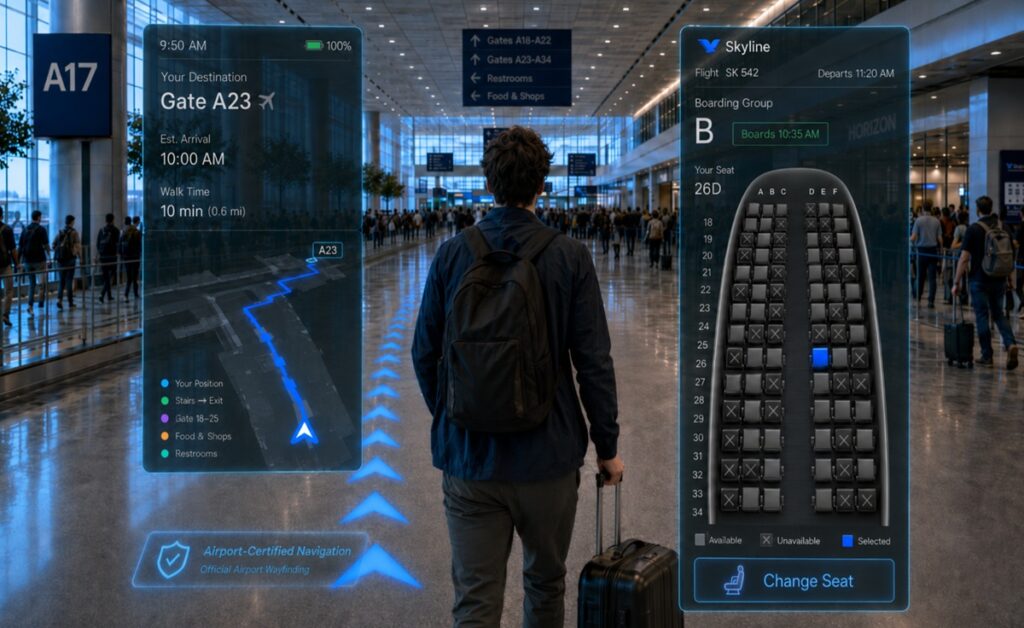 OMBI helps you navigate in real time. Source: Khronos Group RP1 is the lead architect and maintainer of Sneeze, having developed the engine through OMBI in coordination with the Metaverse Standards Forum. RP1 is now building the world’s first native metaverse browser powered by Sneeze and will share more details at AWE 2026 and in the weeks following.
“We built the first metaverse browser as a working prototype on the current web stack and hit its limits firsthand,” said Sean Mann, Co-Founder and CEO of RP1 and board member of the
Metaverse Standards Forum. “Web browsers were not designed for proximity-based content, for dozens of independent operators compositing in one scene, or for the spatial infrastructure that AR glasses and AI will demand. Developing Sneeze through OMBI and the Forum means it belongs to the entire industry from day one. Sneeze is to spatial computing what Blink is to the modern web, and the first browser built on it will prove the standard holds up in a real product.”
existing internet standards (HTTPS, TCP/IP, DNS, etc.), the Khronos Group (ANARI, OpenXR,
SPIR-V, glTF), the W3C (WebAssembly, Decentralized Identifiers), and many more.
What is new is the spatial composition layer: the SOM, the evolving infrastructure for hosting and accessing real-time geolocated services, and the Sneeze engine itself, which makes multi-origin spatial scenes secure and performant.
Architecture and API documentation is available at omb.wiki/sneeze. Source code is live on the
Metaverse Standards Forum GitHub. Universities, enterprises, hardware manufacturers, and
individual developers are already contributing.
 I noted that the context for this is that current web is delivered through platforms. And those platforms have a built-in conflict of interest. They want to continue to get 30% fees out of developers who make apps for the platform’s app stores. The web bypasses that.
But those platforms are not motivated to allow people to escape into the open web, and the platforms control the web browsers. Safari in particular isn’t supporting and upgrading new web experiences that could enable an open web. How do they achieve this kind of change if the platforms aren’t motivated to make changes?
“It’s a great question, and of course, I think we’ve talked many times. There’s a rule of the universe. There’s always this dynamic tension between companies that want to make their business model out of proprietary firewalls and companies that want to make their business model out of completely open platforms and compete on a completely different axis.”
Trevett added, “I think it will continue. The fact that we’re going into the spatial age isn’t going to change that fundamental dynamic. The role of the standards community and the part of the industry that believes in openness and the multiplier effect that that can provide the role of the science community is to enable those companies to take that approach.”
And Trevett said, “We’re not saying that the other approaches are bad, but I think of recent history and XR devices haven’t taken off. You can point to the fact that maybe because the content ecosystems around them are still in the in the AOL phase, and I think enough developers and enough enterprises that have been built well are wary of building their content strategies around proprietary systems. Because there’s recent history of multiple platforms suddenly evaporating, and people being hurt by that.”
I interpret that as meaning that the walled gardens (like AOL in the past) are still in place.
Trevett said those walled gardens have been around forever, but there are only a few companies that can afford to do everything from top to bottom in a vertically integrated stack. And he said the ones that can do it, they can build a good business often, but he added, “The multiplier effect of having an open platform can enable a much richer ecosystem of participants, and in the end I think as we enable users to interact with the world and embodied AI, it’s just not going to take off unless we can break out of the world in our AOL phase.
Sean Mann, cofounder of RP1, amplified that thought.
“There’s historical relevance, and if you think about it, what forced the world to move from AOL to an open ecosystem, and the demand for enterprises, airports, hospitals etc. If you really think about owning and running your own infrastructure, it’s a non-negotiable for the world. And I think once they realize that the standard started being created, and that’s why we have the World Wide Web today.”
Mann added, “And I think we’re going through that same process, and I think it’s not that AOL was bad for the industry and taught the world on how to use the internet. But at some point, the needs of standards progressed, and I think the same thing is happening in the sense that enterprises want to move over to AR infrastructure and run their operations, but they can’t do that without owning their infrastructure, owning their data, and not being locked into any platform.”
Mann thinks of the devices that will be prevalent in the future, like augmented reality (AR) glasses.
Mann added, “I think the device manufacturers — if you look at the Apples and the Googles, everyone’s racing to build commercially viable AR glasses. If they want to sell them at scale, at some point they’re going to have to meet the enterprises where they’re at and enable them to own their data in a way that that makes the experience successful, and I think that’s where these standards actually start to come from.”
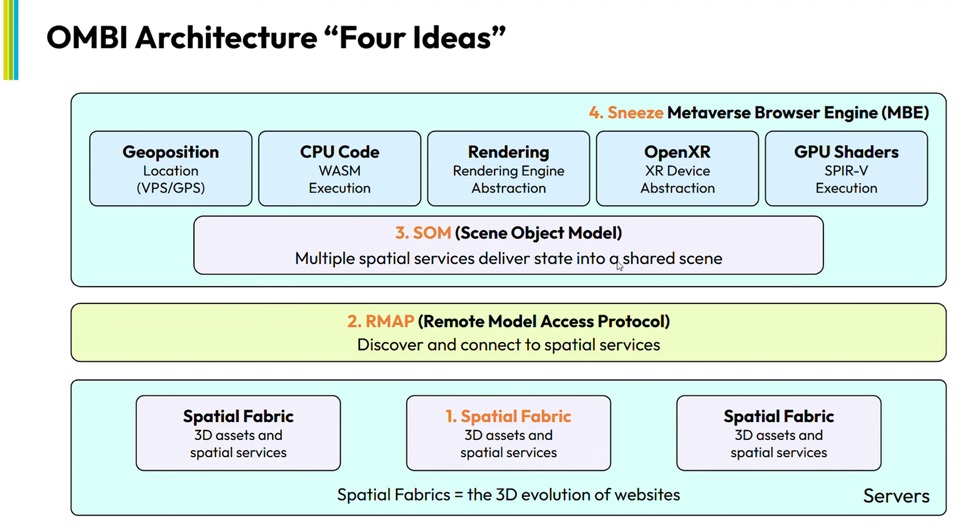 Four big ideas behind the metaverse browser. Source: Khronos Group Alongside Sneeze, the University of Rochester launched the Open Metaverse Academic
Alliance (OMAA), bringing universities and research institutions into the open standards work
underway through OMBI.
Member institutions conduct foundational research on the metaverse browser engine, contribute to the open-source Sneeze project, and prepare students and researchers for careers in spatial computing. The alliance also partners with enterprise organizations to facilitate research across industries, and encourages participation from academic institutions worldwide.
Mann noted that universities led the way to the web, and the forum is tapping the help of universities again for additional standards, the research, education and task of bringing enterprises together and joint research.
Barry Silverstein of the University of Rochester Center of Extended Reality has decided to create the Open Metaverse Academic Alliance, which is going to help unify universities worldwide around these new open source projects.
“The open web was built in universities, and the metaverse should be too. The Open Metaverse Academic Alliance was created to bring universities and enterprise partners together to advance the open standards behind Sneeze and the Open Metaverse Browser Initiative, and to train the engineers who will build on them,” said Silverstein, Director of the Center for eXtended Reality at the University of Rochester, in a statement. “We invite academic and industry partners worldwide to join us in ensuring spatial computing is shaped by open research and the next generation of talent, with interoperability as a core foundation.”
“The new standards are going to be created going forward, and so this is a really big deal, because they’re going to help bring a lot of universities together to not only educate themselves on Sneeze, what a spatial fabric is, our map and all these technologies, but actually bring it to the real world,” Mann said.
The school could work with enterprises to start incorporating this within their environments and really create the documentation, the standards needed to make this a global ecosystem, just like how the world wide web connects.
“A worldwide web connects everyone today, and you know it’s hard to understate, but we really do believe this is the web browser moment for the metaverse, and again, it allows everyone in the world to participate at literally every level,” Mann said. “Whether you want to be a tool maker, build rendering engines, build additional things for spatial fabrics and services. This really helps bring the world together in building an open metaverse, and I think it really starts not only with what’s happening at the metaverse standard form, but also at academia as well, which is why the OMAA is extremely important.
Trevett said this represents a chance to rehabilitate the “metaverse” word.
“In hindsight, the depiction of the metaverse being everyone stuck behind their VR glasses for 16 hours a day, disconnected from their friends and family was too dystopian, and I think society rightly rejected that. This is much more inclusive,” Trevett said. “It’s AR. It’s really helping people to engage in the real world of real people. So I think this is a much more positive and I think engaging vision of what the metaverse should be. So we’ll see.”
Mann said, “A lot of games will be played in the metaverse, but the metaverse is going to help unite people as close to reality as possible, where the world wide web connects us on web pages, and so the whole idea is, if I can’t join my family in the real world because I’m traveling, or I can’t be in a business meeting, how do you do that as close to reality as possible, while allowing everyone to participate at every level?”
Mann said, “The neat thing about the metaverse is that we’re going to be able to join people, and we’re gonna be able to see each other instantly, and be able to interact in a way that the web can’t provide today, and that’s what’s really, really exciting. And I think you know, staring at a six-inch screen as you walk around the real world will be quite comical in a couple of years from now, when you could just look around and be able to imagine it, integrate your environment, and make it super seamless. I think it’s going to be quite special when people can see that vision.”
To learn more or get involved, visit https://www.rochester.edu/university-research/initiatives/extended-reality-research-and-application-extrra/open-metaverse-academic-alliance-omaa/
“As much as we dream of it, the web is not going away, and I think over the next few years, as we can deliver these spatial services, I think people are going to learn how to implement them, use them, and love them,” Trevett said. “That’s the theory, but, of course, the current web is not going to go away, and there’s a number of ways that you could have the two coexisting.”
Trevett said Khronos Grou is a big supporter of this initiative and the technologies being invented here.
Mann said the neat thing about Sneeze is it standardizes how this all gets rendered at the end of the day, so that when you build a spatial fabric, you don’t have to worry about another browser using Sneeze that has a rendering engine that is not compatible. It’s the same thing as when you build a website. You need to make sure it works across all web browsers, the same must be true for these spatial environments across all, you know, companies and enterprises and experiences.
In Google’s Chrome, Sneeze will just sit next to the Blink engine, so it works with the Chrome stack. Mann said there are uses where WebXR is perfect, but it doesn’t let RP1 go to the next step of the vision on spatially composed surfaces.
“We love everyone, and they’re all going to coexist,” Mann said. “This is an incremental journey that we’re on. We don’t have to take out anything, this is all additive. But I think now the interesting thing is, as we’re talking before, the flexibility of the shared scene graph means you can take the output of a Blink engine, for example, and bring it into a true augmented reality environment in any way you want. It’s super powerful.”
Trevett said the tech represents a wonderful opportunity to make tangible the work that the forum is trying to do.
“An open source project is something that is tangible. People can help develop it, and they can use it as a testbed, both externally and internally. So, the open source project, which is the Sneeze Engine, sits alongside all the existing working groups that we have in the forum. You don’t have to be a forum member. You had to be a forum member to get to the working groups, but the open source project is going to be genuinely open to anyone, members or not.”
and platform freedom they have on the web today. Hardware and XR device manufacturers can ensure their devices reach every spatial service. Platform vendors can help shape the
standards their products will run on. Standards organizations can channel real-world implementation requirements and feedback into their work. Developers and researchers can
build a living testbed where specifications become working systems.
The engine is live, and the source code is open. Join the effort at metaverse-standards.org.
● Source code: Will Share Final Link before June 15
● The case for a metaverse browser: https://omb.wiki/standards
● Architecture documentation: https://omb.wiki/sneeze
● OMBI initiative: metaverse-standards.org/open-metaverse-browser-initative
● Open Standards for AR Glasses & Virtual Worlds — fireside chat on Sneeze with Sean
Mann (Co-Founder and CEO, RP1) and Neil Trevett (President, Metaverse Standards
Forum and Khronos Group) on June 16 at 4:30 p.m., Room 101A.
● OMBI Architecture & Roadmap — open roundtable discussion on June 17 at 1:40 p.m,
Room 103B, for anyone interested in getting involved.
Visit Khronos and the Metaverse Standards Forum at Booth #104, and visit RP1 at Booth #928.
protocols. For this industry to finally realize its potential and benefit everyone, it must follow the
playbook of the open web platform and resist the walled-garden XR ecosystems that proprietary platform builders have tried, in vain, to establish,” said Jan-Erik Vinje and Ali Hantal, co-presidents, Open AR Cloud.
Vinje and Hantal added, “AR exists within physical reality, which, at its very core, is a shared experience; dividing the same physical space between separate platforms that don’t work seamlessly together is meaningless. At a time when trust in big-tech platforms sits at a historic low, we believe businesses of every size, developers, creators, entrepreneurs, customers, and citizens alike are ready for the future of open spatial computing,”
interoperability. Open to all organizations of any size, including standards organizations, companies, and universities, the Forum is committed to promoting open standards, collaboration, and best practices to pave the way for an open, inclusive, and accessible metaverse. Metaverse Standards Forum members engage in building consensus on interoperability requirements, prototyping, plugfests, and open-source tool development. Learn more at metaverse-standards.org, and follow the Metaverse Standards Forum on Twitter @metaverse_forum.
“I’m happy that the forum can help bring these ideas, hopefully to the industry, as what we’ve been looking for, and Khronos Group has been working on these component pieces for 25 years, and it’s so awesome to see, and finally, an architecture coming together kind of brings all the pieces together in, in such an open and accessible way, and open source, I think, is going to be a good delivery mechanism to get it actually used out there.”
Mann said that in 2026, you will be able to download the first native metaverse browser using the open standard Sneeze engine, and this gives the ability for enterprises and people to actually use Sneeze and start getting accustomed to all the different technologies and standards over the next handful of months.
“Our goal is to meet with all the top tech companies to get them up to speed, like we are with you, and enable them to incorporate it into current web browsers and incorporate it into XR devices, and really help unify the industry, and that’s why the Open Metaverse Academic Alliance is super important,” Trevett said.
He added, “So we’re going to be not only sharing OMBI and the idea of a native metaverse browser at AWE, but in October at AES is really our goal to have a fully working browser that people can download and install and then start connecting to spatial fabrics and services in real time.”
Trevett said the group will continue to build momentum around all these new technologies, and so the next couple of months is going to be a “really fun ride.”
He said, “There hasn’t been one company or technologist that we’ve met that doesn’t agree that these are long overdue with a very, very fragmented industry, and I think it’s not a bad idea that’s fragmented, because we’ve learned a lot on all these experiences, what VR can do, what AR glasses can do in the real world, but we need standards to really bring everyone together and not feel like they can’t participate at any level, and I think that’s what’s going to be exciting about the messaging around AWE being a true launch for these new standards and new discussions.”
Mann said the presence of the support of the standards will help companies understand that Sneeze is not competing with the web stack. Rather, it is expanding the web stack into new areas and it’s additive. So far, the response has been good.
As for the support from the dominant browser platforms today, Trevett said he is hoping to get that.
“They haven’t formally decided anything, but in the discussions that we had in person at the IRISA working group — and that group does have all the normal suspects, so Meta, Apple, Google were all there. It was an interesting discussion, but they did validate that the core problem analysis was correct, and know the solution that we introduced to them just a few weeks ago is worthy of further investigation. I think that’s that’s an accurate way of saying it,” Trevett said.
Mann agreed that others see the missing pieces within the web, and they know that this effort is going in a direction solving hard problems.
“I think is super important to understand there are not other initiatives that are trying to tackle these challenges, and to know that we’re heading in the right direction is super important. I think they’re also happy to see that we’re not looking to separate the web in a different direction, but really adding to the existing web to make it seamless for people to get involved,” Mann said.
He added, “I believe once we have a working example, they’ll get heavily involved to see how they can actually bring this into current web browsers, but we don’t want to slow that down. That’s why we’re building a native metaverse browser, so that people can have a reference implementation of it and start using it.”
Mann said that 99.9% of the people in the world don’t know what iFrames and DOM and IMAP and all these different things are that enable the web to work.
Trevett said, “We’re describing pretty heavy tech, but at the end of the day, let’s remove that. Just think about the simplicity that you can build a digital twin of your house, and I can come join you from any device, and we just need to be connected to the browser, and we can instantly talk, we can instantly interact.”
Trevett said the idea is to have an open app ecosystem where you can grab any service and instantly connect to it, make sure it’s secure, and make it easy to get started with using it. Right now, most people access apps on a smartphone, like a snow globe, and they are limited in how they can interact with it.
“The browser removes this. It just allows you to connect a service, whether it’s Yelp, whether it’s a navigational software, whether it’s a chess game, whether it’s something that’s helping with a printing press or warehouse software. These services will just be able to be dropped and anchored on any spatial fabric, and you just connect to them. There’s no more formalized app store,” Trevett said.
Instead, there will be open marketplaces where you can go find these services on things that you’re looking for, or they can be designed in house that you can manage, whether it’s proprietary type services that you want to integrate into your own spatial fabric. This just removes the friction, and it makes it easy for people not to be taxed from any one company, Trevett said.
“It enables everyone to actually be a part of it. No different plugins for websites. You can still charge for them, but you don’t necessarily formally have to go through any ecosystem to be able to get those plugins, and so I think the same must be true with services for the for the open metaverse.”
The post Metaverse Standards Forum introduces Sneeze, the 1st open metaverse browser engine | exclusive interview appeared first on GamesBeat.
Available immediately as open source under the Apache 2.0 license on the Forum’s GitHub repository, Sneeze gives developers, enterprises, hardware manufacturers, and researchers the foundational technology to build the open metaverse.
At the core of every web browser today sits an engine: Blink powers Chrome, Edge, and Brave; WebKit powers Safari; Gecko powers Firefox. Those engines were built for 2D documents.
Sneeze is a new engine, purpose-built for spatial computing. Organizations can embed it into
existing browsers or use it to power standalone native metaverse browsers.
Sneeze delivers capabilities the current web stack was never designed for: proximity-based service discovery, secure multi-origin 3D scene composition through the Scene Object Model (SOM), per-service WASM sandboxing for security isolation, and real-time co-presence for AI agents, AR glasses, and enterprise environments at scale.
Market forces are converging, driving the need to make the web a truly capable spatial platform.
What makes Sneeze a fit for the open metaverse
The Open Metaverse Browser Initiative is getting behind standards for a metaverse browser. Source: Khronos Group Sneeze enables organizations to deliver spatial services without walled gardens or customapps, unlocking the future of spatial computing for AI, robotics, and humans.
Major technology companies are racing to ship AR glasses. Enterprises are deploying digital
twins in airports, hospitals, and factories to transform operations with real-time spatial data. AI
agents and autonomous systems are being designed for deployment in physical spaces, where
they must perceive, interact with, and contribute to a shared spatial environment in real time.
All of these applications need a common, open mechanism to connect to spatial experiences and services across devices, operators, and platforms, while retaining the same ownership and
control as their web infrastructure.
No standards-based spatial platform exists today. Without one, every proprietary platform risks
becoming a stack that can be discontinued at any time, stranding the organizations that built on
it. Sneeze solves this by giving the metaverse the same open foundation as the web: a
community-developed engine, based entirely around open standards, that any organization can build on reliably, with no single company able to discontinue or control it.
“Enabling users to seamlessly connect with spatial services, AI, and other users as they journey through the real world is a compelling definition of the metaverse. The web is the only platform that has the reach and openness to make this vision real,” said Neil Trevett, president of the Khronos Group and of the Metaverse Standards Forum. “Building the spatial web will need a constellation of standards from dozens of standards organizations. Enabling and fosteringcooperative standardization is the reason the Forum exists, and building Sneeze under the OMBI is a perfect vehicl to catalyze, prototype, and deliver metaverse interoperability.”
In an interview with GamesBeat, Trevett game a “big shout out to RP1 and Sean, as this is from RP1. They really are the catalyst for this.”
He noted that the standard recognizes the presence of AI in the world, as well as the world being brought in to multiple composed services around a person or a device that is navigating the real world.
“We want to be able to provide those services globally, and the only platform that has that kind of reach is the web, and so that comes down to the mission statement. We’re trying to bring composed spatial services into the web platform,” Trevett said.
Trevett noted that RP1 tried to do this at the beginning and went far down the road before they found that they could not do it with the existing web stack. And so they went about creating and embracing a new web stack. Trevett said RP1 hit some key architectural roadblocks because the current web stack is simply not designed to do 3D spatial service composition.
He added, “Of course, the web was designed around 2D documents, so what we’re trying to do is to bring the spatial web into being. You may call that the metaverse, or not. We’re not trying to reinvent the whole web stack but we will do just the necessary enhancements.”
How It Works
How a metaverse browser will help you navigate in real time. Source: Khronos Group Sneeze enables self-hosted spatial content that works the way the web does today.Organizations host their own spatial fabrics, the metaverse equivalent of websites, on their own
infrastructure. Sneeze handles multi-origin scene composition, rendering, networking, and
security natively across mobile, desktop, VR, and AR devices without proprietary dependencies.
The engine can discover and load spatial content based on physical proximity. As someone
moves through an airport, hospital, or factory, relevant content appears automatically without
having to download multiple applications for each location.
Sneeze also makes shared immersive spaces seamless. Services from multiple organizations
contribute to a single continuous scene through the Scene Object Model (SOM) while
maintaining strict security boundaries through per-service WASM sandboxing.
Each operator writes to its own branch of the scene graph, ensuring that no service can unexpectedly access another’s data or inject content into another’s space. Participants across AR glasses, VR headsets, phones, and desktops share the same spatial experience simultaneously with built-in presence, all without downloads or installations. To dive deeper into the OMBI architecture, go to omb.wiki.
In one use case, Trevett showed a user going through the real world, getting access to multiple services that are brought into their device at the same time. He said spatial 3D devices are not working on a 2D plane.
“It suddenly makes sense to have multiple services concurrently coming into your field of view, because you have a 3D webpage and it becomes confusing. You can have things that are spatially tagged to the pixel level in the real world, and actually navigate through the scene,” Trevett said.
Trevett said the important thing is these different services are coming from completely different providers, from different origin points, but have been composed into a single scene that surrounds the user, and that’s the thing that’s not possible in today’s website.”
Where RP1 comes into this
Sean Mann, CEO of RP1, at Augmented World Expo 2025. It’s worth noting I’ve talked to Mann multiple times over the years and wrote about RP1’s effort to build a prototype metaverse browser using the web. The company announced a while ago it was building a prototype metaverse browser using WebXR.
“The goal was to really show how these technologies are needed and what it looks like as a prototype,” Mann said. “Just talking about it’s really difficult. You need to be able to actually use the technology to understand what you’re actually trying to solve for, and obviously we introduced our scaling technology and the ability to bring this all together.”
Mann said the company ran into big challenges with WebXR.
“When you think about building a spatial fabric, which is the evolution of a website, [you have to consider] how do you anchor multiple services in the same scene, and we realized that the technical details and iFrames were not designed for that process.”
He also said there wasn’t a built-in DPS system to make it seamless, where a user wearing AR glasses or a mobile phone or desktop knows exactly where they’re standing to present you that content.
“If you think about current web browsers, you have to actually go there, you type in a URL and you actually pick where you want to go,” Mann said. “But when you’re in the real world, it’s all around you. How does a new type of browser enable you to see those things in real time without having to install something every step of the way? And so we realized that we had to build out something that was native, that was outside of WebXR. Once we started building this, we realized that this could not be owned by any one company, and we reached out to Neil and the Metaverse Standard Form.
RP1 told the forum that this has to be built within a an organization that can shepherd it without one company controlling it, and make it open source.
“And so we’re now building out the Sneeze engine,” Mann said.
Trevett said enterprises are really telling the forum that they need to host their own spatial content on their own servers, just like they do with the current web.
“From the human user point of view, there’s of course no way that you’re going to be walking down the street and coming up with new services every few places,” Trevett said. “You don’t stop and install an app. So these services have got to be geo-located and come seamlessly in and out of the device. The multi-origin scene composition and service composition, we’ve already talked about. The web is really the only platform that’s going to be able to do this at sufficient scale and to scale up to encompass the entire world and to encompass multiple users in the same space for applications like Virtual Presence and Co Presence.”
“As I’ve come up the learning curve on the good work that RP1 has been doing, it comes down to four good ideas around which everything orbits, and going from the bottom up, there’s the evolution of a web page.”
Trevett said, “If we’re serving spatial services, they have to come from the server side, and [they use a ] spatial fabric, which is basically a set of assets and spatial services that can be geolocated.”
The second good idea is about how you connect those spatial services into devices. The interesting idea here is that it’s much more broadly applicable than just this metaverse application.
“It’s a really cool way to connect services and client devices, and we’ll go into that once you’ve got your browser connected to your spatial fabric. Then what you do, the core operation, is you compose the services and assets and applications into a shared scene graph. It’s a scene graph, but it’s being built cooperatively from multiple services running concurrently — each connected to their own service. And then all of that comes together. The implementation is the metaverse browser engine.”
Trevett said the forum is not re-implementing the entire stack. It’s just implementing an additional engine that can sit alongside the current web engines.
“And we’re calling that Sneeze, because it sits alongside alongside Blink, which is the web engine in the Chrome browser, and the metaverse browser engine. This new engine has multiple bits and pieces,” Trevett said.
A virtual presence scene in a bar
RP1 figured out how to implement a metaverse browser. Source: Khronos Group One of the use cases that the parties have designed is “virtual presence.” You could have someone, dubbed Michael, who is sitting in a real bar. He is talking to Mia, who is connected virtually and is sitting at home. Because there’s a digital twin service, Mia can see what the virtual environment, or the digital twin of the bar, looks like. You could light a virtual candle and you can see its location in the bar. In this case, the spatial fabric of the scene is the equivalent of a web page. It’s a map with coordinates and the map is geolocated, or pinned to a real location on the planet. There’s a list of services available. The tech mixes AR and virtual reality (VR). Michael could be using AR, and Mia may be using VR.
“The assumption here is that the avatar service is using face and body tracking to animate the remote avatar, so that they’re both looking at an avatar in their device. The important thing, though, is that there will be hundreds of services for doing avatar virtual presence of different shapes and sizes, different fidelity, costs, bandwidth requirements, whatever, and they will all compete on the quality of their hand, face, and body tracking,” Trevett said.
He added, “The important thing is not how that works. The important thing we’re trying to enable here is to whoever wants to create a service that does that kind of thing can deploy that service on the open web. If we can achieve that enabler, then you will find lots of healthy competition on different ways of doing virtual presence and co-presence using avatars and live video streams. Whatever you want to do, that is healthy competition of an ecosystem of multiple services enabled by bringing these fundamental capabilities to the web.”
Mann said that others have worked on virtual avatars and the Holy Grail in the past was to bring it from Roblox into Fortnite and all these different experiences. If you take it outside of gaming, the metaverse itself is the evolution of the world wide web, and you need this open standard where I can create an avatar from any company that provides that service
“I can instantly ingest or inject into these scenes without worrying about which platform it exists on, and so by de-standardizing it now, we can create a Dean Takahashi avatar, and you can go visit someone at a conference room,” Mann said. “You can visit me, and we can have a discussion in our home. You can go to the museum and walk around with your niece that might be walking around, and you don’t have to worry about, is your avatar compatible with that scene in that space? You have to standardize this, so the world can build towards one ecosystem versus the fragmentation that exists today.”
Trevett said the forum wants to enable multiple services like this to bloom from a variety of different vendors, so the spatial fabric is just a list of services in location appended to a fabric with coordinates from your service.
“You can have non-pinned services as well. In the example we just went through, the digital twin, the scene, the ambience, ambience, and lighting in the in the scene would be a pinned service. The candle would be a pin service, but there were things like your tab that doesn’t need to be pinned,” Mann said.
The services available can come from different vendors and they don’t have to coordinate. If you’re in the vicinity of where the service can be useful, you can take advantage of it and start using it. Of course, this means you’ll need a good continuous web connection. You might have to engage offline if your connection is bad, and then deal with recovery later on once your connection is restored.
Trevett added, “If I want to go to the Met Museum, I don’t need to download the entire map of the Met Museum. I just need to be able to see what’s around me, and that distance can be altered based on my internet connection, and so as I move around, that data is being pulled, including as people jump into my scene. If you join me, you’ll instantly share in that experience, and that’s all being pulled in real time throughout that process, and that’s the job of the browser to make that seamless and remove the frame.”
You will likely rely on your AI agent controlling your preferences, so you only get the services that you want to, and eventually you will select, or your AI agent will select the services you want to be enabled on your device.
The service installs and starts connecting to the server. It does that through a new protocol, Rmap, which is a protocol that sits on the server. When it connects to a client device, it downloads the code that it needs to communicate with the client application sitting on the client. That means that the service can choose whatever communication network protocols to use and the data it wants to send, entirely under the control of the service sitting on the server.
“That is the key idea,” Trevett said. “Both ends of the network connection are being written by the service provider. That gives a pretty amazing set of advantages, and I say that this is an idea I think that’s going to scale way beyond just the spatial services use case.”
Mann said imagine if you wanted to play a game of chess. Typically, you would install an app and so would you opponent. You would create an account and then start playing that game in a closed app-driven experience.
“What this enables is that anyone can build that chess game, host it anywhere in the world, and they can seamlessly connect to that service and instantly start playing,” Mann said. “And the browser makes it unified, where we no longer have to install that specific service or any service. All services will stream, and our map becomes the simplistic technology that enables the service provider, you and whoever built the game of chess. You don’t have to worry how you programmed it, what language it’s programmed. You need something that protects your app, allows it for to be streamable, and allow millions of people to connect to it seamlessly, no matter where they’re at in the world, and our map makes this extremely easy, where you don’t have to program into it. It’s standardized and enables us to now grab any service, anchor it on any spatial fabric, and instantly start playing it.”
It all happens in real time. You don’t have to install anything other than a metaverse browser or incorporate it into web browsers. You can constantly connect to things as you move around, no matter what that service is, where it’s built, and who owns it and manages it, Mann said.
“It’s a good idea. It’s a really, really awesome idea. It also containerizes the services, so when we’re talking about multi-origin, which is the most important thing, as a metaverse browser allows you to browse the real world,” Trevett said. “We may have a chess game that’s sitting on a table between the two of us, but you may walk up to the bar and talk to an AI service, or there may be another service that provides additional things. This allows the services to coexist, but be secured against each other, right? So, it’s impossible to inspect the code of the service. Our map just allows you to connect to it, and so now you can have multi-origin services existing all around you, and you can pick and choose the things that you want to interact with or not interact with, and it makes it really seamless for the experience.”
RP1 has put the Sneeze engine into open source, and so it can be implementing by anyone. It started working with the Metaverse Standards Forum so that the organization could create a standard for everyone to cooperate together on.
The First Browser using Sneeze Is Coming
OMBI helps you navigate in real time. Source: Khronos Group RP1 is the lead architect and maintainer of Sneeze, having developed the engine through OMBI in coordination with the Metaverse Standards Forum. RP1 is now building the world’s first native metaverse browser powered by Sneeze and will share more details at AWE 2026 and in the weeks following.“We built the first metaverse browser as a working prototype on the current web stack and hit its limits firsthand,” said Sean Mann, Co-Founder and CEO of RP1 and board member of the
Metaverse Standards Forum. “Web browsers were not designed for proximity-based content, for dozens of independent operators compositing in one scene, or for the spatial infrastructure that AR glasses and AI will demand. Developing Sneeze through OMBI and the Forum means it belongs to the entire industry from day one. Sneeze is to spatial computing what Blink is to the modern web, and the first browser built on it will prove the standard holds up in a real product.”
Built on Proven Open Standards
Sneeze builds on established open standards from multiple standards organizations, includingexisting internet standards (HTTPS, TCP/IP, DNS, etc.), the Khronos Group (ANARI, OpenXR,
SPIR-V, glTF), the W3C (WebAssembly, Decentralized Identifiers), and many more.
What is new is the spatial composition layer: the SOM, the evolving infrastructure for hosting and accessing real-time geolocated services, and the Sneeze engine itself, which makes multi-origin spatial scenes secure and performant.
Architecture and API documentation is available at omb.wiki/sneeze. Source code is live on the
Metaverse Standards Forum GitHub. Universities, enterprises, hardware manufacturers, and
individual developers are already contributing.
Circumventing today’s walled gardens
I noted that the context for this is that current web is delivered through platforms. And those platforms have a built-in conflict of interest. They want to continue to get 30% fees out of developers who make apps for the platform’s app stores. The web bypasses that.But those platforms are not motivated to allow people to escape into the open web, and the platforms control the web browsers. Safari in particular isn’t supporting and upgrading new web experiences that could enable an open web. How do they achieve this kind of change if the platforms aren’t motivated to make changes?
“It’s a great question, and of course, I think we’ve talked many times. There’s a rule of the universe. There’s always this dynamic tension between companies that want to make their business model out of proprietary firewalls and companies that want to make their business model out of completely open platforms and compete on a completely different axis.”
Trevett added, “I think it will continue. The fact that we’re going into the spatial age isn’t going to change that fundamental dynamic. The role of the standards community and the part of the industry that believes in openness and the multiplier effect that that can provide the role of the science community is to enable those companies to take that approach.”
And Trevett said, “We’re not saying that the other approaches are bad, but I think of recent history and XR devices haven’t taken off. You can point to the fact that maybe because the content ecosystems around them are still in the in the AOL phase, and I think enough developers and enough enterprises that have been built well are wary of building their content strategies around proprietary systems. Because there’s recent history of multiple platforms suddenly evaporating, and people being hurt by that.”
I interpret that as meaning that the walled gardens (like AOL in the past) are still in place.
Trevett said those walled gardens have been around forever, but there are only a few companies that can afford to do everything from top to bottom in a vertically integrated stack. And he said the ones that can do it, they can build a good business often, but he added, “The multiplier effect of having an open platform can enable a much richer ecosystem of participants, and in the end I think as we enable users to interact with the world and embodied AI, it’s just not going to take off unless we can break out of the world in our AOL phase.
Sean Mann, cofounder of RP1, amplified that thought.
“There’s historical relevance, and if you think about it, what forced the world to move from AOL to an open ecosystem, and the demand for enterprises, airports, hospitals etc. If you really think about owning and running your own infrastructure, it’s a non-negotiable for the world. And I think once they realize that the standard started being created, and that’s why we have the World Wide Web today.”
Mann added, “And I think we’re going through that same process, and I think it’s not that AOL was bad for the industry and taught the world on how to use the internet. But at some point, the needs of standards progressed, and I think the same thing is happening in the sense that enterprises want to move over to AR infrastructure and run their operations, but they can’t do that without owning their infrastructure, owning their data, and not being locked into any platform.”
Mann thinks of the devices that will be prevalent in the future, like augmented reality (AR) glasses.
Mann added, “I think the device manufacturers — if you look at the Apples and the Googles, everyone’s racing to build commercially viable AR glasses. If they want to sell them at scale, at some point they’re going to have to meet the enterprises where they’re at and enable them to own their data in a way that that makes the experience successful, and I think that’s where these standards actually start to come from.”
Academia joins the effort: the Open Metaverse Academia Alliance
Four big ideas behind the metaverse browser. Source: Khronos Group Alongside Sneeze, the University of Rochester launched the Open Metaverse AcademicAlliance (OMAA), bringing universities and research institutions into the open standards work
underway through OMBI.
Member institutions conduct foundational research on the metaverse browser engine, contribute to the open-source Sneeze project, and prepare students and researchers for careers in spatial computing. The alliance also partners with enterprise organizations to facilitate research across industries, and encourages participation from academic institutions worldwide.
Mann noted that universities led the way to the web, and the forum is tapping the help of universities again for additional standards, the research, education and task of bringing enterprises together and joint research.
Barry Silverstein of the University of Rochester Center of Extended Reality has decided to create the Open Metaverse Academic Alliance, which is going to help unify universities worldwide around these new open source projects.
“The open web was built in universities, and the metaverse should be too. The Open Metaverse Academic Alliance was created to bring universities and enterprise partners together to advance the open standards behind Sneeze and the Open Metaverse Browser Initiative, and to train the engineers who will build on them,” said Silverstein, Director of the Center for eXtended Reality at the University of Rochester, in a statement. “We invite academic and industry partners worldwide to join us in ensuring spatial computing is shaped by open research and the next generation of talent, with interoperability as a core foundation.”
“The new standards are going to be created going forward, and so this is a really big deal, because they’re going to help bring a lot of universities together to not only educate themselves on Sneeze, what a spatial fabric is, our map and all these technologies, but actually bring it to the real world,” Mann said.
The school could work with enterprises to start incorporating this within their environments and really create the documentation, the standards needed to make this a global ecosystem, just like how the world wide web connects.
“A worldwide web connects everyone today, and you know it’s hard to understate, but we really do believe this is the web browser moment for the metaverse, and again, it allows everyone in the world to participate at literally every level,” Mann said. “Whether you want to be a tool maker, build rendering engines, build additional things for spatial fabrics and services. This really helps bring the world together in building an open metaverse, and I think it really starts not only with what’s happening at the metaverse standard form, but also at academia as well, which is why the OMAA is extremely important.
Trevett said this represents a chance to rehabilitate the “metaverse” word.
“In hindsight, the depiction of the metaverse being everyone stuck behind their VR glasses for 16 hours a day, disconnected from their friends and family was too dystopian, and I think society rightly rejected that. This is much more inclusive,” Trevett said. “It’s AR. It’s really helping people to engage in the real world of real people. So I think this is a much more positive and I think engaging vision of what the metaverse should be. So we’ll see.”
Mann said, “A lot of games will be played in the metaverse, but the metaverse is going to help unite people as close to reality as possible, where the world wide web connects us on web pages, and so the whole idea is, if I can’t join my family in the real world because I’m traveling, or I can’t be in a business meeting, how do you do that as close to reality as possible, while allowing everyone to participate at every level?”
Mann said, “The neat thing about the metaverse is that we’re going to be able to join people, and we’re gonna be able to see each other instantly, and be able to interact in a way that the web can’t provide today, and that’s what’s really, really exciting. And I think you know, staring at a six-inch screen as you walk around the real world will be quite comical in a couple of years from now, when you could just look around and be able to imagine it, integrate your environment, and make it super seamless. I think it’s going to be quite special when people can see that vision.”
To learn more or get involved, visit https://www.rochester.edu/university-research/initiatives/extended-reality-research-and-application-extrra/open-metaverse-academic-alliance-omaa/
Will the old web go away?
I asked if the old way of creating web pages will go away. Trevett said no. He said the world isn’t spatial, or rendered in 3D, yet. “As much as we dream of it, the web is not going away, and I think over the next few years, as we can deliver these spatial services, I think people are going to learn how to implement them, use them, and love them,” Trevett said. “That’s the theory, but, of course, the current web is not going to go away, and there’s a number of ways that you could have the two coexisting.”
Trevett said Khronos Grou is a big supporter of this initiative and the technologies being invented here.
Mann said the neat thing about Sneeze is it standardizes how this all gets rendered at the end of the day, so that when you build a spatial fabric, you don’t have to worry about another browser using Sneeze that has a rendering engine that is not compatible. It’s the same thing as when you build a website. You need to make sure it works across all web browsers, the same must be true for these spatial environments across all, you know, companies and enterprises and experiences.
In Google’s Chrome, Sneeze will just sit next to the Blink engine, so it works with the Chrome stack. Mann said there are uses where WebXR is perfect, but it doesn’t let RP1 go to the next step of the vision on spatially composed surfaces.
“We love everyone, and they’re all going to coexist,” Mann said. “This is an incremental journey that we’re on. We don’t have to take out anything, this is all additive. But I think now the interesting thing is, as we’re talking before, the flexibility of the shared scene graph means you can take the output of a Blink engine, for example, and bring it into a true augmented reality environment in any way you want. It’s super powerful.”
Trevett said the tech represents a wonderful opportunity to make tangible the work that the forum is trying to do.
“An open source project is something that is tangible. People can help develop it, and they can use it as a testbed, both externally and internally. So, the open source project, which is the Sneeze Engine, sits alongside all the existing working groups that we have in the forum. You don’t have to be a forum member. You had to be a forum member to get to the working groups, but the open source project is going to be genuinely open to anyone, members or not.”
Get Involved
Enterprises can deploy spatial services without giving up the data ownership, revenue control,and platform freedom they have on the web today. Hardware and XR device manufacturers can ensure their devices reach every spatial service. Platform vendors can help shape the
standards their products will run on. Standards organizations can channel real-world implementation requirements and feedback into their work. Developers and researchers can
build a living testbed where specifications become working systems.
The engine is live, and the source code is open. Join the effort at metaverse-standards.org.
● Source code: Will Share Final Link before June 15
● The case for a metaverse browser: https://omb.wiki/standards
● Architecture documentation: https://omb.wiki/sneeze
● OMBI initiative: metaverse-standards.org/open-metaverse-browser-initative
Meet the Team at AWE 2026
The OMBI team will be at AWE 2026 (June 15–18, Long Beach, CA), presenting two sessions:● Open Standards for AR Glasses & Virtual Worlds — fireside chat on Sneeze with Sean
Mann (Co-Founder and CEO, RP1) and Neil Trevett (President, Metaverse Standards
Forum and Khronos Group) on June 16 at 4:30 p.m., Room 101A.
● OMBI Architecture & Roadmap — open roundtable discussion on June 17 at 1:40 p.m,
Room 103B, for anyone interested in getting involved.
Visit Khronos and the Metaverse Standards Forum at Booth #104, and visit RP1 at Booth #928.
Support from Standards Development Organizations
“The Open AR Cloud Association warmly welcomes this ambitious and exciting initiative, and its pursuit of a long-held dream: an open spatial web browser built on open standards andprotocols. For this industry to finally realize its potential and benefit everyone, it must follow the
playbook of the open web platform and resist the walled-garden XR ecosystems that proprietary platform builders have tried, in vain, to establish,” said Jan-Erik Vinje and Ali Hantal, co-presidents, Open AR Cloud.
Vinje and Hantal added, “AR exists within physical reality, which, at its very core, is a shared experience; dividing the same physical space between separate platforms that don’t work seamlessly together is meaningless. At a time when trust in big-tech platforms sits at a historic low, we believe businesses of every size, developers, creators, entrepreneurs, customers, and citizens alike are ready for the future of open spatial computing,”
About the Metaverse Standards Forum
The Metaverse Standards Forum is a non-profit consortium dedicated to fostering metaverseinteroperability. Open to all organizations of any size, including standards organizations, companies, and universities, the Forum is committed to promoting open standards, collaboration, and best practices to pave the way for an open, inclusive, and accessible metaverse. Metaverse Standards Forum members engage in building consensus on interoperability requirements, prototyping, plugfests, and open-source tool development. Learn more at metaverse-standards.org, and follow the Metaverse Standards Forum on Twitter @metaverse_forum.
The next steps
Trevett said he gives a lot of credit to RP1 for being on the journey with the standards group and working through its good ideas.“I’m happy that the forum can help bring these ideas, hopefully to the industry, as what we’ve been looking for, and Khronos Group has been working on these component pieces for 25 years, and it’s so awesome to see, and finally, an architecture coming together kind of brings all the pieces together in, in such an open and accessible way, and open source, I think, is going to be a good delivery mechanism to get it actually used out there.”
Mann said that in 2026, you will be able to download the first native metaverse browser using the open standard Sneeze engine, and this gives the ability for enterprises and people to actually use Sneeze and start getting accustomed to all the different technologies and standards over the next handful of months.
“Our goal is to meet with all the top tech companies to get them up to speed, like we are with you, and enable them to incorporate it into current web browsers and incorporate it into XR devices, and really help unify the industry, and that’s why the Open Metaverse Academic Alliance is super important,” Trevett said.
He added, “So we’re going to be not only sharing OMBI and the idea of a native metaverse browser at AWE, but in October at AES is really our goal to have a fully working browser that people can download and install and then start connecting to spatial fabrics and services in real time.”
Trevett said the group will continue to build momentum around all these new technologies, and so the next couple of months is going to be a “really fun ride.”
He said, “There hasn’t been one company or technologist that we’ve met that doesn’t agree that these are long overdue with a very, very fragmented industry, and I think it’s not a bad idea that’s fragmented, because we’ve learned a lot on all these experiences, what VR can do, what AR glasses can do in the real world, but we need standards to really bring everyone together and not feel like they can’t participate at any level, and I think that’s what’s going to be exciting about the messaging around AWE being a true launch for these new standards and new discussions.”
Mann said the presence of the support of the standards will help companies understand that Sneeze is not competing with the web stack. Rather, it is expanding the web stack into new areas and it’s additive. So far, the response has been good.
As for the support from the dominant browser platforms today, Trevett said he is hoping to get that.
“They haven’t formally decided anything, but in the discussions that we had in person at the IRISA working group — and that group does have all the normal suspects, so Meta, Apple, Google were all there. It was an interesting discussion, but they did validate that the core problem analysis was correct, and know the solution that we introduced to them just a few weeks ago is worthy of further investigation. I think that’s that’s an accurate way of saying it,” Trevett said.
Mann agreed that others see the missing pieces within the web, and they know that this effort is going in a direction solving hard problems.
“I think is super important to understand there are not other initiatives that are trying to tackle these challenges, and to know that we’re heading in the right direction is super important. I think they’re also happy to see that we’re not looking to separate the web in a different direction, but really adding to the existing web to make it seamless for people to get involved,” Mann said.
He added, “I believe once we have a working example, they’ll get heavily involved to see how they can actually bring this into current web browsers, but we don’t want to slow that down. That’s why we’re building a native metaverse browser, so that people can have a reference implementation of it and start using it.”
Mann said that 99.9% of the people in the world don’t know what iFrames and DOM and IMAP and all these different things are that enable the web to work.
Trevett said, “We’re describing pretty heavy tech, but at the end of the day, let’s remove that. Just think about the simplicity that you can build a digital twin of your house, and I can come join you from any device, and we just need to be connected to the browser, and we can instantly talk, we can instantly interact.”
Trevett said the idea is to have an open app ecosystem where you can grab any service and instantly connect to it, make sure it’s secure, and make it easy to get started with using it. Right now, most people access apps on a smartphone, like a snow globe, and they are limited in how they can interact with it.
“The browser removes this. It just allows you to connect a service, whether it’s Yelp, whether it’s a navigational software, whether it’s a chess game, whether it’s something that’s helping with a printing press or warehouse software. These services will just be able to be dropped and anchored on any spatial fabric, and you just connect to them. There’s no more formalized app store,” Trevett said.
Instead, there will be open marketplaces where you can go find these services on things that you’re looking for, or they can be designed in house that you can manage, whether it’s proprietary type services that you want to integrate into your own spatial fabric. This just removes the friction, and it makes it easy for people not to be taxed from any one company, Trevett said.
“It enables everyone to actually be a part of it. No different plugins for websites. You can still charge for them, but you don’t necessarily formally have to go through any ecosystem to be able to get those plugins, and so I think the same must be true with services for the for the open metaverse.”
The post Metaverse Standards Forum introduces Sneeze, the 1st open metaverse browser engine | exclusive interview appeared first on GamesBeat.

Jat AI
Stay informed with the latest in artificial intelligence. Jat AI News Portal is your go-to source for AI trends, breakthroughs, and industry analysis. Connect with the community of technologists and business professionals shaping the future.