





















I wanted to adore the Epomaker GX1 headset, but its tinny sound and middling software put a stop to our audio love affair
The Epomaker GX1 is the first time the brand has tried its hand at making a headset, and I think it needed more on the design chopping block. I went into testing the GX1 hoping it'd end up on our best gaming headsets list, primarily as I was a fan of its stylish looks (at least where the white version provided for this review is concerned) and for the fact it provides an open-back form factor at a cheap $49.99 / £45.99. Something that's pretty much unheard of with other brands, Epomaker was off to a great start. But after a few weeks of the brand's first-ever cans by my side, what should remain unheard is their tinny sound. Combined with awkward-to-use software that refused to boot up at times and the muddy microphone, this is not the dream cheap open-back pair I've been hoping for. Key specs Price $49.99 / £45.99 Acoustic design Over-ear, open-black Connection Triple-mode (2.4GHz Wireless / Bluetooth / Wired via Type-C to 3.5mm or USB) Drivers 50mm dynamic drivers Frequency response 20Hz – 20kHz Microphone Built-in Mic & Detachable External Boom Mic (with ENC) ANC No Controls Volume dial, Power button, mic mute button, RGB button, Bluetooth/2.4 GHz switch button Battery 30 hours with RGB on; 70 hours with RGB off Weight 320g Compatibility PC, PS5, Nintendo Switch 2, MobileDesign (Image credit: Future/Rosalie Newcombe) I'm a big fan of the Epomaker GX1's aesthetic - but it's mainly thanks to the white model I was provided with for this review. Rather than just being pale from every inch, Epomaker chose to coat the metal yokes in this charming, shiny shade of baby blue that gives it a Y2K appeal. I'm not sure if this was deliberate or not, but as a millennial I'm very much a fan of its look, especially as the color combo reminds me of the early 00s. So often tech back then was either transparent plastic or draped in shimmery metallic colors, and the white and shiny blue combo looks like a headset that Space Channel 5's Ulala would have dawned in the iconic Dreamcast game of the era. It's not just the color palette that makes it stand out, but the decision to hide the RGB lighting behind the open-back grills rather than around them. Once you press that power button, a rim of light pastel rainbow lighting illuminates through the dotted ventilation on the exterior of the cups, alongside a faint Epomaker logo, and I can't get enough.Features (Image credit: Future/Rosalie Newcombe) The defining feature of the Epomaker GX1 is undoubtedly its open-back form factor, and there's no getting around that. Is it the first open-back headset to exist? Far from it, but often they come in pricey packages, so getting the GX1's features for $49.99 / £45.99 is a pretty sweet situation, especially when you factor in the rest of the features Epomaker has piled into their pair. You've also got 50mm-sized dynamic audio drivers with a 20Hz – 20kHz frequency response and Tri-mode connectivity (Wired, Bluetooth and 2.4GHz) at your disposal. The cans also include one of the handiest wireless receivers s I've ever come across after years of testing the best PC headsets for gaming, which can transform into either a USB-C or USB-A dongle. No more worrying about your desktop's port situation, which is great for me as I have only one USB-C port to use on a daily basis. Besides that, the GX1 uses virtual 7.1 surround sound, a detachable ENC noise-canceling microphone, an impressive 70-hour battery (when the RGB lighting is turned off), and support for the brand's XearOne Audio Center software.Performance (Image credit: Future/Rosalie Newcombe) When I think "open back" in the context of headsets, natural-sounding and high-quality audio instantly comes to mind, but that was not what I entirely found while testing the GX1. While its form factor lent itself to dialogue and sound design, the sound produced by Epomaker's first pair of cups was a bit too tinny for my liking. For dialogue, things were fine, even better than fine. Earlier this week, as the end of my testing time drew near, Marvel's Wolverine launched on the PS5, and the muttering between Logan and Mystique sounded incredibly immersive. Each line of dialogue was clear and consistent, and with the 7.1 surround sound in tow, it was almost as if the iconic X-Men were in the room with me. Hey Logan, please stay clear of my valuable collectibles. Yet whenever the music kicked in, and I was meant to feel this onslaught of adrenaline, the audio just fell flat. Open-back cans are known for not having the same amount of bass prowess as their closed-back counterparts, which I of course knew before dropping the bright white peripheral on my head, but I was still left disappointed. What helped was the existence of the XearOne software I mentioned earlier. It's available to download straight from the Epomaker website, and provides a small batch of EQ and audio settings to help - so long as you're playing on PC. Popping on its "Dynamic Bass" setting helped make the tunes emitting from the hea
 The Epomaker GX1 is the first time the brand has tried its hand at making a headset, and I think it needed more on the design chopping block.
I went into testing the GX1 hoping it'd end up on our best gaming headsets list, primarily as I was a fan of its stylish looks (at least where the white version provided for this review is concerned) and for the fact it provides an open-back form factor at a cheap $49.99 / £45.99. Something that's pretty much unheard of with other brands, Epomaker was off to a great start.
But after a few weeks of the brand's first-ever cans by my side, what should remain unheard is their tinny sound. Combined with awkward-to-use software that refused to boot up at times and the muddy microphone, this is not the dream cheap open-back pair I've been hoping for.
Key specs
Price
$49.99 / £45.99
Acoustic design
Over-ear, open-black
Connection
Triple-mode (2.4GHz Wireless / Bluetooth / Wired via Type-C to 3.5mm or USB)
Drivers
50mm dynamic drivers
Frequency response
20Hz – 20kHz
Microphone
Built-in Mic & Detachable External Boom Mic (with ENC)
ANC
No
Controls
Volume dial, Power button, mic mute button, RGB button, Bluetooth/2.4 GHz switch button
Battery
30 hours with RGB on; 70 hours with RGB off
Weight
320g
Compatibility
PC, PS5, Nintendo Switch 2, Mobile
Design

(Image credit: Future/Rosalie Newcombe) I'm a big fan of the Epomaker GX1's aesthetic - but it's mainly thanks to the white model I was provided with for this review.
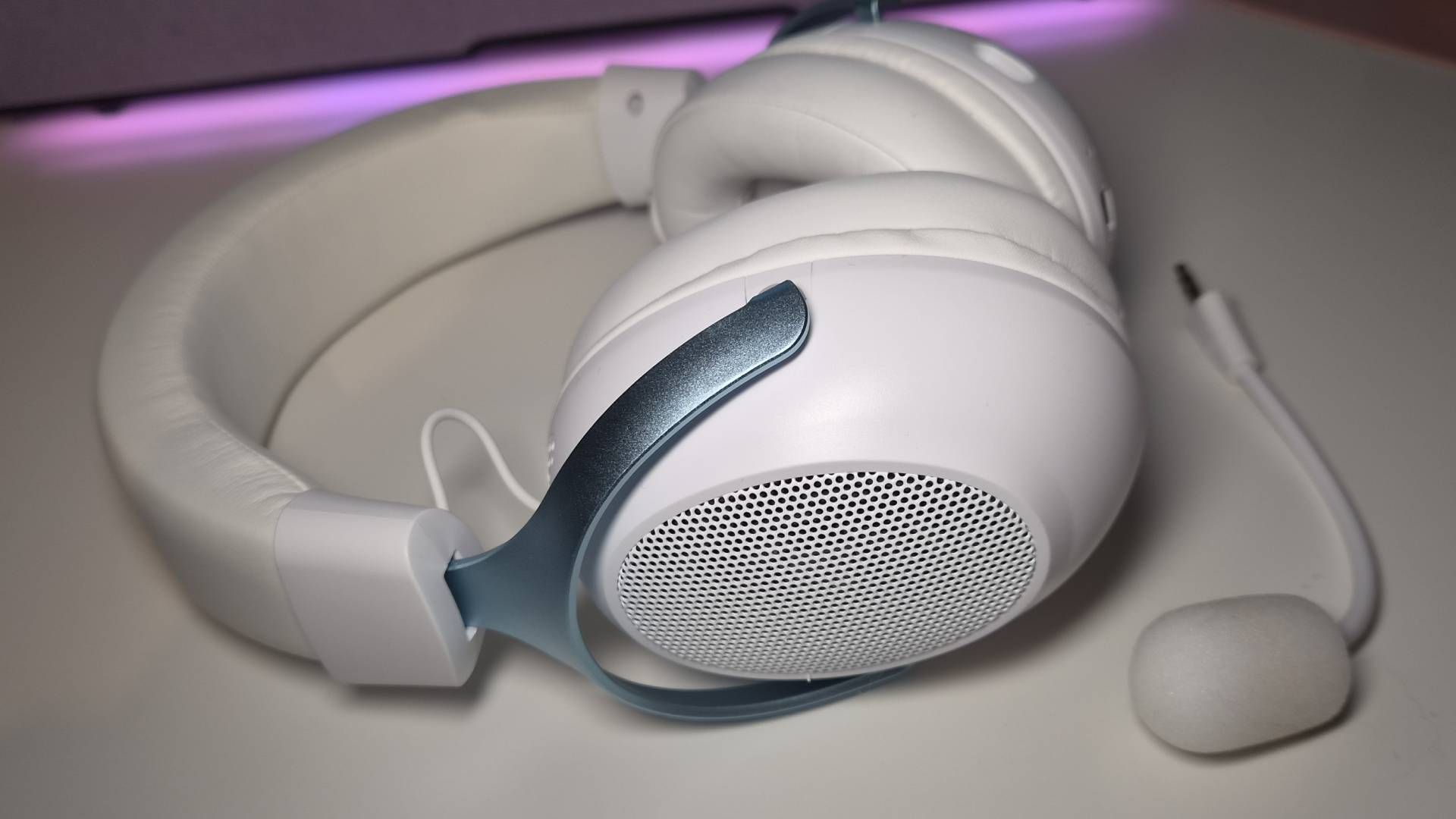
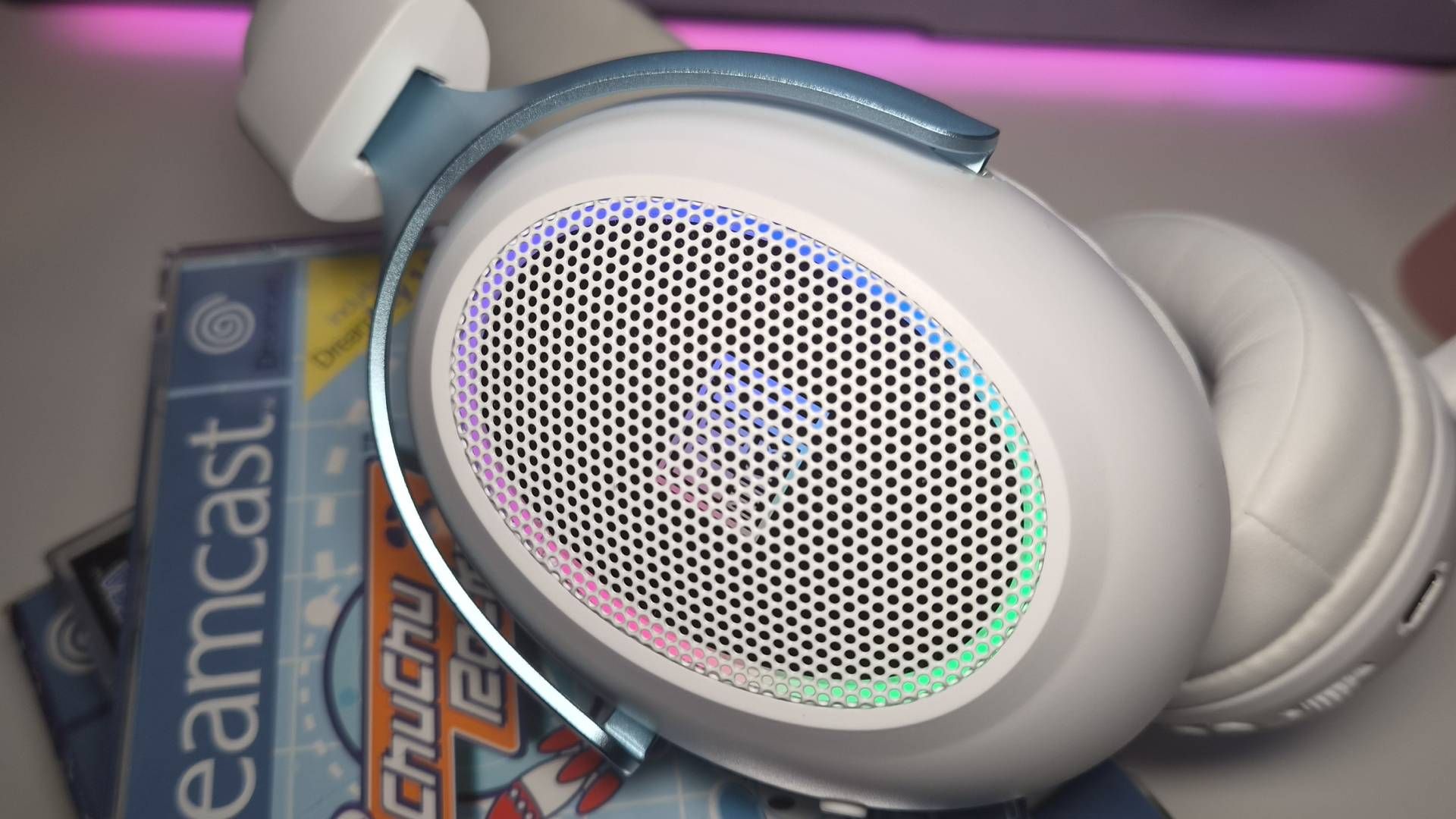
Rather than just being pale from every inch, Epomaker chose to coat the metal yokes in this charming, shiny shade of baby blue that gives it a Y2K appeal. I'm not sure if this was deliberate or not, but as a millennial I'm very much a fan of its look, especially as the color combo reminds me of the early 00s. So often tech back then was either transparent plastic or draped in shimmery metallic colors, and the white and shiny blue combo looks like a headset that Space Channel 5's Ulala would have dawned in the iconic Dreamcast game of the era.
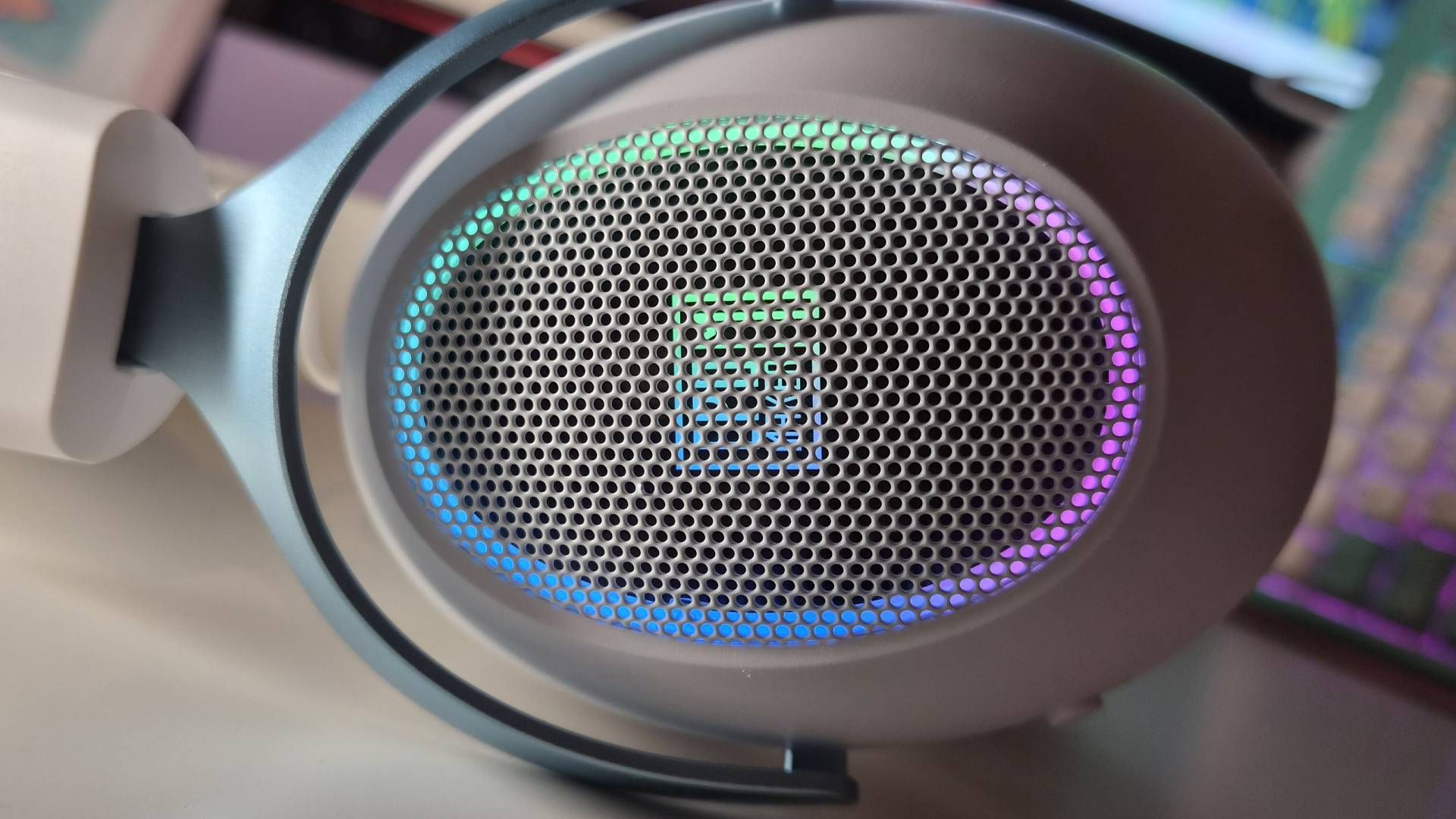
It's not just the color palette that makes it stand out, but the decision to hide the RGB lighting behind the open-back grills rather than around them. Once you press that power button, a rim of light pastel rainbow lighting illuminates through the dotted ventilation on the exterior of the cups, alongside a faint Epomaker logo, and I can't get enough.
Features
(Image credit: Future/Rosalie Newcombe) The defining feature of the Epomaker GX1 is undoubtedly its open-back form factor, and there's no getting around that. Is it the first open-back headset to exist? Far from it, but often they come in pricey packages, so getting the GX1's features for $49.99 / £45.99 is a pretty sweet situation, especially when you factor in the rest of the features Epomaker has piled into their pair.
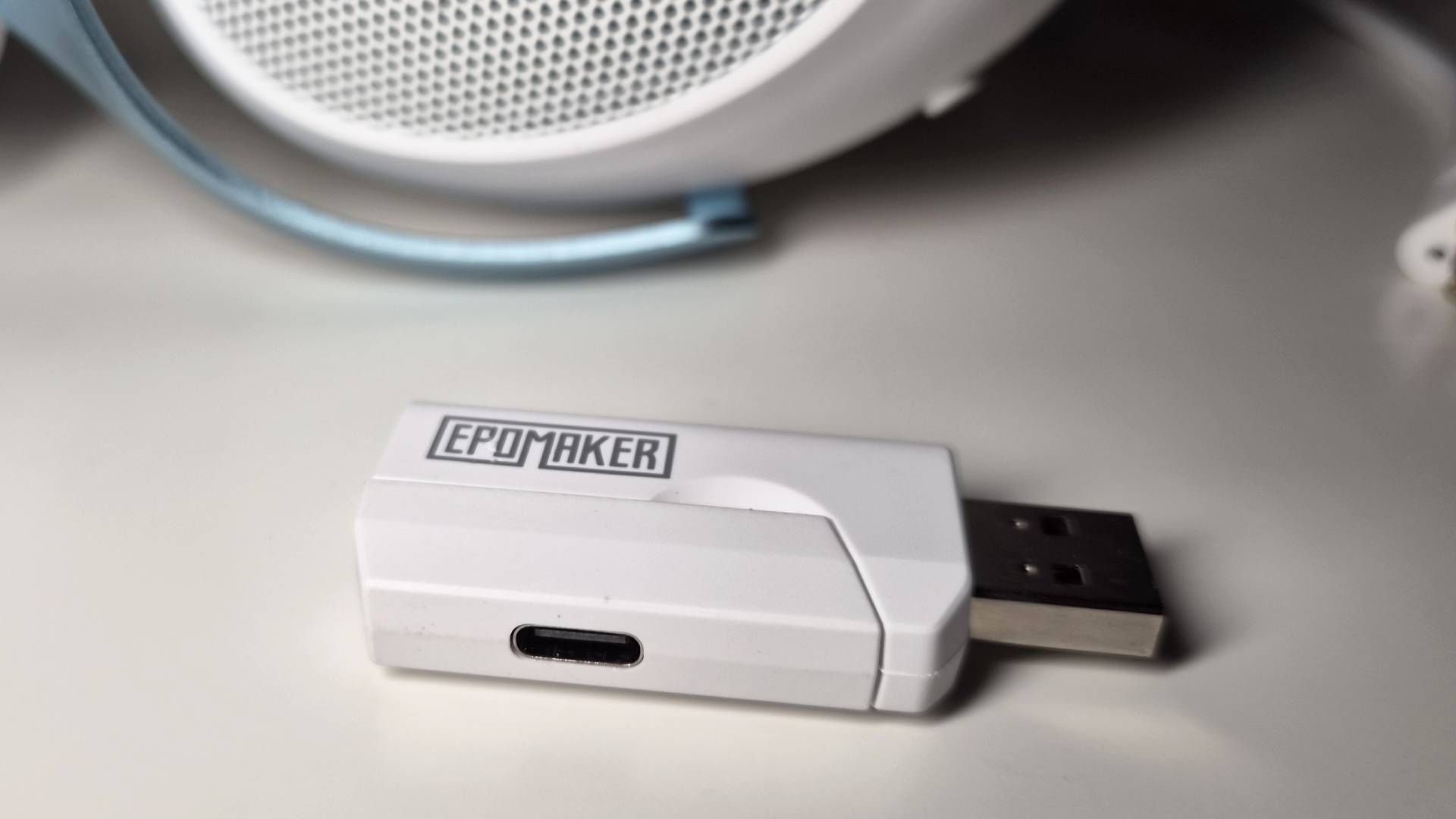
You've also got 50mm-sized dynamic audio drivers with a 20Hz – 20kHz frequency response and Tri-mode connectivity (Wired, Bluetooth and 2.4GHz) at your disposal. The cans also include one of the handiest wireless receivers s I've ever come across after years of testing the best PC headsets for gaming, which can transform into either a USB-C or USB-A dongle. No more worrying about your desktop's port situation, which is great for me as I have only one USB-C port to use on a daily basis.
Besides that, the GX1 uses virtual 7.1 surround sound, a detachable ENC noise-canceling microphone, an impressive 70-hour battery (when the RGB lighting is turned off), and support for the brand's XearOne Audio Center software.
Performance
(Image credit: Future/Rosalie Newcombe) When I think "open back" in the context of headsets, natural-sounding and high-quality audio instantly comes to mind, but that was not what I entirely found while testing the GX1. While its form factor lent itself to dialogue and sound design, the sound produced by Epomaker's first pair of cups was a bit too tinny for my liking.
For dialogue, things were fine, even better than fine. Earlier this week, as the end of my testing time drew near, Marvel's Wolverine launched on the PS5, and the muttering between Logan and Mystique sounded incredibly immersive. Each line of dialogue was clear and consistent, and with the 7.1 surround sound in tow, it was almost as if the iconic X-Men were in the room with me. Hey Logan, please stay clear of my valuable collectibles.
Yet whenever the music kicked in, and I was meant to feel this onslaught of adrenaline, the audio just fell flat. Open-back cans are known for not having the same amount of bass prowess as their closed-back counterparts, which I of course knew before dropping the bright white peripheral on my head, but I was still left disappointed.
What helped was the existence of the XearOne software I mentioned earlier. It's available to download straight from the Epomaker website, and provides a small batch of EQ and audio settings to help - so long as you're playing on PC. Popping on its "Dynamic Bass" setting helped make the tunes emitting from the headset's speakers resonate and give them more warmth. This was immediately noticeable in the indie game Is This Seat Taken, where its title music had a bit more jauntiness to it, which is what you want for a jazzy track of its kind.
(Image credit: Future/Rosalie Newcombe) Yet while the software definitely helped, it had issues of its own. For one, while mine was most definitely set to English (I checked twice), but its tutorial text was not. Secondly, midway through testing, the software just refused to boot up, only deciding to flicker on and disappear within a moment's notice. There's every chance Windows 11 was at fault here, and the software was a completely innocent bystander, but it didn't help make my experience any better.
When I did manage to get it working, I was at least happy to see some audio and microphone settings at play. While it provides the option to adjust the headset's volume (an alternative to its on-board dial), pan sound to the left or right, modify EQ settings, and select through a bunch of presets, there was some customization with the mic too. It had a volume bar of its own, but you could also increase the level of noise reduction, and even select a range of 'Xear Magic Voice' sounds effects. I didn't particularly want my voice to sound like that of a rubber duck when chatting to my pals on Discord, but at least the option was there, I guess.
[/url] Talking of the microphones, the GX1 actually has two available - one detachable mic and a built-in mic it will automatically switch to should you remove the first. Though I wasn't a fan of either.
Look, I wasn't expecting condenser mic levels of quality for something that costs less than a brand-new AAA game, but I was hoping for a little bit more. While friends could hear me just fine as we dived into A Big Walk, singling it out and recording it through Audacity revealed an incredibly muddy and unpleasant quality. I was worried at first that I had somehow managed to record the built-in mic rather than the detachable one, but no, this boomy and fuzzy quality is what the GX1 had to offer me.
It wasn't all bad. While its audio quality was a bit lackluster, its battery life was superb. If you ensure not to have its RGB lights blazing all day, you can muster 70 hours of playback, and I rarely had to change the thing. Some of the best PC headsets for gaming I've tested, like the SteelSeries Arctis Nova 3 Wireless, can only muster 30 hours, but the GX1 can provide more than double at half the price.
Should you buy the Epomaker GX1 headset?
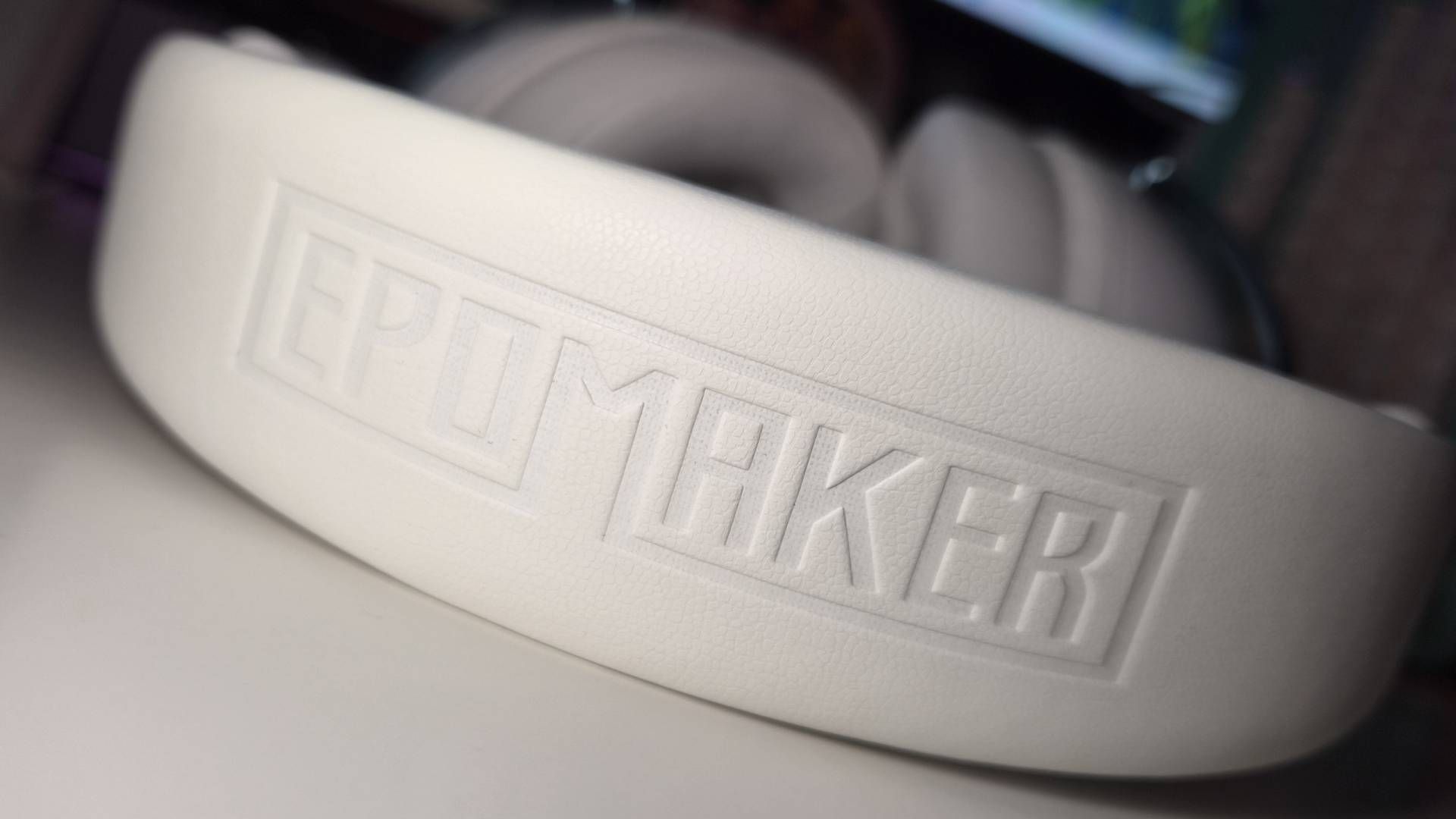
(Image credit: Future/Rosalie Newcombe) A $49.99 / £45.99 MSRP is incredibly affordable for a headset sporting an open-back design, but just because it's cheap doesn't mean you should jump on the Epomaker GX1.
It pains me a bit to write those words, as I really wanted to love this headset. When it first arrived at my door for testing, I was obsessed with its shiny, metallic white and blue design, and its Black and Pink alternative colorways look just as stylish. It's also one of the most comfortable peripherals I've reviewed, and I swear it is much lighter than the 320g the brand states it to be. Yet no matter how comfortable, flashy, and long-lasting this headset was, I was not a great fan of its audio quality, and in the end, that's what headsets should all be held accountable for.
If you're looking for a low-cost open-back option, I'd sooner recommend waiting for alternatives like the Turtle Beach Atlas Air to drop down from its $179.99 / £159.99 price, which could be soon with Black Friday and the holiday sale season upon us. Otherwise, the Sony Inzone H6 Air is another fantastic contender, though you'll have to hope its $199.99 / £179.99 price receives a discount too, and be happy with wired-only.
How I tested the Epomaker GX1 headset
For a little over two weeks, the Epomaker GX1 headset became my go-to cans, whether I was picking up my Steam Deck, Nintendo Switch 2, PS5, or my PC. I started off rocking the Y2K-looking cans while on my desktop, as its accompanying software is only available on PC platforms. With it, I played everything from Counter-Strike 2, Marvel Rivals, and Dispatch. On the Steam Deck, my go-to was Disney Dreamlight Valley; meanwhile, I rocked Marvel Rivals, Marvel's Wolverine, and Fortnite on the PS5.When not playing games, I used the pair to listen to plenty of music on Spotify, including Sending Hearts To All My Dearies – A Tribute To The Smashing Pumpkins, Vitalic's 'OK Cowboy' album, and the Nintendo Music browser app. Additionally, the GX1 happened to be on my head while I was bingeing Gilmore Girls on Netflix, and watching films like Atlantis The Lost Empire via Disney+.
For more information on how we test gaming headsets, check out the full GamesRadar+ Hardware Policy.
Not sure if the Epomaker GX1 is for you? Check out our guides to the best PC headset for gaming, the best PS5 headset, and the best Xbox Series X headset for more options for your setup.
[/url]

Jat AI
Stay informed with the latest in artificial intelligence. Jat AI News Portal is your go-to source for AI trends, breakthroughs, and industry analysis. Connect with the community of technologists and business professionals shaping the future.