
















P4: Clues from Bright Side
The reality differed from what the models predicted. They described this place as arid and scorching, but the truth was far worse. Crossing the terminator line, the temperature lea…
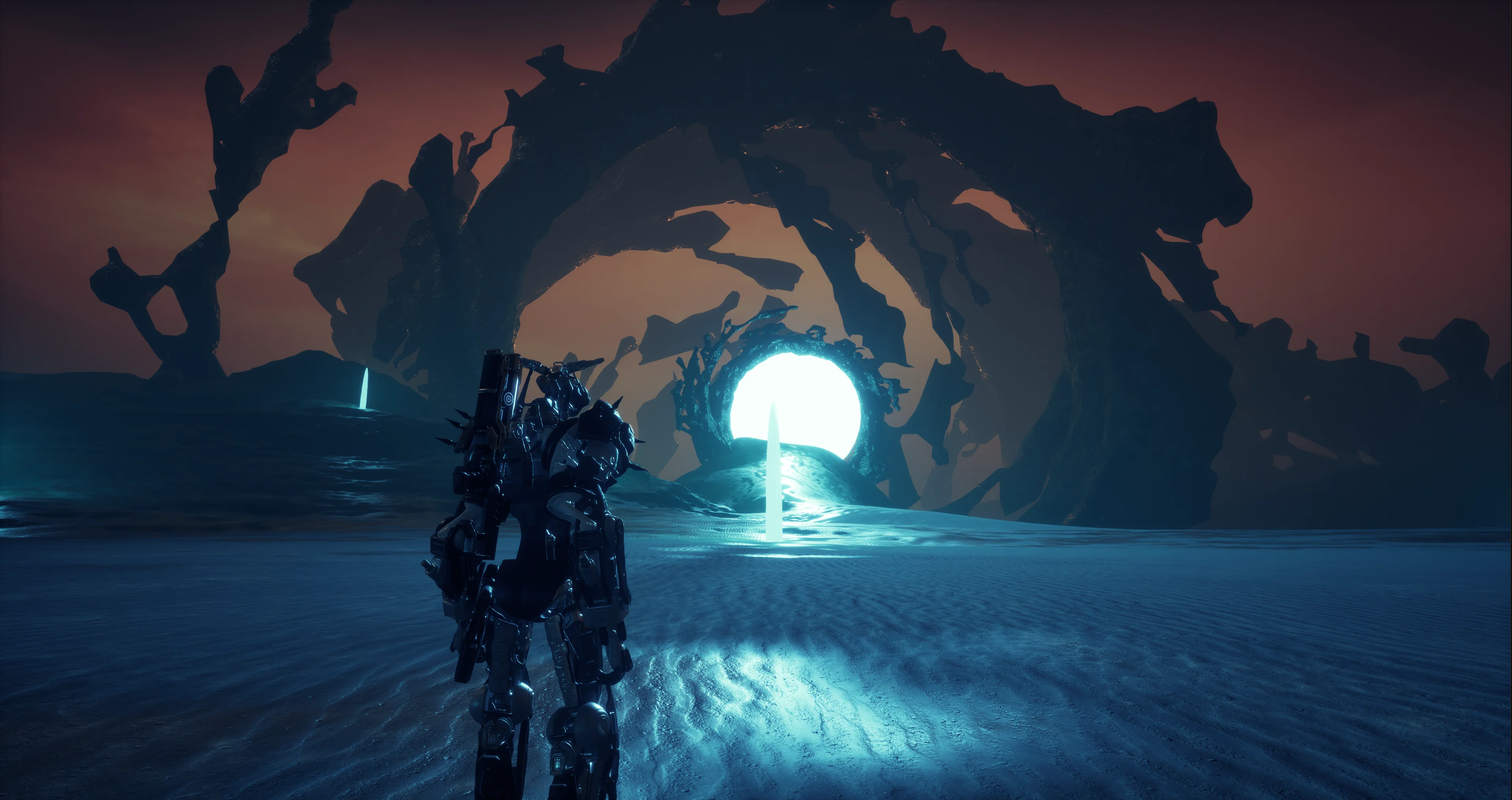
As it crossed the terminator line, it witnessed a sunrise.
The planet is tidally locked; its star should remain fixed at a single point in the sky forever. Yet, that dim, crimson star was now inching its way above the horizon, casting a reddish-brown glow across the eternal night it had traversed. It checked its altimeter: in twelve hours, the star had risen by 0.6 degrees. There was also a four-hour-and-eleven-minute cycle—a subtle oscillation that synchronized with the pulsations of the planet’s dark side.
The planet is tilting—much like a tree being slowly bent by the wind.
The "Bright Side" is nothing like the models predicted. The models described it as arid and scorching, but the reality is far worse. Crossing the terminator, the temperature leaps from minus eighty to plus thirty-one degrees Celsius; the air is thin, and the wind, blowing from the direction of the star, is as dry as a bone. After traveling for a while, the unit’s armor became coated in a white, crusty layer of salts—flakes that would crumble away at the slightest touch.
Then, it spotted the array.
Beyond the terminator, row upon row of black pillars—each forty meters tall and topped with a parabolic dish—stretched out in a precise, uniform grid. These were the terraforming systems from the models: solar-thermal collection arrays designed to provide heat and water for the colony.
But they were oriented incorrectly.
Though the star hung in the sky, the arrays were not pointed toward it. Thousands of parabolic dishes were all aimed at the same spot in the sky—a point remarkably low on the horizon. It followed the line of sight, but found nothing there—only a vast, faintly reddish void.
It pulled up the construction logs and navigated to the entry for Array No. 1127. The foundation had been poured three months before the first pile was driven for the domed city. In the remarks column, a single line of text remained, written in the archaic style of the Engineering Department:
"When *it* arrives, this place shall already be facing it."
It read the sentence over and over. *When it arrives.* "It." Whoever wrote this log knew that something was coming.
It traveled along the array for two hours until it reached the end, where it found a communications zone. In the center stood a primary antenna tower, taller than any other structure in the array, its parabolic dish aimed toward that same low-hanging point in the sky.
This tower should have been oriented toward the relay station belonging to Axiox Industries. It checked the final transmission log: on the day contact was lost, the tower had issued a shutdown command—clean, precise, and devoid of a single error code. It was as if someone had whispered a "goodbye" before hanging up the phone.
Standing beneath the tower, it reread the mission briefing.
"The Nantianmen colony has been out of contact for several days. Conduct an immediate investigation, stabilize the situation, and report the progress of the 'Cradle' project to CEO Larkwood."
It had memorized this line the moment it woke up. Now, however, it took on a different meaning. "Cradle" was never a codename for Nantianmen; Nantianmen was merely the shell for the Cradle. The true Cradle was this very array, pointed toward that empty expanse of the sky. What Larkwood wanted was a handover inventory for the "Cradle"—a confirmation of whether everything was ready upon its arrival.
It recalled the list, numbered 1 through 36—each date marking the completion of an individual machine. The "cleaner" was never tasked with clearing away mere malfunctions.
It stood before the array for a long time. On the "Bright Side," there is no night; a reddish-brown light bathes everything in a constant, unceasing glow.
From the ground, the full picture remains hidden. The patch of sky toward which the array is aimed can only be seen clearly from orbit. The Nantianmen space station still hangs above, orbiting the planet just as it has since the day contact was lost.
It began to walk toward the launch site, then stopped. Compressing the construction log, it tucked the file into a private storage partition alongside three others, all bearing the same note: "Upon its arrival, this place shall be turned to face it."
The blue, gelatinous heart within its chest gave a single throb. The twenty-third time.

Jat AI
Stay informed with the latest in artificial intelligence. Jat AI News Portal is your go-to source for AI trends, breakthroughs, and industry analysis. Connect with the community of technologists and business professionals shaping the future.