













World War 1 Remembrance Day Sale
The Armistice agreement that would bring a conclusion to active combat in the First World War was agreed at around 5am on 11th November 1918. To allow word to spread to soldiers up and down the Western Front it would not come into effect until 11am. Soldiers continued to fight and die right up to the final moment before the guns fell silent. 1st Battalion Irish Guards read news of the Armistice at Maubeuge on 12 November 1918, IWM (Q 3365).Never before had a war reached out into the homes and lives of so many people across the world. For four years the conflict had dictated virtually every aspect of society for the major combatants and its impacts had greatly impacted those nations who remained neutral.For the nations who had actively fought, the final counts of the dead and wounded were enormous. In the fighting areas whole towns, villages, and cities had been damaged or utterly destroyed. It would take time to rebuild and the sense of loss and grief would last for decades.Cheering crowds on the Boulevard in Paris, 11 November 1918, IWM (Q 69030).11th November 1918 was met with a mix of wild celebration, gratitude, and sadness. The same day the following year saw the beginnings of commemoration as we know it today. The creation of war memorials both local and national, the use of commemorative symbols like the poppy or bleuet, the laying of wreaths, and the moments of silence. For a time the world would stand still to remember and reflect on the loss of those who had fought and died in the greatest conflict to have ever happened."And of course when the time came on that 11th hour of the 11th day, pandemonium broke loose. Everybody went mad." - Harold Boughton, Royal Defence CorpsGallica, Bibliothèque nationale de France, Rol 52409, http://gallica.bnf.fr/ark:/12148/btv1b53005788gThe nature of Remembrance as we recognise it now also took time to be constructed but the desire to do something to commemorate those who had been lost existed within many of the combatant nations. They did it in 1919 and many nations continue to observe that same silence to reflect and remember to this day. This year, the small but wonderful WW1 game community has come together for the WW1 Remembrance Sale. Until November 16th, check out new releases, play free demos, and get some deals on these fantastic WW1-themed games that make sure we'll never forget. Witness the tales of war, enter the trenches as a soldier, or explore the darkest side of the conflict.Find the WW1 Remembrance Sale here:
The Armistice agreement that would bring a conclusion to active combat in the First World War was agreed at around 5am on 11th November 1918. To allow word to spread to soldiers up and down the Western Front it would not come into effect until 11am. Soldiers continued to fight and die right up to the final moment before the guns fell silent.
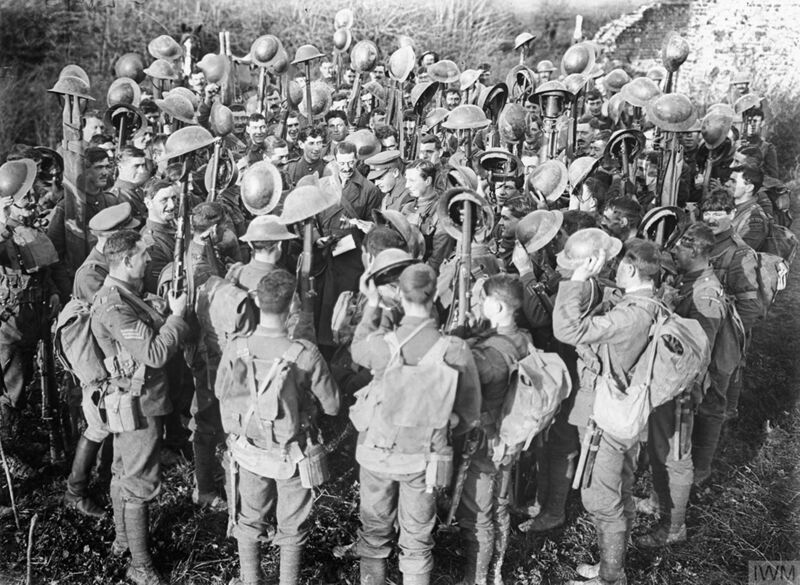
1st Battalion Irish Guards read news of the Armistice at Maubeuge on 12 November 1918, IWM (Q 3365).
Never before had a war reached out into the homes and lives of so many people across the world. For four years the conflict had dictated virtually every aspect of society for the major combatants and its impacts had greatly impacted those nations who remained neutral.
For the nations who had actively fought, the final counts of the dead and wounded were enormous. In the fighting areas whole towns, villages, and cities had been damaged or utterly destroyed. It would take time to rebuild and the sense of loss and grief would last for decades.
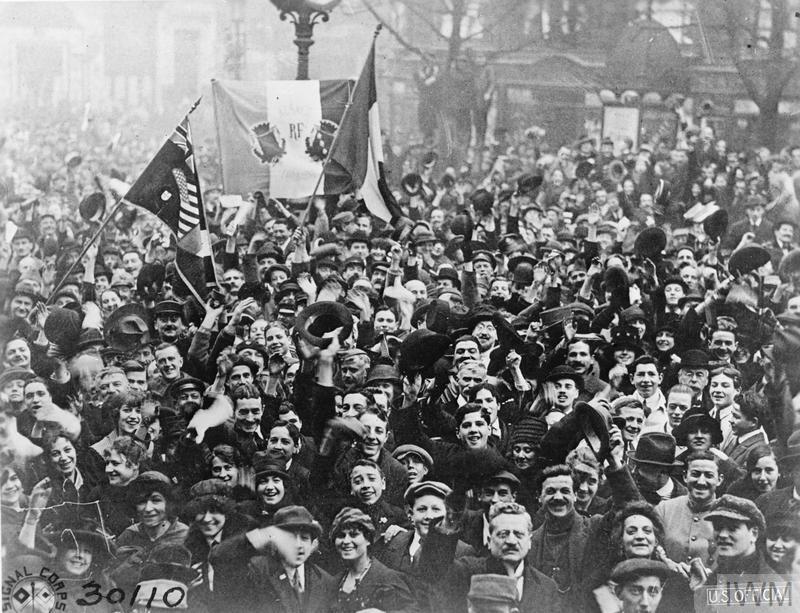
Cheering crowds on the Boulevard in Paris, 11 November 1918, IWM (Q 69030).
11th November 1918 was met with a mix of wild celebration, gratitude, and sadness. The same day the following year saw the beginnings of commemoration as we know it today. The creation of war memorials both local and national, the use of commemorative symbols like the poppy or bleuet, the laying of wreaths, and the moments of silence. For a time the world would stand still to remember and reflect on the loss of those who had fought and died in the greatest conflict to have ever happened.
"And of course when the time came on that 11th hour of the 11th day, pandemonium broke loose. Everybody went mad." - Harold Boughton, Royal Defence Corps
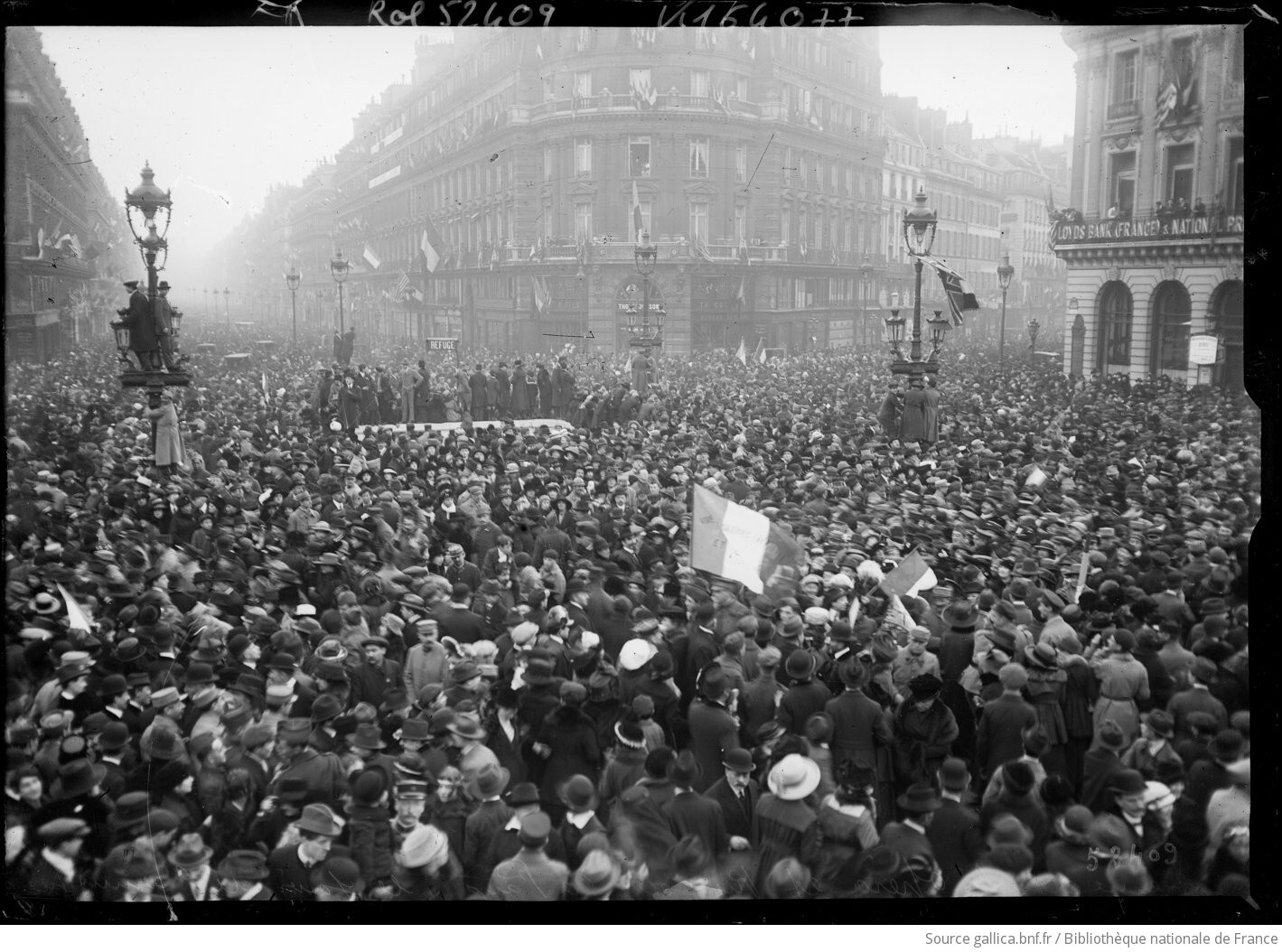 Gallica, Bibliothèque nationale de France, Rol 52409, http://gallica.bnf.fr/ark:/12148/btv1b53005788g
The nature of Remembrance as we recognise it now also took time to be constructed but the desire to do something to commemorate those who had been lost existed within many of the combatant nations. They did it in 1919 and many nations continue to observe that same silence to reflect and remember to this day.
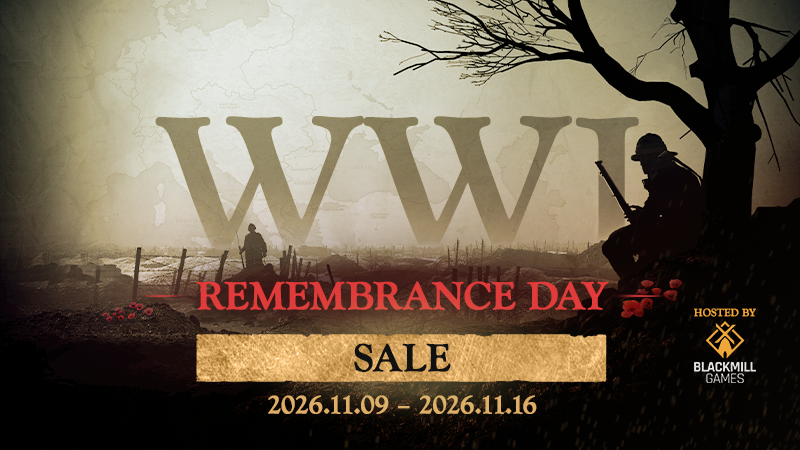
This year, the small but wonderful WW1 game community has come together for the WW1 Remembrance Sale. Until November 16th, check out new releases, play free demos, and get some deals on these fantastic WW1-themed games that make sure we'll never forget. Witness the tales of war, enter the trenches as a soldier, or explore the darkest side of the conflict.