













City Corner #15 - The Road So Far
Howdy, Mayors!On today’s City Corner, we are sitting down and gathering around the fire to talk about the overall development of Cities: Skylines II. Since we took over, we have been working on improving the nooks and crannies of every corner of the game. Some of these changes have been easier to spot (looking at you, environmental improvements), while others have happened behind the scenes, quietly making sure everything runs a little better. We already took a look at our first six months in City Corner #9, so this time we wanted to take a slightly different approach. Rather than going through every patch one by one, let’s look at the bigger picture; what are the areas we have focused on, what has changed along the way, and a few things you might have missed in our latest patch, which went live two days ago, on November 10th!So, grab a cup of tea, coffee, or hot chocolate, get those s'mores ready, and let’s get down to business!Diving into the SimulationOne of the areas we want to start increasingly working on is the simulation, and how we can keep all the little systems working together. Citizens need to get around, companies need to find places to operate, services need to do their jobs, and all of this needs to happen without bringing your carefully planned city into a full stop. Our focus so far has been making these systems work together more consistently. We have spent time looking at how citizens make decisions, how they move around in your cities, and how different simulation systems interact with one another. We have also continued working on the behaviour of companies, households, and services, with particular attention to the challenges that come to light as your city grows larger. A lot of this work is not necessarily something you will notice straight away, but it can make a difference when you are looking at the bigger picture. The goal is to have a simulation that behaves more reasonably, puts less unnecessary strain on performance, and gives you a more reliable foundation to build on. The benchmark tool lets you check performance between patches, and is also handy for testing your graphics settings.And, speaking of performance, this has remained an important part of our work. We will continue to look at how the game handles everything happening in your cities, from citizens and traffic, to buildings and environment. Performance is a large beast to conquer, and (unfortunately) there is not one magical line of code that would make everything run perfectly. Instead, it is a continuous process of identifying bottlenecks, testing changes, and finding ways to make the game handle your ever-growing cities a little bit better. This is something we will keep working on and improving in the future, as performance remains an important concern not only for us, but for many of you as well. Freedom to CreateOf course, we also want to be able to give you the tools and freedom to build the cities you have in mind. We have continued expanding and refining these tools available to you, with the aim of making the building experience more flexible and giving you greater control over the little details. Whether it is the way your roads are laid out, how buildings fit into the surroundings, or the way you shape the landscape, we have been working to remove some of the limitations and give you more ways to make your city feel your own. The new biomes offer even more room for creativity.The visual side of the game has also received attention. Along new visual content, we have been working on the environment, terrain, lighting, and other details that help bring your cities to life. However, these kinds of improvements are not always about adding something completely new; sometimes, it is about making sure that the existing pieces fit together a bit more nicely. The old UI (above) and the new one (below), both being adjustable to suit your needs! And what would these pieces be without the UI? We started our work with the interface at the very beginning of our takeover, and as always, this work never stops. We have continued refining the UI and adding options to make it more comfortable to use. After all, you will be spending quite a bit of time in those menus, so they might as well make themselves more useful. Improving the Asset EditorWe know that building and creating your city does not stop with the tools and assets included in the base game. The modding community has always been a huge part of the Cities franchise, and supporting both creators and players has been another important area of development. We have been working on improving the Asset Editor and the overall modding workflow, making it easier to create, edit, and publish custom content. At the same time, we have supported the Paradox Mods team with their efforts to improve the Paradox Mods experience, bringing better ways to browse, organize, and manage the mods you might want to use in your cities. There is quite a bit happening behind the scenes,


Howdy, Mayors!
On today’s City Corner, we are sitting down and gathering around the fire to talk about the overall development of Cities: Skylines II. Since we took over, we have been working on improving the nooks and crannies of every corner of the game. Some of these changes have been easier to spot (looking at you, environmental improvements), while others have happened behind the scenes, quietly making sure everything runs a little better.
We already took a look at our first six months in City Corner #9, so this time we wanted to take a slightly different approach. Rather than going through every patch one by one, let’s look at the bigger picture; what are the areas we have focused on, what has changed along the way, and a few things you might have missed in our latest patch, which went live two days ago, on November 10th!
So, grab a cup of tea, coffee, or hot chocolate, get those s'mores ready, and let’s get down to business!
One of the areas we want to start increasingly working on is the simulation, and how we can keep all the little systems working together. Citizens need to get around, companies need to find places to operate, services need to do their jobs, and all of this needs to happen without bringing your carefully planned city into a full stop.
Our focus so far has been making these systems work together more consistently. We have spent time looking at how citizens make decisions, how they move around in your cities, and how different simulation systems interact with one another. We have also continued working on the behaviour of companies, households, and services, with particular attention to the challenges that come to light as your city grows larger.
A lot of this work is not necessarily something you will notice straight away, but it can make a difference when you are looking at the bigger picture. The goal is to have a simulation that behaves more reasonably, puts less unnecessary strain on performance, and gives you a more reliable foundation to build on.
 The benchmark tool lets you check performance between patches, and is also handy for testing your graphics settings.
And, speaking of performance, this has remained an important part of our work. We will continue to look at how the game handles everything happening in your cities, from citizens and traffic, to buildings and environment. Performance is a large beast to conquer, and (unfortunately) there is not one magical line of code that would make everything run perfectly. Instead, it is a continuous process of identifying bottlenecks, testing changes, and finding ways to make the game handle your ever-growing cities a little bit better. This is something we will keep working on and improving in the future, as performance remains an important concern not only for us, but for many of you as well.
Of course, we also want to be able to give you the tools and freedom to build the cities you have in mind. We have continued expanding and refining these tools available to you, with the aim of making the building experience more flexible and giving you greater control over the little details. Whether it is the way your roads are laid out, how buildings fit into the surroundings, or the way you shape the landscape, we have been working to remove some of the limitations and give you more ways to make your city feel your own.
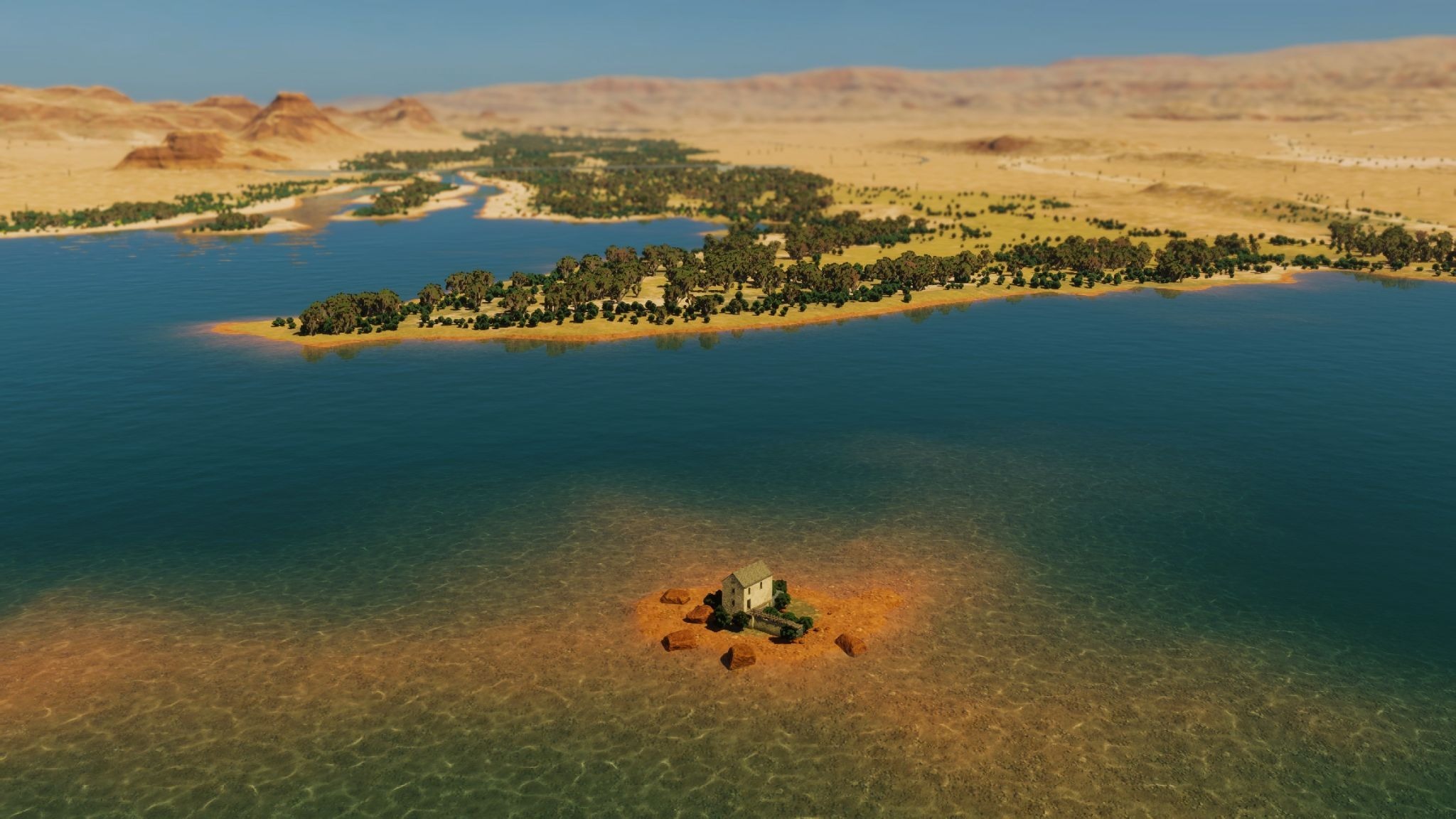 The new biomes offer even more room for creativity.
The visual side of the game has also received attention. Along new visual content, we have been working on the environment, terrain, lighting, and other details that help bring your cities to life. However, these kinds of improvements are not always about adding something completely new; sometimes, it is about making sure that the existing pieces fit together a bit more nicely.
 The old UI (above) and the new one (below), both being adjustable to suit your needs!
And what would these pieces be without the UI? We started our work with the interface at the very beginning of our takeover, and as always, this work never stops. We have continued refining the UI and adding options to make it more comfortable to use. After all, you will be spending quite a bit of time in those menus, so they might as well make themselves more useful.
We know that building and creating your city does not stop with the tools and assets included in the base game. The modding community has always been a huge part of the Cities franchise, and supporting both creators and players has been another important area of development.
We have been working on improving the Asset Editor and the overall modding workflow, making it easier to create, edit, and publish custom content. At the same time, we have supported the Paradox Mods team with their efforts to improve the Paradox Mods experience, bringing better ways to browse, organize, and manage the mods you might want to use in your cities.
There is quite a bit happening behind the scenes, and making these tools more accessible and reliable means fewer obstacles between your ideas and the finished product. So, knowing what some of you are capable of creating, we certainly do not want to get in the way!
Now, let’s jump back to the present. In addition to sharing the release date for Park Adventures, we also released a patch two days ago. This update works as groundwork for the upcoming expansion, and brought a couple of bug fixes you had been asking about.
On the gameplay side, we addressed an issue that could cause cities to accumulate too many companies, even when there were not enough buildings available for them. We have also fixed the Hydroelectric Power Plant not functioning properly, following your reports about the issue. So, if your power plant had been holding the line a little too well, now it should finally be ready to get back to work! We will continue to monitor the situation, of course, since we know there are still some issues that need to be addressed.
 The Hydroelectric Power Plant should once again provide electricity to your city!
Paradox Mods got some attention too, bringing you new ways to discover content from creators you follow, including a dedicated tab and a featured section highlighting their latest mods. We also added an option to keep subscribed playsets up to date, improved playset management, and made it possible for you to manage your Playsets and Library even when you were logged out.
In addition, there were a few technical and UI improvements in the patch as well, which you may have already tested in the Open Beta, like the updated Coherent UI framework and support for upscalers. We decided to hold back some other improvements to give them a little more polish based on your feedback, such as the additional texturing under roads and support for FSR4.
We have been talking quite a bit about the improvements we have made for Cities: Skylines II, and you might be wondering, what for? Starting today, November 12th, the game will be free to play on Steam for a few days.
This means that whether you have been waiting for the right moment to test the waters, return to a city you have left behind, or finally convince a friend to join you, this is a good opportunity to get building. And there is also a little something extra waiting for you: the new Grand Post Office signature building can be unlocked by subscribing to the Paradox Newsletter, giving you another landmark to add to the collection!

Like we have mentioned before, we know that there is still plenty of work ahead of us, and we know that there are many more things you would like to see improved. That said, there is something quite huge coming in December alongside Park Adventures, and we can’t wait for you to see it! In the meantime, we will keep chipping away at our to–do list, and we will continue to rely on your feedback along the way.
Thank you for sticking with us. Now, back to work! Those parks will not build themselves, and we still have many adventures to go through! In the next City Corner, we will get back to talking more about Park Adventures, so stay tuned!
See you soon!