












Apex Legends: Matchmaking Tests Update
For a fully translated version of the update, see here.As part of our ongoing commitment to transparency, we’ve been more direct in sharing our approach to developing Apex Legends, a critical part of this approach is listening to you all in the community, understanding their needs, and working to address them. As such, we wanted to highlight the work being done on matchmaking to provide an even better experience for our players.Below, we’ll be discussing the frustrations we’re consistently working to alleviate, the various changes we’ve made and tests we’ve run, what outcomes we’re targeting, as well as what we’ve learned and how we’re using it to improve matchmaking moving forward. Read on to learn all about:Five major matchmaking pain pointsParameters and results of recent matchmaking tests:Increased maximum queue search timesBots in mid-tier unranked lobbiesDiamond+ solo-queue only4.5 Hour Ranked map rotations1-tier locked Ranked premadesThe challenges of testingDEFINING MATCHMAKING PAIN POINTSYou have made it clear, and we understand: Long queues and endlessly sweaty matches are the opposite of fun.We are always listening and talking with players, we hear the feedback and frustration. It’s important that we balance your feedback and match data, so while we’re seeing that the majority of matches are fast and fair, we also see a smaller outlier of unacceptable matches that we’re committed to addressing to improve the overall game experience. Over the past few seasons, we've been focused on what our players are saying and exploring match data to identify a list of five main pain points which we use to guide our work on Matchmaking systems.Here’s what we've been hearing:Queue Times: No one wants to wait forever to get into a match. There is an inherent trade-off between faster queue times and a fairer match, but we also know that no one should have to spend more time in queue than actually playing. We see this frustration amplified in Ranked as it's the mode in which players will wait longer for matches with tighter matchmaking.Lobby Skill Disparity: The skill gaps in your matches can be too wide. Veterans and casuals shouldn't be competing in the same lobby. Both Ranked and Unranked matches see the problem of Lobby Skill Disparity, and we approach both modes with different proposed solutions based on differing player needs.Solos vs Premade Imbalance: Solo players are at a disadvantage against coordinated three-stacks, especially in Ranked. Communication and coordination are part of the core game loop and bring real advantages, but they shouldn't be that decisive.Teammate Quality: You're paired with teammates who don't match your playstyle or skill level. Inconsistent experiences impact match quality.Sweaty Lobbies: No one has fun when every single match feels like it’s your pain and someone else's gain. There is a time and a place for hyper-competitive matches, and you should know when you’re opting into the experience.Every bullet here touches the core functions of the matchmaker. Pull one lever and everything else shifts along. It’s a tough balancing act. That's why over the past year, we've been methodical about testing solutions and tracking how each adjustment ripples through matchmaking.RECENT TESTSMatchmaking tests and experiments are run on specific regional servers to ensure that we can get clear data when we compare against other regions playing during the same period.Over the past year, we have increased the number of tests, and are planning to continue with a regular cadence moving forward. Here's what we've learned.TEST: INCREASED MAXIMUM QUEUE SEARCH TIMESWhich pain point are we addressing? Queue Times, Lobby Skill Disparity, Teammate QualityWhat was the test? The matchmaker searches, initially, for an opponent of closely-aligned skill level, and incrementally expands the search, loosening the skill restriction over time. For this test, we increased the search window from 30 seconds to 60 seconds before expanding the matchmaking criteria. This gives the matchmaker more time to find fairly-matched players instead of immediately widening the skill range in favour of more quickly filling a lobby.What were the results? We saw a positive impact on match quality and much fewer skill mismatches, especially at the high end of competition (visualized below), in both Ranked and Unranked without significantly increasing queue times.What are the next steps? Given the positive results, we implemented this globally on May 7th, 2026 as part of our standard matchmaking logic in Ranked and Unranked Trios. But we are not stopping there. We are continuing to tweak and monitor edge-cases to ensure that no one waits more than the intended maximum queue wait time before getting into a match.TEST: BOTS IN LOWER-SKILL UNRANKED LOBBIESWhich pain point are we addressing? Queue Times, Lobby Skill Disparity, Teammate QualityWhat did we test? We enabled bot-fill in mid-tier lobbies of Duos and Pub Trios matches, to unde
For a fully translated version of the update, see here.
As part of our ongoing commitment to transparency, we’ve been more direct in sharing our approach to developing Apex Legends, a critical part of this approach is listening to you all in the community, understanding their needs, and working to address them. As such, we wanted to highlight the work being done on matchmaking to provide an even better experience for our players.
Below, we’ll be discussing the frustrations we’re consistently working to alleviate, the various changes we’ve made and tests we’ve run, what outcomes we’re targeting, as well as what we’ve learned and how we’re using it to improve matchmaking moving forward.
Read on to learn all about:
Five major matchmaking pain points
Parameters and results of recent matchmaking tests:
Increased maximum queue search times
Bots in mid-tier unranked lobbies
Diamond+ solo-queue only
4.5 Hour Ranked map rotations
1-tier locked Ranked premades
The challenges of testing
You have made it clear, and we understand: Long queues and endlessly sweaty matches are the opposite of fun.
We are always listening and talking with players, we hear the feedback and frustration. It’s important that we balance your feedback and match data, so while we’re seeing that the majority of matches are fast and fair, we also see a smaller outlier of unacceptable matches that we’re committed to addressing to improve the overall game experience. Over the past few seasons, we've been focused on what our players are saying and exploring match data to identify a list of five main pain points which we use to guide our work on Matchmaking systems.
Here’s what we've been hearing:
Queue Times: No one wants to wait forever to get into a match. There is an inherent trade-off between faster queue times and a fairer match, but we also know that no one should have to spend more time in queue than actually playing. We see this frustration amplified in Ranked as it's the mode in which players will wait longer for matches with tighter matchmaking.
Lobby Skill Disparity: The skill gaps in your matches can be too wide. Veterans and casuals shouldn't be competing in the same lobby. Both Ranked and Unranked matches see the problem of Lobby Skill Disparity, and we approach both modes with different proposed solutions based on differing player needs.
Solos vs Premade Imbalance: Solo players are at a disadvantage against coordinated three-stacks, especially in Ranked. Communication and coordination are part of the core game loop and bring real advantages, but they shouldn't be that decisive.
Teammate Quality: You're paired with teammates who don't match your playstyle or skill level. Inconsistent experiences impact match quality.
Sweaty Lobbies: No one has fun when every single match feels like it’s your pain and someone else's gain. There is a time and a place for hyper-competitive matches, and you should know when you’re opting into the experience.
Every bullet here touches the core functions of the matchmaker. Pull one lever and everything else shifts along. It’s a tough balancing act. That's why over the past year, we've been methodical about testing solutions and tracking how each adjustment ripples through matchmaking.
Matchmaking tests and experiments are run on specific regional servers to ensure that we can get clear data when we compare against other regions playing during the same period.
Over the past year, we have increased the number of tests, and are planning to continue with a regular cadence moving forward. Here's what we've learned.
Which pain point are we addressing? Queue Times, Lobby Skill Disparity, Teammate Quality
What was the test? The matchmaker searches, initially, for an opponent of closely-aligned skill level, and incrementally expands the search, loosening the skill restriction over time. For this test, we increased the search window from 30 seconds to 60 seconds before expanding the matchmaking criteria. This gives the matchmaker more time to find fairly-matched players instead of immediately widening the skill range in favour of more quickly filling a lobby.
What were the results? We saw a positive impact on match quality and much fewer skill mismatches, especially at the high end of competition (visualized below), in both Ranked and Unranked without significantly increasing queue times.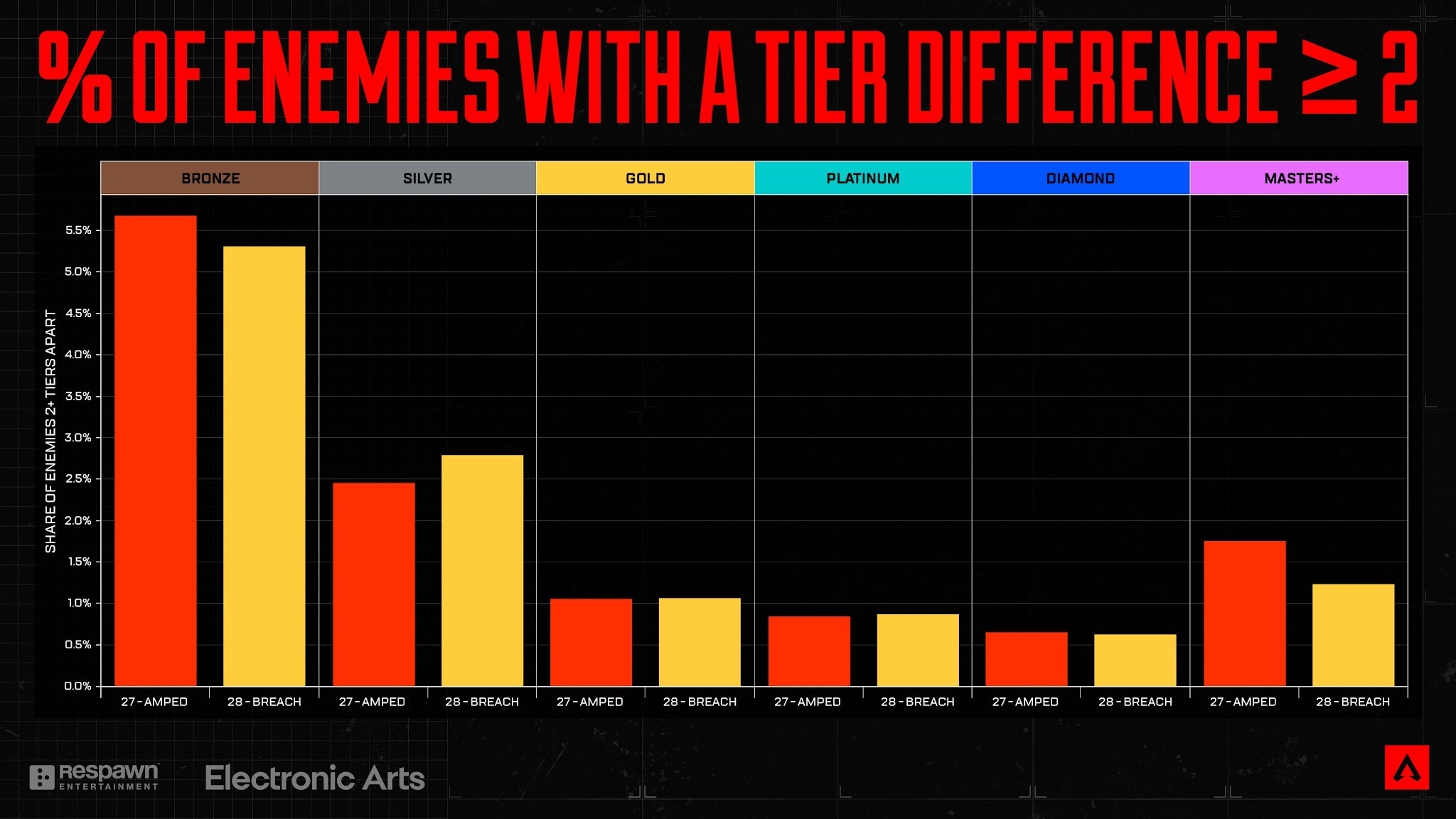
What are the next steps? Given the positive results, we implemented this globally on May 7th, 2026 as part of our standard matchmaking logic in Ranked and Unranked Trios. But we are not stopping there. We are continuing to tweak and monitor edge-cases to ensure that no one waits more than the intended maximum queue wait time before getting into a match.
Which pain point are we addressing? Queue Times, Lobby Skill Disparity, Teammate Quality
What did we test?
We enabled bot-fill in mid-tier lobbies of Duos and Pub Trios matches, to understand whether they improved matchmaking quality and overall player experience. As a reminder: there are no plans to add bots to Ranked, and bots do not fill an empty spot on your squad.
What were the results?
Being able to add a small number of bots to lower-skill matches is very positive for matchmaking quality. During off-hours, bots enable us to create fair matches within a reasonable amount of time and reduce how often we have to bring high skill players into a skill-mismatch situation. However, bots are still a work in progress and they can only be added to lobbies where they participate meaningfully. Outside the new player or lower-skill lobbies, they struggle to keep up and cause the match experience to deteriorate and thus we remain dedicated to improving bot behaviours.
What are the next steps?
We will continue to invest in our bots and slowly roll them out to situations where they create a positive player experience. Today, bots have a key role to play in the extended onboarding experience, especially as players learn the games through live matches, and to help facilitate improved matchmaking in situations where we, otherwise, would have had to create very wide matches.
Which pain point are we addressing? Solos vs Premade Imbalance, Lobby Skill Disparity
What is the test? Later on in Season 29, in all regions, Ranked will be solo-queue only for all players Diamond and above. If you’re Diamond or higher, you won’t be able to squad up as a premade in Ranked. Everyone plays with new friends - no exceptions.
Why are we doing this? We see clear frustration amongst Diamond+ players stemming from the imbalance between solo and premade squads, and this is one of the most requested solutions. This constraint should level the playing field and allow everyone to compete, relying only on their own skill and two new squadmates. As a result, lobbies will be more evenly matched and players can trust that they have the same opportunity to win as every other squad in their match.
The trade-off we’re making. Playing with friends is a core part of Apex. We understand that this test removes that core tenet from Ranked play at the highest tiers, and we know that will sting for players who queue together. With this test, we are prioritizing fairness first as the constraint to understand how it affects matchmaking improvements. We’re measuring whether the fairness gain is worth it, and we’re prepared to hear candid feedback either way. Ultimately, this is just one test to address these pain points; if the test results don't point to this being a long-term solution, we'll evaluate our other approaches to solve this issue.
Playing with friends is a key driver of social connection and long-term retention. That said, even highly social players spend a substantial amount of time playing solo. As a result, the solo queue experience cannot be treated as secondary; it is a critical part of the overall player experience, including for our most engaged users.
The data backing this. It is in Diamond+ that the feedback is the loudest, and our data supports it. Players who play most of their games as a premade squad do make it to the highest tiers at the fastest pace. In matches above Diamond, we also see the largest performance disparity between solo players and premade squads. A three-stack where all players are equally-high skilled is likely to significantly outperform everyone else. The coordination advantage is real.
What we’re watching. Community sentiment and match data. We want to know if leveling the playing field does improve the overall experience and improves the integrity of Ranked at the top end. This is a two-week window to learn before we decide what’s next.
Why not just split the queues? Splitting queues between solos and premades introduces more issues than it solves. Player populations get fractured into smaller pools, creating longer queue times or much wider matches for everyone. As an oversimplified example: if we split the matchmaking pool and it splits right down the middle, there are 50% fewer players loading into each version of Ranked, meaning that, best case scenario, wait times for each subset will increase 50% and match quality will suffer.
One queue with a solo-only constraint keeps the player base intact and queue times reasonable. While we’re testing this option to “level the playing field”, we will continue to thoroughly analyze data and sentiment to understand the broader impact of the change before evaluating a more permanent solution.
Which pain point are we addressing? General QOL improvement
What did we test? We shortened the map rotation in Ranked from 24 hours to 4.5 hours.
Why did we test this? This was mainly a functionality test where we validated that there was no unforeseen negative impact to players or internal systems. We also wanted to understand how the Ranked community would react to being able to play more maps in Ranked during their own normal play schedule over the course of a split.
What were the results?
All clear! Systems were healthy, we saw a greater number of players over a week being able to play on more maps and the community chatter was positive.
What are the next steps?
This is now Ranked for everyone. Moving forward, we may continue testing out different rotation schedules to get the best mix of freshness and familiarity.
Which pain point are we addressing? Lobby Skill Disparity
What did we test?
Our data shows that Platinum players matching up with Masters is driven primarily by players squadding-up and bringing those wide skill band squads to a lobby. Players often report those pre-match tier distribution graphs with frustration and confusion. As a result, we limited squad-ups to 1 tier above or below your rank, instead of 2, to see if we can create better matches for all.
This test is currently active at the time of writing, we will follow up with the results when we have them!
With the deliberate focus on testing matchmaking parameters, sometimes things get broken along the way. It’s a rare and unfortunate outcome, and something we work hard to learn from to ensure we don’t repeat our mistakes.
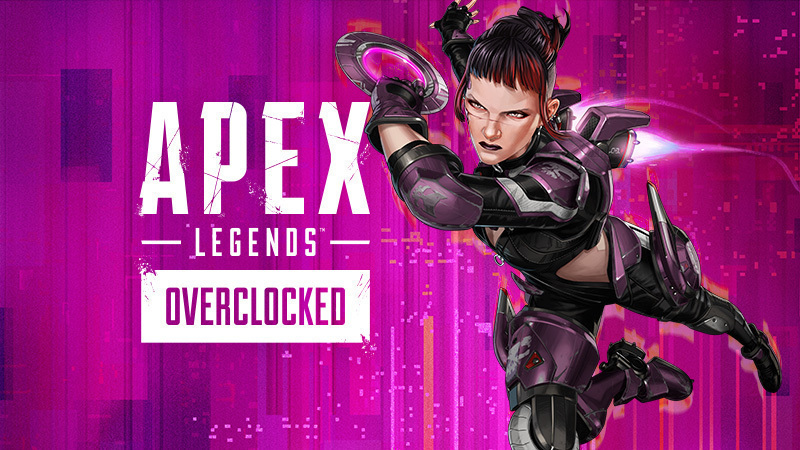
For example, the day of Overclocked’s launch we experienced a matchmaking outage that lasted several hours. We moved too fast, made last-minute changes, missed a crucial bug, and, as a result, the outage impacted our entire playerbase - which is frankly unacceptable.
So what are we doing differently moving forward?
Process enforcement: We are demanding stricter adherence to our change‑management workflow.
Technical safeguards: We are implementing automatic mechanisms to release queue pressure automatically, so that future failures can be recovered more gracefully and faster.
When something breaks and takes the game offline, the team bands together to resolve it as quickly as possible. When matchmaking systems crash, more and more players accumulate in the queue; if the queue cannot be cleared by loading into matches, it continues to grow, and once it reaches a certain size it overloads the database. To get the game back online, our team had to manually clear the queue and then gradually re‑introduce players at a reduced capacity, starting with 10 % of the usual queue and expanding slowly.
Only after sufficient pressure was relieved from the matchmaking queue were we able to restore normal service.`
We hope this furthers our transparency surrounding our matchmaking test processes. It is a complicated space to get right, as it requires a delicate balance and rigorous ongoing testing. We will continue to test and iterate, and will communicate with you each step of the way. We have more we’re excited to share with you about Matchmaking and Ranked in the coming months, so stay tuned!


![[Advance Notice] Steam Workshop Support Plan & Mod Policy](https://clan.akamai.steamstatic.com/images/46066795/3b52f4664a641d736a6caa82ea72a6290d3d0953.png?#)