













Behind AZ3 — Designing a Nuclear Crisis for Operations
Season Meltdown is live, and many of you are entering AZ3.This is our first new extraction map since Tide Prison. For us, that made AZ3 more than a new location. It had to add something meaningful to the way Operations is played: how you read a space, how you judge risk, how you search for value, and how far you are willing to go before the run starts asking for something back.AZ3 is large, but scale was never the point by itself. The point was to build a map where a familiar crisis — a nuclear power plant under stress — becomes a chain of extraction decisions.That is the design we want to share with you today.A setting players already understandA nuclear facility carries its own language. Radiation, containment, alarms, sealed corridors, meltdown — players understand these ideas before we explain them. That gave us a strong starting point, but also a clear responsibility: the setting could not remain decorative.The question we kept returning to was simple: what does the future look like when it fails?AZ3 sits at the point where old Ahsarah, industrial decay, and Havvk's pursuit of advanced systems meet. It is not an ancient ruin, and not clean science fiction. It is a modern ruin: a place where progress has already arrived, already failed, and is still dangerous.That idea shaped the map. The outer areas give you room to observe and approach. The damaged plant narrows the pace. The reactor building holds the strongest pull: better rewards, less comfort, fewer clean answers.We know the Operations mindset well enough by now. If the most dangerous building also has the best loot, many Operators will still find a reason to go in.AZ3 is built around that moment.Pressure that can be readRadiation is the clearest expression of AZ3's design.We did not want it to be a simple punishment timer. A timer can create urgency, but it often reduces the decision to "leave when the number is bad." AZ3 needed something more useful to extraction: pressure that can be read, managed, and sometimes accepted.As you push deeper, radiation builds through several stages. At lower levels, it is manageable. At higher levels, it begins to affect movement, vision, and survival. Cleanup rooms and certain equipment give you ways to reduce that pressure, so radiation remains a judgment call rather than a single forced answer.More importantly, radiation also carries information.The Geiger counter does not only warn you. It can point toward value. In AZ3, danger and reward often share the same signal. A sound that should make you cautious may also be the reason you take one more step.That tension is deliberate. Good extraction decisions rarely feel clean. They live somewhere between "we should leave" and "we can still make this work." Radiation gives that familiar argument a form you can hear, track, and act on.Searching should leave a traceAZ3 also changes how looting feels.We wanted the act of searching to be more interactive, less like checking a list of containers that behave the same way every time. Across the map, high-value spaces are tied more closely to the environment: some are easier to plan around, some are signaled by sound or radiation, and some require players to follow keys, rooms, and routes through the facility.Certain searchable areas can also leave traces after players interact with them. Sparks, leaks, smoke, small fires, or local failures may appear after an area has been searched. These are not meant to point directly to a prize or remove the scavenging experience. They are softer signals: this place has been touched, this route may no longer be quiet, someone may have been here before you.That matters because loot in AZ3 is not only a reward at the end of a path. It is part of how the map speaks.A locked room, a radiation signal, a disturbed space, a keycard chain — each can change the way your squad reads the run. Sometimes the right call is to keep moving. Sometimes it is to turn around. Sometimes it is to admit that the sound you just heard is probably a bad idea, then check it anyway.We have all been that squad.A facility under stressAZ3 is not meant to feel like a static arena with a disaster painted over it.As a run develops, the plant shows signs of stress. Systems fail in the background. Areas react. The facility begins to feel less like a set of rooms and more like a place under pressure.The reactor status gives the match a shared pulse. Even when you are focused on inventory, footsteps, or the next door, the plant continues moving. We wanted players to feel that the map is not waiting politely for them to finish looting.At the same time, the crisis should not feel purely scripted. The plant reacts to the state of the run. Players contribute to that state. Ideally, AZ3 feels less like a sequence of events and more like a stressed system with Operators inside it — making things better, worse, or simply more complicated.That distinction is important to us.A threat that changes your postureEnvironmental pressure i
 Season Meltdown is live, and many of you are entering AZ3.
This is our first new extraction map since Tide Prison. For us, that made AZ3 more than a new location. It had to add something meaningful to the way Operations is played: how you read a space, how you judge risk, how you search for value, and how far you are willing to go before the run starts asking for something back.
AZ3 is large, but scale was never the point by itself. The point was to build a map where a familiar crisis — a nuclear power plant under stress — becomes a chain of extraction decisions.
That is the design we want to share with you today.
A setting players already understand A nuclear facility carries its own language. Radiation, containment, alarms, sealed corridors, meltdown — players understand these ideas before we explain them. That gave us a strong starting point, but also a clear responsibility: the setting could not remain decorative.
The question we kept returning to was simple: what does the future look like when it fails?
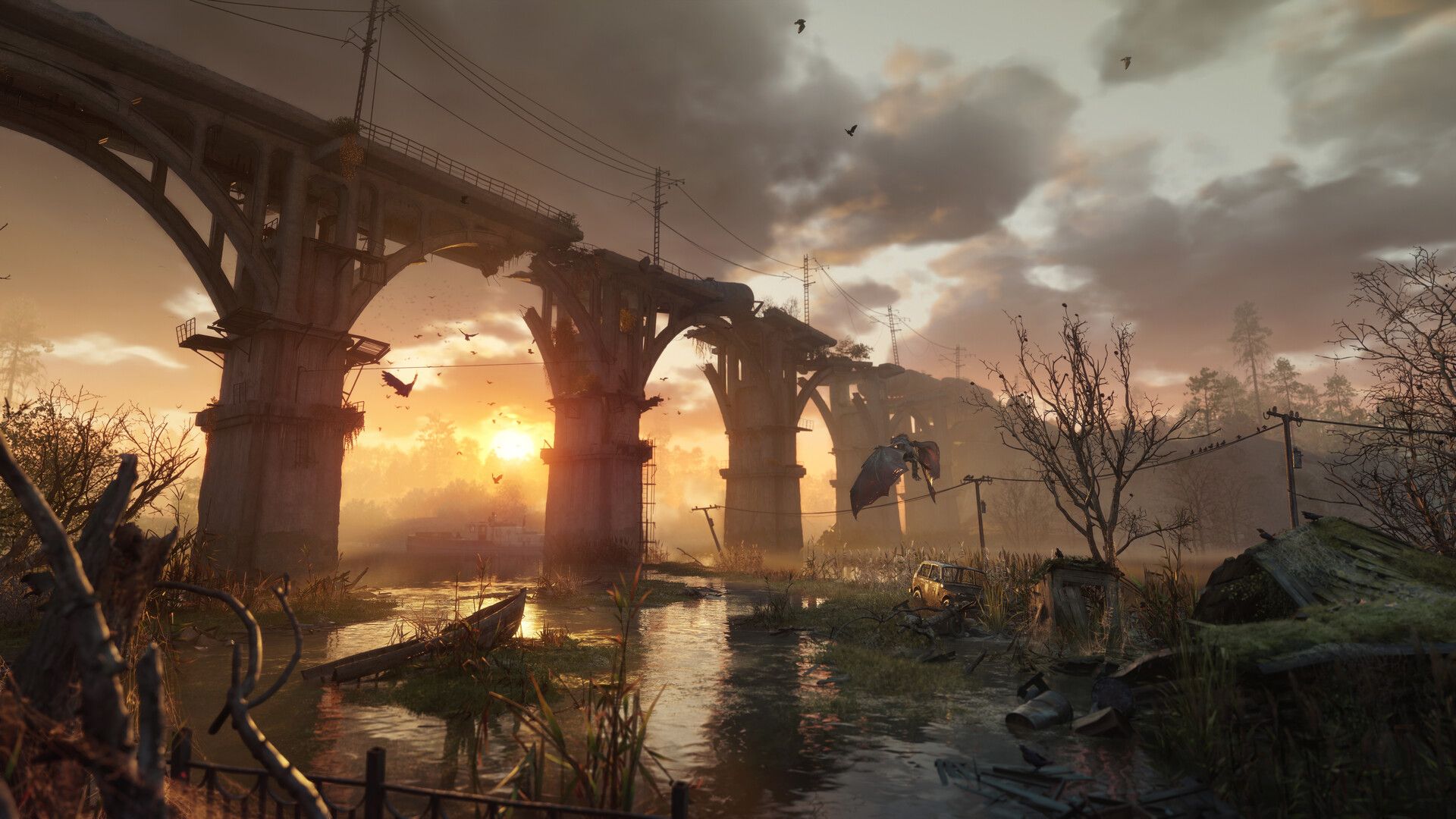
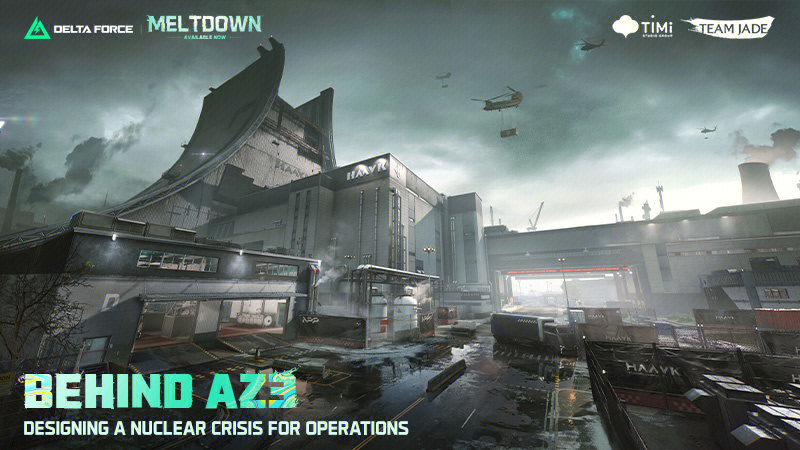
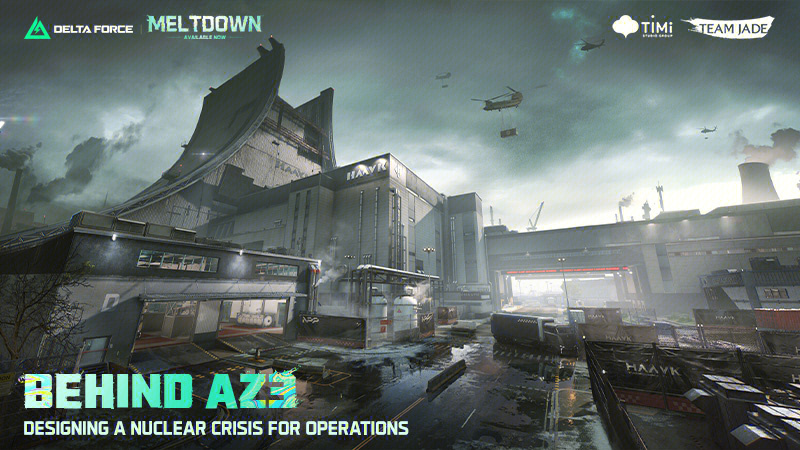
AZ3 sits at the point where old Ahsarah, industrial decay, and Havvk's pursuit of advanced systems meet. It is not an ancient ruin, and not clean science fiction. It is a modern ruin: a place where progress has already arrived, already failed, and is still dangerous.
That idea shaped the map. The outer areas give you room to observe and approach. The damaged plant narrows the pace. The reactor building holds the strongest pull: better rewards, less comfort, fewer clean answers.
We know the Operations mindset well enough by now. If the most dangerous building also has the best loot, many Operators will still find a reason to go in.
AZ3 is built around that moment.
Pressure that can be read Radiation is the clearest expression of AZ3's design.
We did not want it to be a simple punishment timer. A timer can create urgency, but it often reduces the decision to "leave when the number is bad." AZ3 needed something more useful to extraction: pressure that can be read, managed, and sometimes accepted.
As you push deeper, radiation builds through several stages. At lower levels, it is manageable. At higher levels, it begins to affect movement, vision, and survival. Cleanup rooms and certain equipment give you ways to reduce that pressure, so radiation remains a judgment call rather than a single forced answer.
More importantly, radiation also carries information.
The Geiger counter does not only warn you. It can point toward value. In AZ3, danger and reward often share the same signal. A sound that should make you cautious may also be the reason you take one more step.
That tension is deliberate. Good extraction decisions rarely feel clean. They live somewhere between "we should leave" and "we can still make this work." Radiation gives that familiar argument a form you can hear, track, and act on.
Searching should leave a trace AZ3 also changes how looting feels.
We wanted the act of searching to be more interactive, less like checking a list of containers that behave the same way every time. Across the map, high-value spaces are tied more closely to the environment: some are easier to plan around, some are signaled by sound or radiation, and some require players to follow keys, rooms, and routes through the facility.
Certain searchable areas can also leave traces after players interact with them. Sparks, leaks, smoke, small fires, or local failures may appear after an area has been searched. These are not meant to point directly to a prize or remove the scavenging experience. They are softer signals: this place has been touched, this route may no longer be quiet, someone may have been here before you.
That matters because loot in AZ3 is not only a reward at the end of a path. It is part of how the map speaks.
A locked room, a radiation signal, a disturbed space, a keycard chain — each can change the way your squad reads the run. Sometimes the right call is to keep moving. Sometimes it is to turn around. Sometimes it is to admit that the sound you just heard is probably a bad idea, then check it anyway.
We have all been that squad.
A facility under stress AZ3 is not meant to feel like a static arena with a disaster painted over it.
As a run develops, the plant shows signs of stress. Systems fail in the background. Areas react. The facility begins to feel less like a set of rooms and more like a place under pressure.
The reactor status gives the match a shared pulse. Even when you are focused on inventory, footsteps, or the next door, the plant continues moving. We wanted players to feel that the map is not waiting politely for them to finish looting.
At the same time, the crisis should not feel purely scripted. The plant reacts to the state of the run. Players contribute to that state. Ideally, AZ3 feels less like a sequence of events and more like a stressed system with Operators inside it — making things better, worse, or simply more complicated.
That distinction is important to us.
A threat that changes your posture Environmental pressure is only one side of AZ3.
The other is H1000.
H1000 is the plant's security chief, transformed through Havvk technology into a mobile combat threat. The design point was not simply that he should be strong. It was that he should change how players move once they realize he is involved.
Many boss encounters begin when you enter a place. H1000 works differently. He can pursue high-threat Operators, flank, use smoke, fire a tranquilizer dart, and close distance when you are least comfortable with it. The intention is simple: being hunted should feel different from finding a boss.
That pressure only works if it leaves room for mastery. A squad that understands his tools can respond. Medic Operators have a meaningful role when his dart appears. His music and behavior are designed to create recognition, not confusion.
AZ3 should be harsh, but readable. We want experience to matter.
An ending you help write
The most important experiment in AZ3 is not any single room or enemy. It is the way a run can resolve.
As the reactor situation develops, the map can open a late-run opportunity tied to the fate of the plant. We will leave the exact outcomes for you to discover, because that discovery belongs in the run, not in a blog.
What we can say is this: the ending is not only personal. You help write it, and so does everyone else in the lobby.
One squad may commit to the objective. Another may keep chasing loot. Another may interfere because, in Operations, another team's plan is still part of the battlefield. These choices are not separate from AZ3's design. They are the design.
We wanted the end of a run to feel like a consequence of what players did, not simply what the map announced. A good AZ3 run should leave you with a story that feels authored by the people inside it — including the people who made the wrong call at exactly the wrong time.
Sometimes that is you. That is part of the mode.
One more thing: Easy mode
AZ3 launches with both Easy and Normal difficulty.
We know what ZDE (Zero Dam-Easy) means to the community. For many Operators, it is where extraction first made sense: where routes became familiar, confidence grew, and the mode started to feel like home.
We are not trying to replace that. We hope AZ3 can become another place players return to.
That matters especially for a map with this many systems. Radiation, reactor status, keycards, interactive loot spaces, H1000, and run outcomes are meant to deepen over time. Easy mode gives new and returning Operators room to learn the zone without closing the door too early.
A complex map should not be afraid to teach.
If AZ3 becomes a place where new players find their footing, and experienced squads keep finding better ways through it, then the map will have done what we hoped.
AZ3 is our attempt to take a familiar fear and make it feel new through Operations: not by hiding the danger, but by making each risk clear enough that choosing it feels like your decision.
Step into the zone, read what the plant is telling you, and decide how far your squad is willing to go.
We built AZ3 to test your judgment, not just your aim — and we cannot wait to see the stories you bring back.
— Delta Force Operations Team