![[Notice] Advance Notice of Server Transfer Limits](https://clan.akamai.steamstatic.com/images/46074831/d61a3f15dbd37e032968feff620df4c5e501f3c4.png?#)
















Warcraft 3 Reforged: Forsaken Kingdom Review
I was a bit stunned to hear there's a new single-player story campaign for Warcraft 3 in 2026 – 23 years after its last expansion, The Frozen Throne. And after the uneven Warcraft 3 Reforged, I was even more surprised at how much I ended up enjoying Forsaken Kingdom and its accompanying changes. It's honestly great to be back looking down at Azeroth's moody champions and impressive cities from a raven's eye view considering Blizzard hasn't given single-player RTS fans anything new to chew on since 2016's Starcraft II: Nova Covert Ops. This expansion maintains the feel of classic Warcraft 3 while mixing in some new ideas, and while it doesn’t hit the highs of Reign of Chaos or The Frozen Throne, that's something I might never run out of appetite for. This review will cover three main additions to Reforged that all arrived together: the Forsaken Kingdom single-player campaign expansion itself, the Forsaken Paladin multiplayer hero, and the "Definitive Edition" graphics update that was made to address criticisms of 2020's redone art style. Let's start with the campaign. Forsaken Kingdom kicks off with the four-mission Last Days of Lordaeron prologue campaign, which is quite juicy and ambitious on its own. It picks up on the day Arthas returned from Northrend to kill his father, perhaps one of the most pivotal moments in all of Warcraft lore, and follows the new hero, guard lieutenant Garek Bandarion, as he fights his way through a besieged Andorhal and a devastated Strathholme in a doomed attempt to save his homeland from the Scourge. This chapter culminates with a confrontation against none other than Baron Rivendare, and contains numerous clever little references to both Warcraft 3 and World of Warcraft. I enjoyed the design of these missions for the most part, as they take after the classic RTS formula of Warcraft 3. The Siege of Andorhal, especially, puts a little bit of a MOBA-inspired twist on the typical Warcraft 3 routine by having you capture towers that spawn waves of CPU-controlled friendly soldiers at regular intervals to help you push across the map. Another segment of the same mission required me to hold specific objectives to be able to recruit certain kinds of units, rather than simply needing their associated structure in my base. Stratholme, post-purge at this point, is built like a winding dungeon crawl. Stratholme, post-purge at this point, is built like a winding dungeon crawl that requires you to coordinate one group led by Garek and a second led by the elven priest Ilastar Songbreeze – 500 bonus points if you recognize that deep cut, because I definitely had to look up who the heck he was and I practically eat, sleep, and breathe Warcraft. They remain separated for the first half of the mission, which created some interesting opportunities to use one group to complete an objective that helped the other progress. They then unite at the end for the final, dramatic push, which ties the whole scenario together nicely. In an extremely heavily-telegraphed twist, Garek doesn't fare well in his confrontation with Rivendare, and ends up raised as one of the free-willed Forsaken in the main campaign. Taking his orders directly from Sylvanas and accompanied by her lieutenant, the Dark Ranger Anya, this free-roaming, quest-driven adventure revolves around establishing the Forsaken in the Undercity beneath the capital ruins. If you played the Founding of Durotar epilogue campaign in the original, you kind of know what to expect. What I said about Warcraft 3: Reforged Warcraft 3 is still probably my favorite Warcraft game of all time, and one of my favorite fantasy stories in any video game. The visual update Reforged brings to all its beloved and behated characters is all the reason I needed to want to experience it again. It’s not perfect, and it’s not everything we may have been promised, but it’s still Warcraft 3. If I were judging it purely based on how good of a remaster it is, there’s not much to write home about and plenty of room for improvement. But taken as a whole, it’s still a great game nearly two decades after its initial release. And the relatively minor shortcomings of this edition shouldn’t stop you from returning to this classic age of Azeroth or diving in for the first time. - Len Hafer, February 5, 2020Score: 7 Read the full Warcraft 3: Reforged review.[/url] Across three chapters, you focus mainly on Garek and Anya, completing quests across multiple areas of the Undercity and the surrounding countryside. There's quite a bit of progression to chew on, with the level cap extending all the way up to 20 by the end and a brand new system that allows you to equip tons of new gear in specific slots like in WoW or Diablo. Still, I longed for a little bit more variety. This is basically an RPG. There's really only one mission that makes use of RTS mechanics after the prologue. And since regular troops can only be bought at mercenary camps with the same money you could otherwise spend on
 I was a bit stunned to hear there's a new single-player story campaign for Warcraft 3 in 2026 – 23 years after its last expansion, The Frozen Throne. And after the uneven Warcraft 3 Reforged, I was even more surprised at how much I ended up enjoying Forsaken Kingdom and its accompanying changes. It's honestly great to be back looking down at Azeroth's moody champions and impressive cities from a raven's eye view considering Blizzard hasn't given single-player RTS fans anything new to chew on since 2016's Starcraft II: Nova Covert Ops. This expansion maintains the feel of classic Warcraft 3 while mixing in some new ideas, and while it doesn’t hit the highs of Reign of Chaos or The Frozen Throne, that's something I might never run out of appetite for.
This review will cover three main additions to Reforged that all arrived together: the Forsaken Kingdom single-player campaign expansion itself, the Forsaken Paladin multiplayer hero, and the "Definitive Edition" graphics update that was made to address criticisms of 2020's redone art style. Let's start with the campaign.
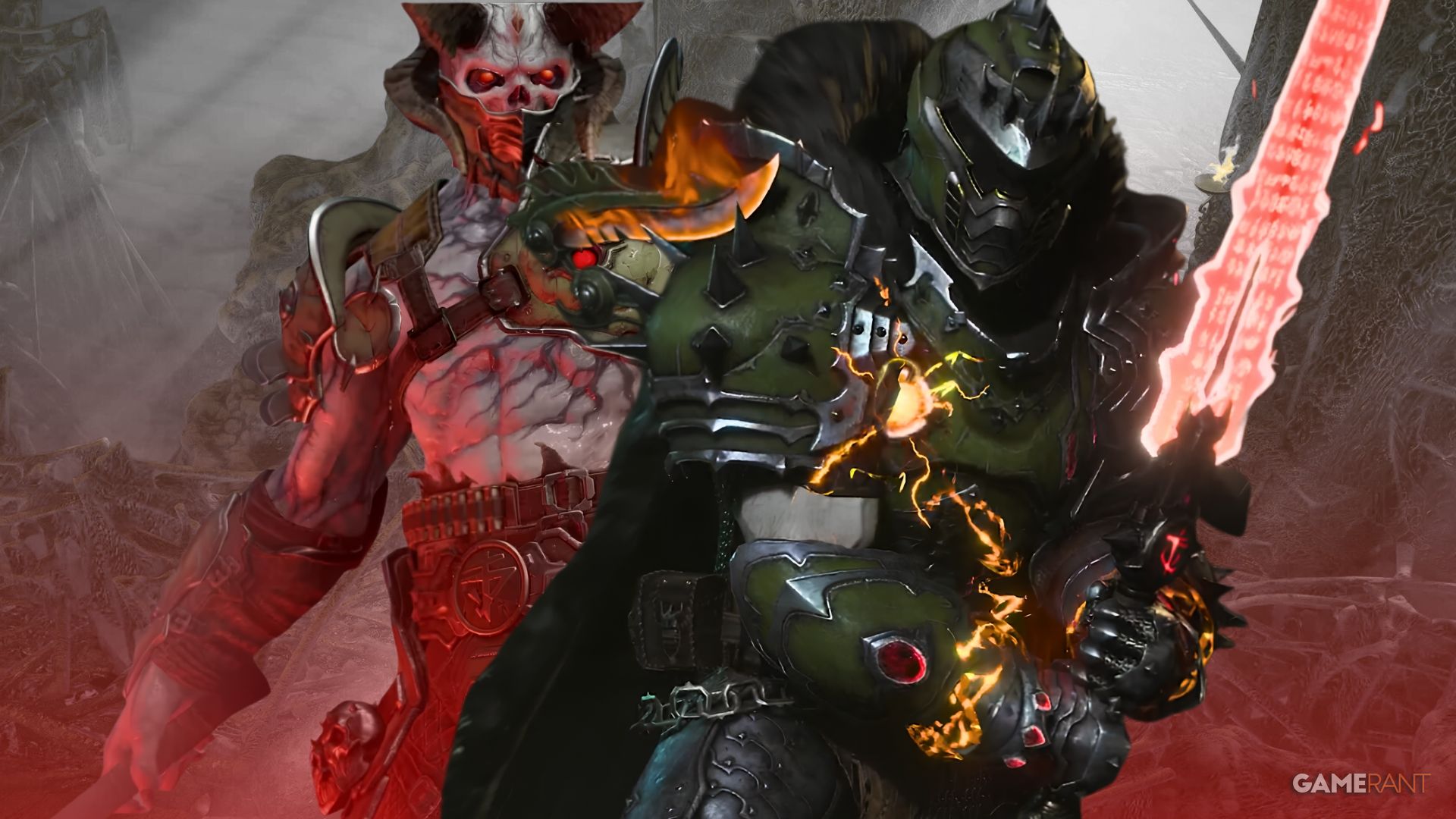
Forsaken Kingdom kicks off with the four-mission Last Days of Lordaeron prologue campaign, which is quite juicy and ambitious on its own. It picks up on the day Arthas returned from Northrend to kill his father, perhaps one of the most pivotal moments in all of Warcraft lore, and follows the new hero, guard lieutenant Garek Bandarion, as he fights his way through a besieged Andorhal and a devastated Strathholme in a doomed attempt to save his homeland from the Scourge. This chapter culminates with a confrontation against none other than Baron Rivendare, and contains numerous clever little references to both Warcraft 3 and World of Warcraft.
I enjoyed the design of these missions for the most part, as they take after the classic RTS formula of Warcraft 3. The Siege of Andorhal, especially, puts a little bit of a MOBA-inspired twist on the typical Warcraft 3 routine by having you capture towers that spawn waves of CPU-controlled friendly soldiers at regular intervals to help you push across the map. Another segment of the same mission required me to hold specific objectives to be able to recruit certain kinds of units, rather than simply needing their associated structure in my base.
Stratholme, post-purge at this point, is built like a winding dungeon crawl. Stratholme, post-purge at this point, is built like a winding dungeon crawl that requires you to coordinate one group led by Garek and a second led by the elven priest Ilastar Songbreeze – 500 bonus points if you recognize that deep cut, because I definitely had to look up who the heck he was and I practically eat, sleep, and breathe Warcraft. They remain separated for the first half of the mission, which created some interesting opportunities to use one group to complete an objective that helped the other progress. They then unite at the end for the final, dramatic push, which ties the whole scenario together nicely.
In an extremely heavily-telegraphed twist, Garek doesn't fare well in his confrontation with Rivendare, and ends up raised as one of the free-willed Forsaken in the main campaign. Taking his orders directly from Sylvanas and accompanied by her lieutenant, the Dark Ranger Anya, this free-roaming, quest-driven adventure revolves around establishing the Forsaken in the Undercity beneath the capital ruins. If you played the Founding of Durotar epilogue campaign in the original, you kind of know what to expect.
What I said about Warcraft 3: Reforged
Warcraft 3 is still probably my favorite Warcraft game of all time, and one of my favorite fantasy stories in any video game. The visual update Reforged brings to all its beloved and behated characters is all the reason I needed to want to experience it again. It’s not perfect, and it’s not everything we may have been promised, but it’s still Warcraft 3. If I were judging it purely based on how good of a remaster it is, there’s not much to write home about and plenty of room for improvement. But taken as a whole, it’s still a great game nearly two decades after its initial release. And the relatively minor shortcomings of this edition shouldn’t stop you from returning to this classic age of Azeroth or diving in for the first time. - Len Hafer, February 5, 2020Score: 7
Read the full Warcraft 3: Reforged review.[/url] Across three chapters, you focus mainly on Garek and Anya, completing quests across multiple areas of the Undercity and the surrounding countryside. There's quite a bit of progression to chew on, with the level cap extending all the way up to 20 by the end and a brand new system that allows you to equip tons of new gear in specific slots like in WoW or Diablo. Still, I longed for a little bit more variety. This is basically an RPG. There's really only one mission that makes use of RTS mechanics after the prologue.
And since regular troops can only be bought at mercenary camps with the same money you could otherwise spend on gear, I found I was mostly just rolling with my two heroes. New units like the Forsaken Deathguard are too squishy to stick around for long, and feel like a waste of money when I could get a permanent upgrade like a new sword instead. Garek and Anya can also respawn for free at altars placed around the map (outside of a few scripted segments), which encouraged me to simply throw them at a challenge until it broke rather than try to return with backup.
The writing isn't groundbreaking, but it does have that old school Blizzard touch. While I wouldn't say the writing in the campaign is groundbreaking, it does have that old school Blizzard touch. It's a little bit grittier and a little bit edgier than modern WoW. Getting to see the Undercity from a new angle and some major lore events like the rise of the Scarlet Crusade were neat. And Garek's journey to becoming the first Forsaken paladin had a worthwhile emotional payoff.
Forsaken Kingdom also comes with a third, entirely new graphical style for Warcraft 3, the aforementioned "Definitive Edition" option. At first, I wasn't super impressed with this direction. It doesn't look great zoomed in during cutscenes, to be honest. A lot of the textures are extremely flat, matte, and almost unfinished-looking. You can see visible pixels on some of the armor where it transitions from the faction blue to the metallic edging. This is more apparent on some units than others, especially in the campaign.
But when I loaded into a custom skirmish match against AI, I suddenly saw what Blizzard was going for. Playing zoomed out at a fast pace, I almost forgot I wasn't using the original 2003 graphics. It's like a magic trick. All the units and buildings look like how I remember them, just with higher fidelity. I suspect this will become the preferred way to play multiplayer and custom games for all but the most die-hard, low-polygon grognards.
It's a bit unfortunate to me, then, that these visual goodies are so unevenly distributed. The Forsaken Kingdom campaign can only be played with the Definitive Edition graphics. (And, you know, that seems fair enough.) Multiplayer and skirmish let you pick between Classic, Reforged, or Definitive Edition. But if you want to revisit the still frankly superb Reign of Chaos and Frozen Throne campaigns – and you really should! – they only support Classic or Reforged, not Definitive. That's probably the most disappointing part of this whole package.
It's unfortunate that the new visual goodies are so unevenly distributed. The other significant addition, and the one with a big impact on multiplayer, is Warcraft 3's first new tavern hero since the Alchemist and Firelord were added in 2004. This is the Forsaken Paladin, based on Garek, of course. He's in a bit of a strange thematic spot. After all, there's already the Human Paladin hero, and the Death Knight was originally designed as sort of a negative mirror image of that. So where does that leave the Forsaken Paladin?
Well, he is an undea d neutral hero who can only heal the living, so he might be the least useful to Undead faction players, ironically. His Q ability is a dash that slows enemies it passes through, so he's quite mobile. As a strength hero, he is deadly in melee. His W is familiar to anyone who has played a WoW paladin with Consecration, which damages undead enemies and heals friendly living units in a small circle at his feet.
He also has a passive aura that reduces magic damage taken and increases healing received. And his ult is an AoE purge/stun that heals nearby friendly units, with bonus healing and a short damage buff if the purge removed a debuff from them. This could definitely have some strong counterplay against certain builds, and I'm interested to see what pro players think of him. I like the way he brings a playstyle we've seen in spin-offs like Dota to the mix, though I think he might be a touch overpowered at the moment.
I should also mention that the number of units in a control group has been doubled across all game modes. It's an ambitious change for a legacy game like this, and one I'm sure the old guard will groan about. But I think it's a positive one overall, from my spot down here in the tryhard seats.

Jat AI
Stay informed with the latest in artificial intelligence. Jat AI News Portal is your go-to source for AI trends, breakthroughs, and industry analysis. Connect with the community of technologists and business professionals shaping the future.