


















The making of GTA 5: How the GTA 6 predecessor helped Rockstar pave the way for its return to Vice City with Jason and Lucia
Back in 2013, Grand Theft Auto 5 won the prestigious title of Edge Magazine's Game of the Year. A lot has changed since then, but at least one figure is the same. Aaron Garbut, co-studio head at Rockstar North on GTA 6, was art director on GTA 5, and he spoke to Edge about the process of making that game. With GTA 6 likely to be a mainstay in Game of the Year conversations through 2027, and our own GTA 6 review out in the wild, we're revisiting that interview to see which design philosophies have stayed the same over the past 13 years, and where Rockstar's ideas have differed. Garbut's firmly looking in the rear-view mirror - back in 2013, GTA 6 would be more than a decade away, and Red Dead Redemption 2 would likely have been a much bigger concern for Rockstar. But a lot of what he talks about is relevant today; the design impact of having multiple lead characters; the need to kill your darlings throughout development; the struggles of creating a realistic, life-like urban game environment. We've been sharing some of those stories this week, but you can read the full interview with Garbut right here. How did having three playable characters inform your design choices when it came to building the world? The world is always designed before the game. That’s just the way we do things. We have a chunk of preproduction where a subset of the art team lay out and build a white box city. We get the roads feeling good, the vistas working well and look at the skyline and landmarks. We spend a long time driving and building and tweaking and getting everything in place and feeling balanced, making sure the districts we have chosen will blend together naturally and as a whole create the feeling of the city. As missions and story come together, I work with the level designers to place missions and key locations and to utilise as much of the world as we can. We did know the [biographies] for the three characters right at the start, so we knew we wanted to create an area for Trevor out in the sticks. Towards the beginning of preproduction, I met up with [Rockstar president] Sam [Houser] in LA, and we spent a week together driving about, just exploring and talking. During that trip, we drove out into the desert and eventually ended up visiting Salton Sea [in California]. We went to an amazing spot called Bombay Beach and expected a real-life Trevor to burst out on us at any second. When the full reference trip was organised, we sent a team out to Salton Sea for a few days. With GTA Online planned as such a large part of the experience, and one which we knew we wanted to sustain, we really didn’t have the luxury of focusing solely on the singleplayer journey. We had to ensure that the world as a whole was coherent and of consistent quality. We also knew we wanted to give the entire world a sense of life, and to encourage and reward the player for exploring. I think if this was a linear experience, the three characters would have had a bigger impact on the design and workload of the world. As it was, though, they just gave us a few anchor points. All the things that hung off of that – the contrasts, the fidelity and detail, the personality – we would have done anyway. At a certain point, the detail and scope is just so big that you can do what you want within it and it has little impact on production. https://www.youtube-nocookie.com/embed/oUNeCZEngM8 What were the most valuable lessons you’d learnt through previous GTAs that were transferable to this project? Mostly not to get locked down to anything, whether it’s a process, a plan, a goal, an asset, an idea – anything. To keep completely open-minded, adapt to the situation and always look for a better way forward, rather than stick with what’s been decided previously. I don’t mean chop and change for the sake of it, but let what’s best for the game dictate the way forward. With a game that’s as large and complex as this, the ideas need to be fluid, and you need to be paying as much attention as you can to every aspect to make sure they’re working together. We’ve got an amazing art team here that is extremely experienced at building open worlds. We’ve been doing it for 15 years, so a lot of the problems and solutions are just so ingrained in us that we don’t really notice them. There’s always new things that come along, though, and the nature of how we approach development means that we need to be ready to adapt. The world is built first, then missions, then structure and story, and all the time all our systems are developing and changing. Each of these things influences the others massively, so each needs to adapt to the others. We are always playing and refining, adjusting each element of the game to play better with the others. We’re rarely throwing away content; it’s more about adapting plans and constantly looking ahead with a clean slate, rather than sticking stubbornly to old decisions. I always think of the process the same way I was taught in art college to
 Back in 2013, Grand Theft Auto 5 won the prestigious title of Edge Magazine's Game of the Year. A lot has changed since then, but at least one figure is the same. Aaron Garbut, co-studio head at Rockstar North on GTA 6, was art director on GTA 5, and he spoke to Edge about the process of making that game. With GTA 6 likely to be a mainstay in Game of the Year conversations through 2027, and our own GTA 6 review out in the wild, we're revisiting that interview to see which design philosophies have stayed the same over the past 13 years, and where Rockstar's ideas have differed.
Garbut's firmly looking in the rear-view mirror - back in 2013, GTA 6 would be more than a decade away, and Red Dead Redemption 2 would likely have been a much bigger concern for Rockstar. But a lot of what he talks about is relevant today; the design impact of having multiple lead characters; the need to kill your darlings throughout development; the struggles of creating a realistic, life-like urban game environment. We've been sharing some of those stories this week, but you can read the full interview with Garbut right here.
How did having three playable characters inform your design choices when it came to building the world?
The world is always designed before the game. That’s just the way we do things. We have a chunk of preproduction where a subset of the art team lay out and build a white box city. We get the roads feeling good, the vistas working well and look at the skyline and landmarks. We spend a long time driving and building and tweaking and getting everything in place and feeling balanced, making sure the districts we have chosen will blend together naturally and as a whole create the feeling of the city. As missions and story come together, I work with the level designers to place missions and key locations and to utilise as much of the world as we can.
We did know the [biographies] for the three characters right at the start, so we knew we wanted to create an area for Trevor out in the sticks. Towards the beginning of preproduction, I met up with [Rockstar president] Sam [Houser] in LA, and we spent a week together driving about, just exploring and talking. During that trip, we drove out into the desert and eventually ended up visiting Salton Sea [in California]. We went to an amazing spot called Bombay Beach and expected a real-life Trevor to burst out on us at any second. When the full reference trip was organised, we sent a team out to Salton Sea for a few days.
With GTA Online planned as such a large part of the experience, and one which we knew we wanted to sustain, we really didn’t have the luxury of focusing solely on the singleplayer journey. We had to ensure that the world as a whole was coherent and of consistent quality. We also knew we wanted to give the entire world a sense of life, and to encourage and reward the player for exploring. I think if this was a linear experience, the three characters would have had a bigger impact on the design and workload of the world.
As it was, though, they just gave us a few anchor points. All the things that hung off of that – the contrasts, the fidelity and detail, the personality – we would have done anyway. At a certain point, the detail and scope is just so big that you can do what you want within it and it has little impact on production.
https://www.youtube-nocookie.com/embed/oUNeCZEngM8 What were the most valuable lessons you’d learnt through previous GTAs that were transferable to this project?
Mostly not to get locked down to anything, whether it’s a process, a plan, a goal, an asset, an idea – anything. To keep completely open-minded, adapt to the situation and always look for a better way forward, rather than stick with what’s been decided previously. I don’t mean chop and change for the sake of it, but let what’s best for the game dictate the way forward. With a game that’s as large and complex as this, the ideas need to be fluid, and you need to be paying as much attention as you can to every aspect to make sure they’re working together.
We’ve got an amazing art team here that is extremely experienced at building open worlds. We’ve been doing it for 15 years, so a lot of the problems and solutions are just so ingrained in us that we don’t really notice them. There’s always new things that come along, though, and the nature of how we approach development means that we need to be ready to adapt. The world is built first, then missions, then structure and story, and all the time all our systems are developing and changing. Each of these things influences the others massively, so each needs to adapt to the others. We are always playing and refining, adjusting each element of the game to play better with the others. We’re rarely throwing away content; it’s more about adapting plans and constantly looking ahead with a clean slate, rather than sticking stubbornly to old decisions.
I always think of the process the same way I was taught in art college to draw or sculpt. It’s about sketching in the overall vision and then layering and working in additional detail, pulling the end result out of the page. It’s just that we have a thousand people all drawing at once on the same page. We’re lucky – a lot of us have been doing this together for so long that we know how to work together.

(Image credit: Rockstar Games) "Multiple characters was a leap of faith" - Many years before Jason and Lucia would lead GTA 6, Rockstar knew that GTA 5's trio "might backfire". Thankfully, they seem to have dodged that particular
Looking back, how do you think the final version of the game matches up to your initial vision?
It’s hard to remember the original vision now. We always have a very basic idea of what we want to achieve, but from day one it’s evolving and adapting. As a game, the initial vision is always very rough. We decided right at the start we wanted to do three switchable characters, we decided who the main characters were and we decided the general tone for the game. Then we just built and evolved and let the game dictate itself.
[Having] multiple characters was a leap of faith. It was an interesting idea, and it felt like we could do interesting things with it, but it also felt like a change to the core of the game that might backfire. I think it really worked out. It’s so hard during development to get perspective – you get so used to looking for the problems that it becomes almost impossible to step back and see the positives. On this project, despite living in that world for years, playing the missions again and again, it felt fun. It felt great to experience the world, to see it evolve from the basic building blocks to the finished detailed results with all the scenarios and life added. I still think of it like a real place in a lot of ways. That’s an amazing thing – to build what feels like a real place and then for nearly 30 million people to live there.
As a group of people, we’re never short of ideas. There are always things that come up during development that you want to add. Often we do, but the closer you get to release, the less that happens. I don’t feel like the game fell short, but there is undoubtedly a huge volume of plans and ideas that we wanted to do to push it further.
What I love about our GTA Online plans is that the game is no longer static. We can continue to add these things and evolve. That’s even more exciting these days, where through forums, Reddit, etc, we have a real direct connection to the people playing the game. We can respond to what they are into and what they hate more than ever. It’s something that really suits the way we work, the way we’re always trying to adapt to the experience and avoid walking blindly down a set path.

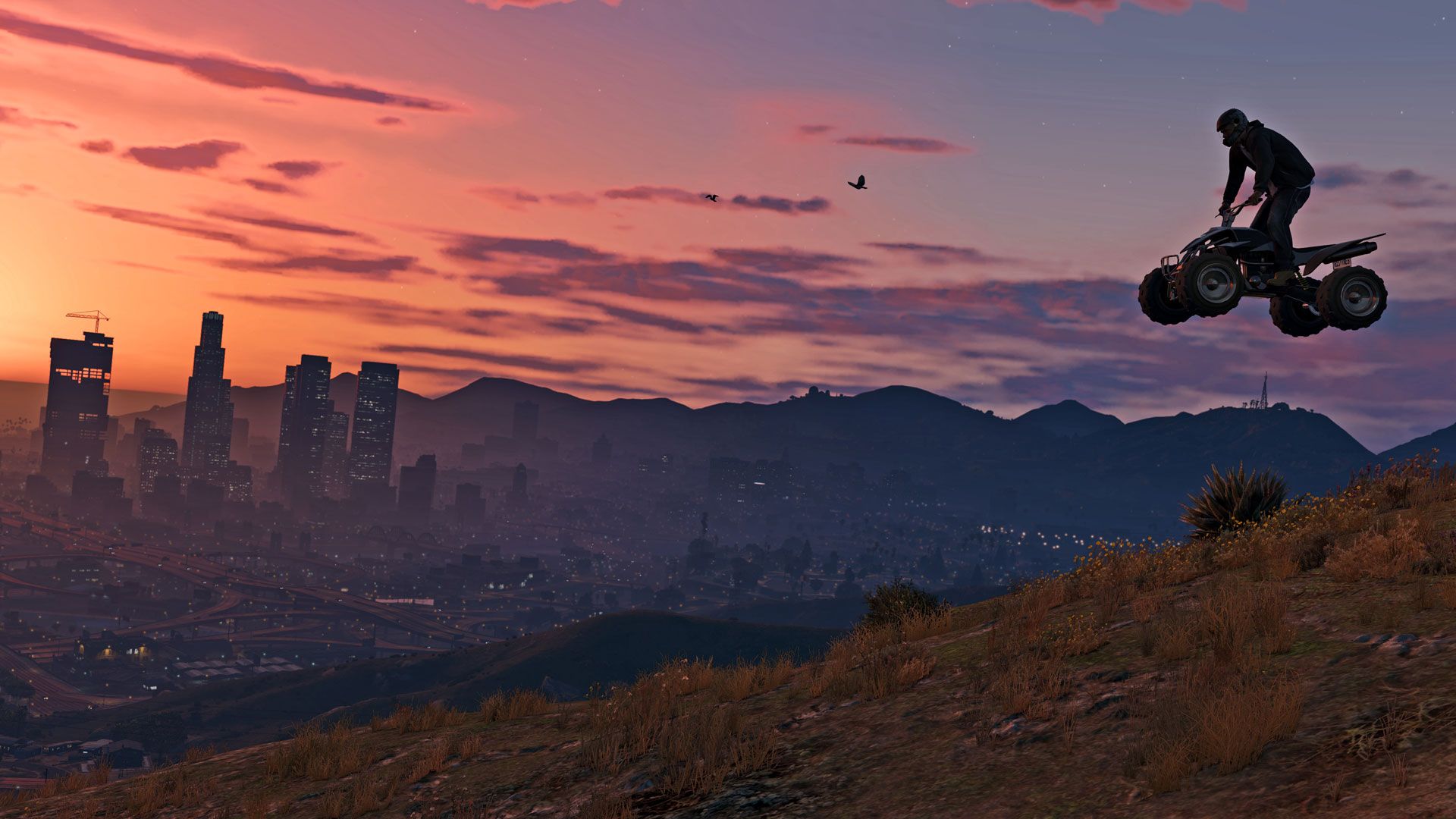
(Image credit: Rockstar Games) "Let what's best for the game dictate the way forward" - Garbut says that the most important Rockstar learned over the course of the GTA series was to kill its darlings, and be prepared to cut anything that might need to go for the good of the game
Los Santos is the series’ closest analogy to a real location – how does that affect how it’s designed?
We always use the same process: working with real cities, starting on a macro level to define the districts we want to use, and working down. I think the only variation is how many real landmarks we decide to use once we get to the individual building level. I always feel we build our own world – we’re still a long way from being dictated by reality. Instead, we use it as a starting point. We’ll move entire districts about geographically, never mind individual buildings.
I’d never want to rebuild a city. I think that would be a lot less satisfying both for us to build and for the player to play. In a lot of ways, it would be less convincing, too. At least that’s how I rationalise it to myself. Only a relatively small subset of players ever get to know the real LA or New York. Most experience it through film and TV, or through short visits, and that’s a highly edited representation. We do the same: we take the feel of a city, the one we get through visiting and through experiencing it our whole lives through media, and build that. We compress, we edit, we emphasise certain things and we end up with something that in some ways, I think, feels more like the popular perception of the place than the actual city. Only because the popular perception isn’t the real city, if that makes sense.
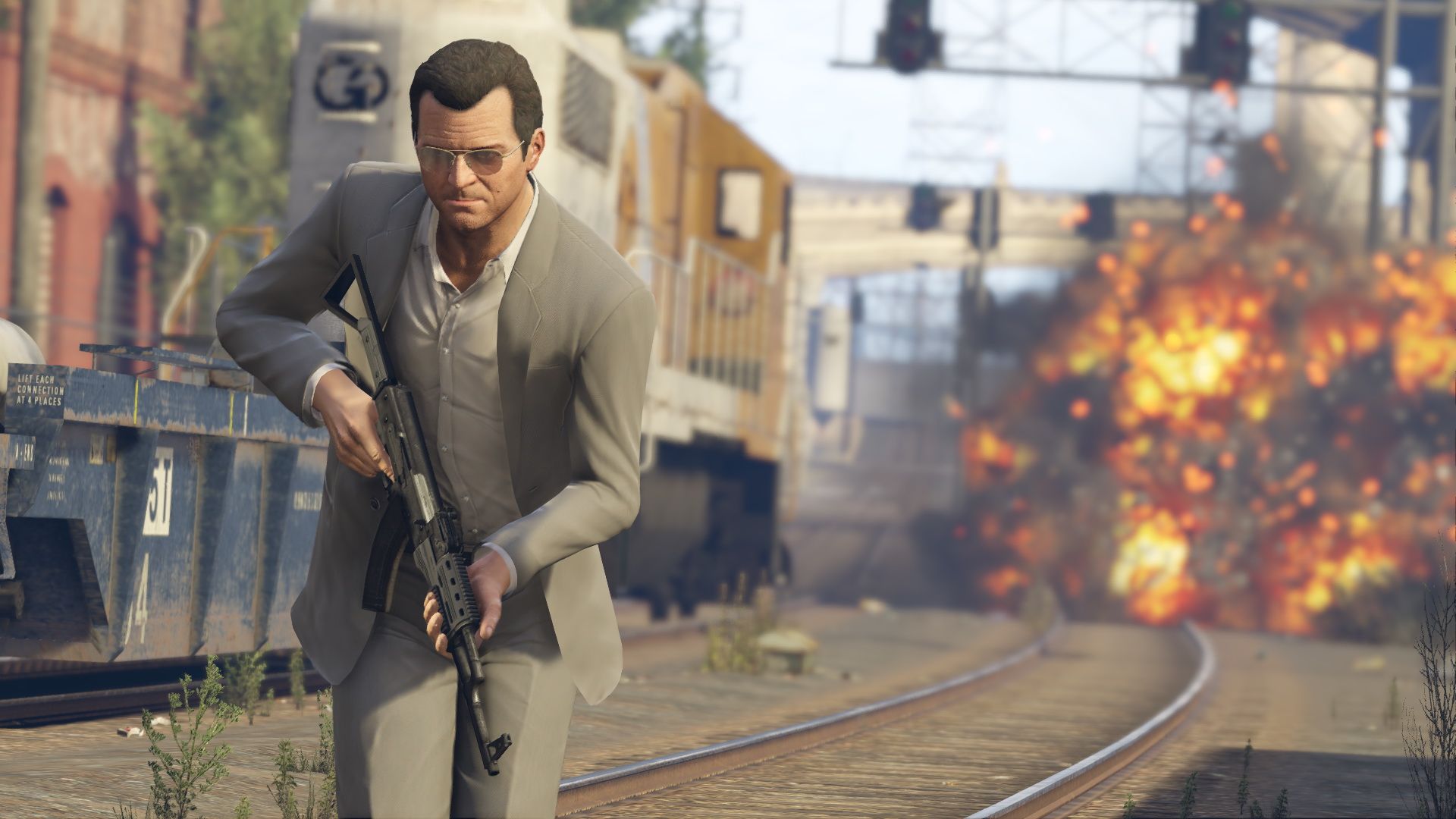
(Image credit: Rockstar Games) "I'd never want to rebuild a city, I think that would be a lot less satisfying" - Garbut says that the act of recreating a world brick-by-brick wouldn't work for either the developers or the players
The game’s lighting system works really hard to evoke moods – how important do you think it is to the finished game?
It’s absolutely vital. Good lighting makes all the difference; it’s what binds the experience together. We have an extremely good lighting team who have worked together to push and push what was previously possible. It’s a hell of a lot of work and tuning, held together by extremely optimal and clever code with a layer of hacky tricks over the top to give us the things that shouldn’t be possible.
Sam Houser once told us that recreating neon lighting in Vice City was an important breakthrough during its development. Were there equivalent points while making GTAIV and V?
On IV, that was when the lighting – and in particular the realtime shadows – came online. That was a revelation for us at the time, having spent years on PS2 baking in static lighting. Suddenly, everything felt solid. On V, it was similar: the lighting system was reworked and we had a system that could draw much nicer shadows over much farther distances. The first time I saw the shadows drawing all the way into the distance while flying over the city was one of those moments – and then when the lighting [level of detail] system came together, we suddenly had a world that seemed so much more alive at night. From your position as art director, which part of creating the game was the most enjoyable? I love working with level design. As we’re laying out the world and blocking it in, we’re considering gameplay and coming up with mission ideas. I always do my best to push those ideas through, but I think the most enjoyable part of the project is when we start to place everything in the world. Once the locations are in place and level designers start to get everything to flow together and the cutscenes plugging in, it ticks over from being a series of disconnected elements into a game. It’s at this point – once everything is in place, to some degree – that the work actually starts. It’s that last chunk when you make the hard decisions, where elements that are not working have to be changed and where you can iterate. It’s hard. It takes a long time. But it’s the bit that makes all the difference. I’m not entirely sure if it’s the most enjoyable, but it’s certainly the most rewarding.
[/url]

Jat AI
Stay informed with the latest in artificial intelligence. Jat AI News Portal is your go-to source for AI trends, breakthroughs, and industry analysis. Connect with the community of technologists and business professionals shaping the future.