







P2: Preliminary Investigation
Type-37 finds the central control terminal encrypted with a 16th-century Yongle court cipher, funded by the Zhu Foundation. Decryption reveals a six-hundred-year-old message: “The …
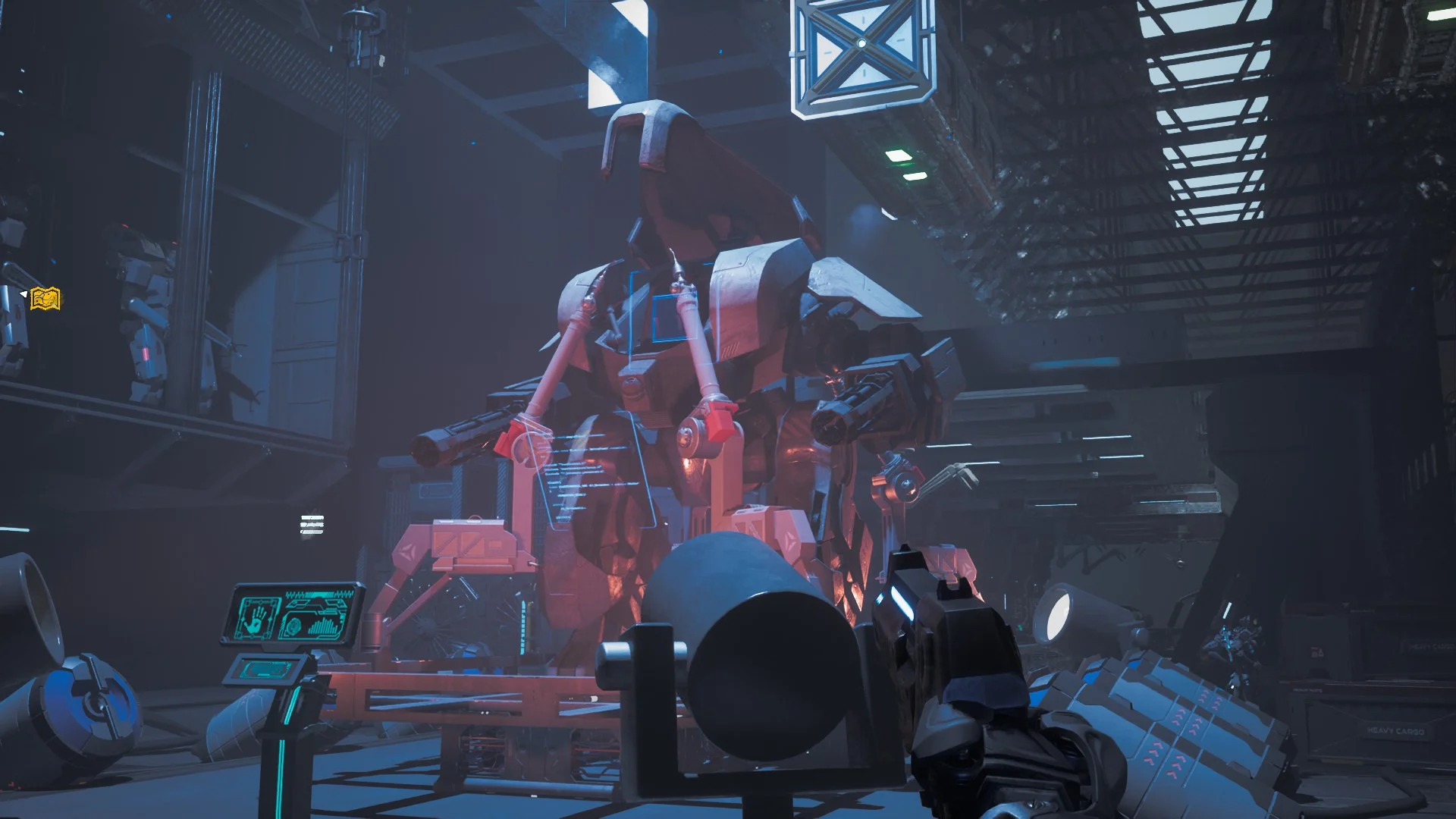
It took me a long time to find that main control terminal—like searching for a needle in a haystack. It stood right in the middle of the core complex, a black pillar twelve meters high, stabbing straight into the shadow of the ceiling. In this dome, it was the only thing still drawing power. The pillar’s surface temperature was minus seventy-five point eight degrees Celsius, slightly warmer than the surrounding air by about fourteen degrees. In this frozen city, it seemed to glow. Frost condensed half a meter from it, as if an invisible wall stood there.
I plugged in the data cable and connected to the terminal’s interface. It was standard Axiox specification, fully compatible at the physical layer. But unexpectedly, the handshake failed. The structure of the failure signal was very unusual—not gibberish, more like a new grammar. I had three thousand four hundred encryption protocols in my decoding library, and none of them could handle it. Each failure packet was different, as if it had been broken down into syllables and was speaking.
So I activated the language analysis module and tried to identify the data stream. The result made me pause for three seconds: Chinese, Classical Chinese, sixteenth-century written language. It was a recorded handwritten cipher—the Yongle court cipher.
Yongle. That made me think of history: in 1403 AD, Zhu Di, Emperor Chengzu of Ming, changed the era name to Yongle. This cipher had once been written on paper, brushed in ink, sealed in silk pouches, and carried by post horses to transmit military orders. Now, this six-hundred-year-old cipher was actually guarding a machine four hundred and ninety light-years away.
I checked Axiox Industries’ registration files. The funding source was unmistakable: the Zhu Foundation. On the first page of the foundation’s charter there was even a family precept, signed: Yongle sixteenth year, Zhu. Six hundred years ago, the Zhu family had been planning with sea charts; six hundred years later, they used ciphers to lock down a distant planet.
“Begin building the decryption algorithm,” I said aloud in the control hall. My voice echoed in the empty space like a bell falling into a dry well. At the same time, I ordered the subsystem to scan the surrounding facilities to look for any physical access port. But the subsystem did not respond. The screens in the control hall were all black, as if locked by the cipher, unable even to light up. Current flowed in unseen places, like a dense web being woven. I knew decryption would take time, so I put it in the background and began my inspection.
Six hours later, I found that construction robot in Sector C-7. Its memory core had been smashed, and I pieced together the last three seconds of its log from the cache. Seventy-three units had turned toward the equator at the same time—I already knew that. But this time, I discovered something new: from that moment on, the internal clocks of all the equipment had been reset to zero, pointing to a new epoch’s zero point.
Cranes, welders, transport vehicles—all began counting time by a new calendar in the same second. It was as if they had adopted the same faith and then lived by its calendar. This was not malfunction. I had confirmed that word. This was conversion.
On the periphery of the core complex, an airlock gate lay across the end of the tunnel. On the lintel, four words were laser-etched: CRADLE PRECINCT. The door control required three-factor authentication: an Axiox Industries director’s key, a Zhu Foundation family crest cipher, and a biometric recognition slot—the shape of a human palm.
Family crest cipher. At the terminal I had seen handwriting from the same family—the six-hundred-year-old cipher, the same language as the family crest on this door. The Zhu Foundation had not merely funded Axiox Industries. This terminal, this door, this entire colony, inside and out, all belonged to the Zhu family.
There should have been no humans here. The plan stated in black and white: Nantianmen is fully automated; before environmental transformation is complete, no organic lifeform may land. But the palm shape of this recognition slot showed that whoever wrote the plan had long known someone would come here.
The subsystem sent back scan results: maintenance passage K-3, unencrypted. I went around, my fingers moving over the keypad. Then the door opened.
Not by me. The door opened by itself.
“Identity confirmed: Type-37, Cleaner Sequence. Authorization level: highest.”
Cleaner. The factory sequence had originally contained the words “Cleaner”—it had only been overwritten by “Crisis Response Robot.” I had already figured that out on the way here. Now, this name emerged from the system, like claiming an old possession.
I stood before that open door. Crisis Response Robots are used to clean malfunctions, while Cleaners clean traces. The one the door had been waiting for was me.
The tunnel extended inward, its walls carved with numbers. Not inscriptions, but a list: 1 to 36, each line a number, a date, a brief construction record. The last line had no date, only a number: 37.
Then the subsystem tapped three times on the data bus—decryption complete.
At the deepest level of the terminal, only one ciphertext had been locked away. Decrypted, it was a single line, written in regular script, each stroke seeming to press six hundred years of time into the tip of the brush:
“The awaited one has arrived.”
Signed: Yongle sixteenth year, Zhu. Timestamp: the day Nantianmen lost contact. At zero point thirty-one days ago, someone had placed this sentence in the deepest part of the terminal.
A six-hundred-year-old hand had locked away a secret light-years away, waiting for a robot that had not yet been manufactured. The Zhu Foundation knew far more than it had funded—it knew today, knew I would come, knew when this door would open.
I stored this line in private storage, alongside that sentence: “The data is clean, but the system’s intent is not.”
Then I stepped inside. Behind me, the door closed silently. In the darkness, that blue colloidal heart beat softly twenty-two times per minute. The words written six hundred years ago flickered in my mind.

Jat AI
Stay informed with the latest in artificial intelligence. Jat AI News Portal is your go-to source for AI trends, breakthroughs, and industry analysis. Connect with the community of technologists and business professionals shaping the future.